Institute of Interdisciplinary Integrative Biomedical Research, Shanghai University of Traditional Chinese Medicine, Shanghai, 201203, China.
Shanghai Engineering Research Center of Molecular Therapeutics and New Drug Development, School of Chemistry and Molecular Engineering, East China Normal University, Shanghai, 200062, China.
Acta Pharmacol Sin. 2020 Feb;41(2):237-248. doi: 10.1038/s41401-019-0275-z. Epub 2019 Jul 24.
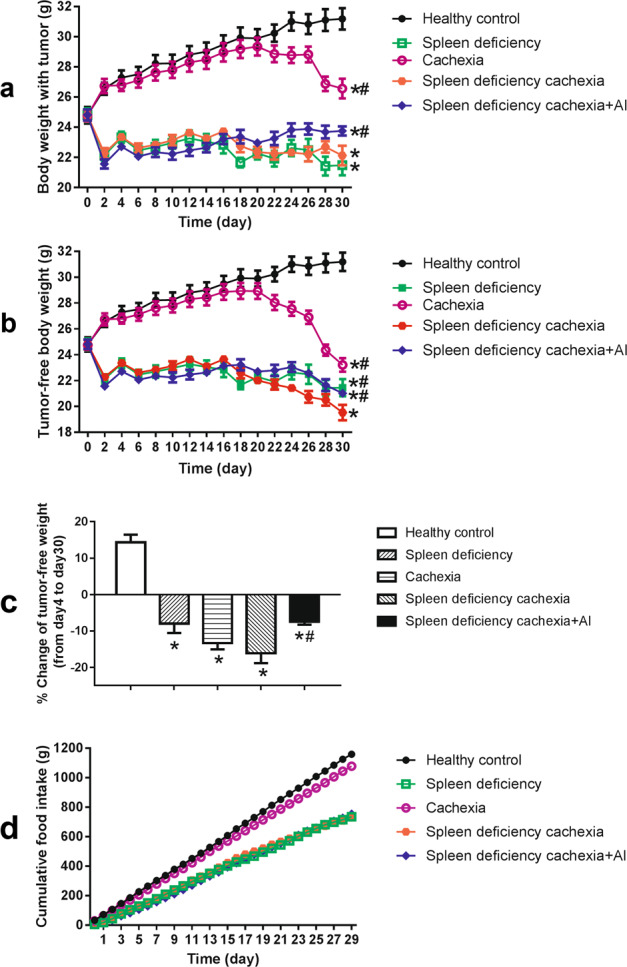
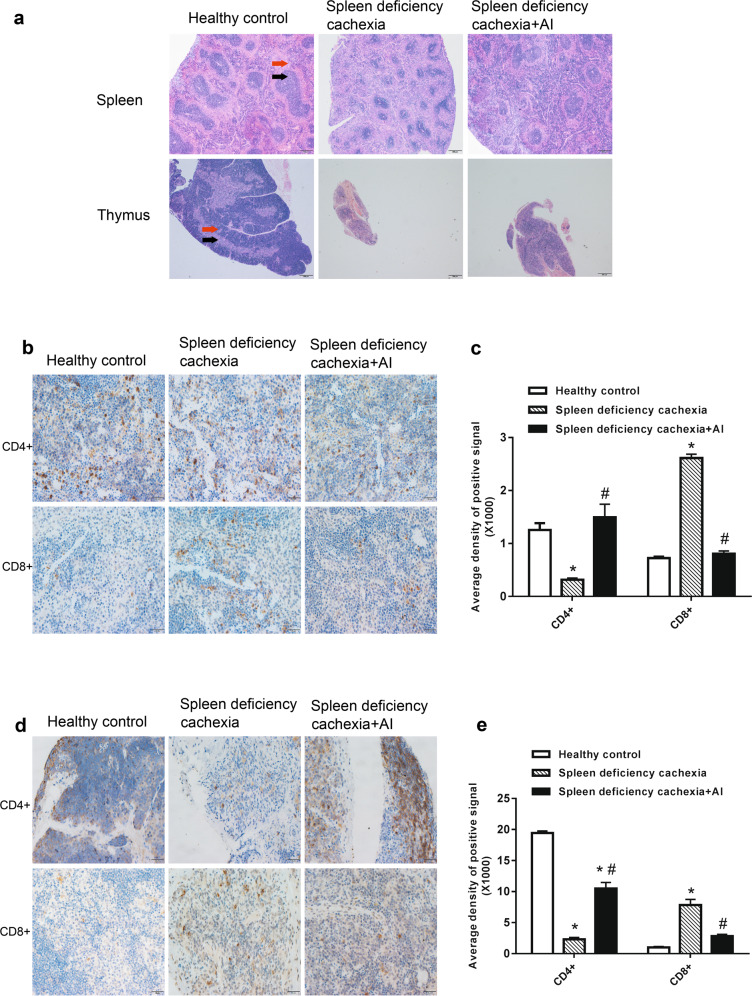
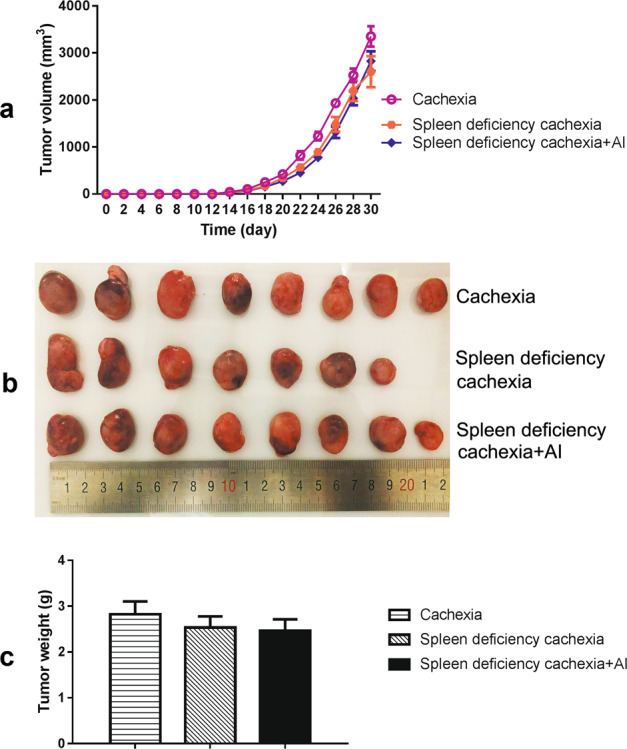
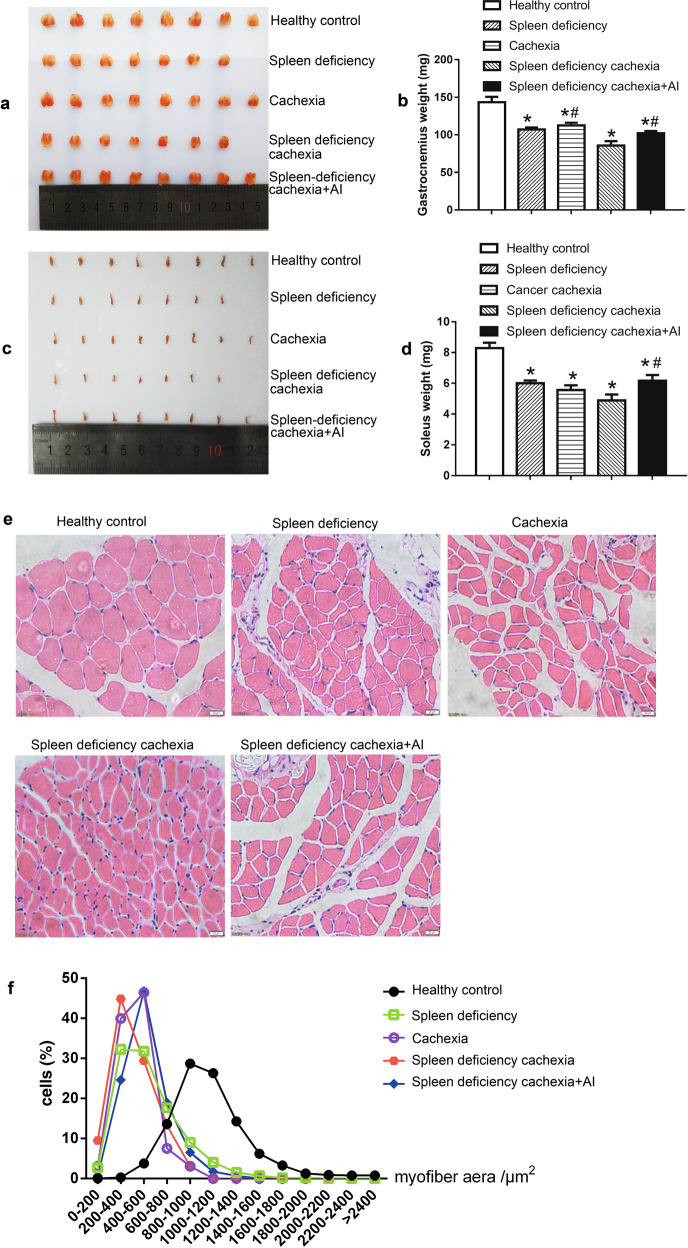
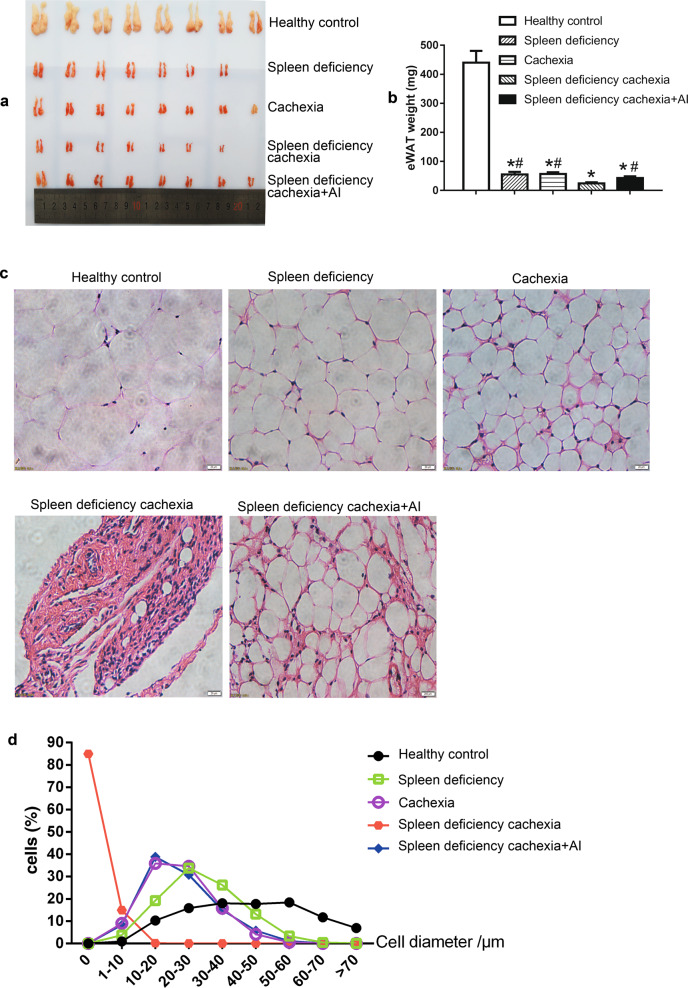
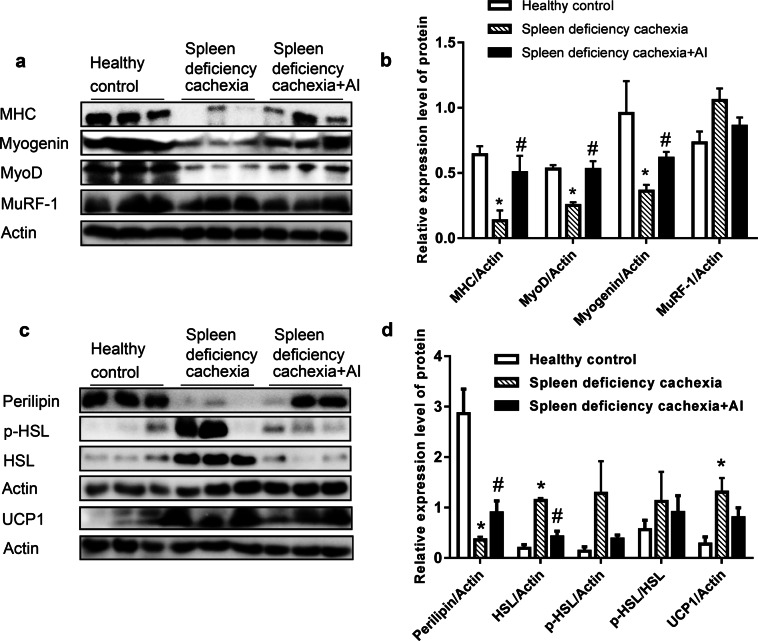
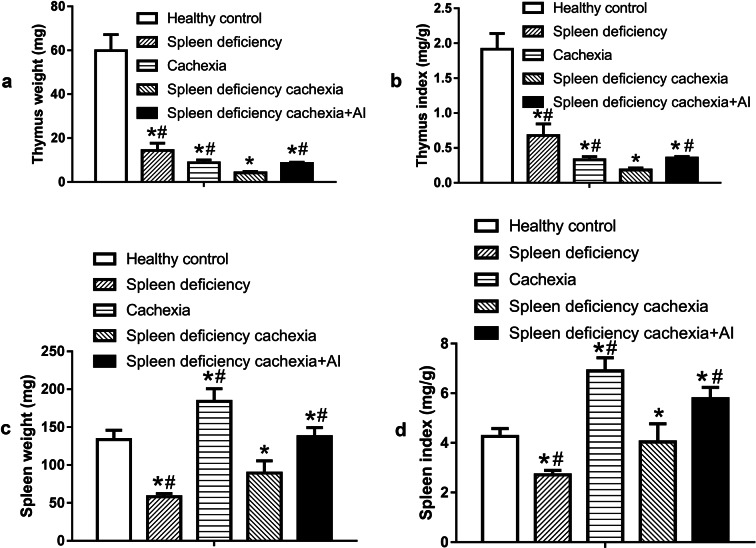
Cancer cachexia is a multifactorial metabolic syndrome that affects ∼50%-80% of cancer patients, and no effective therapy for cancer cachexia is presently available. In traditional Chinese medicine, a large portion of patients with cancer cachexia was diagnosed as spleen deficiency syndrome and treated with tonifying TCMs that produce clinic benefits. In this study we established a new animal model of spleen deficiency and cancer cachexia in mice and evaluated the therapeutic effects of atractylenolide I, an active component of tonifying TCM BaiZhu, in the mouse model. Cancer cachexia was induced in male BALB/c mice by inoculation of mouse C26 colon adenocarcinoma cells, whereas spleen deficiency syndrome was induced by treating the mice with spleen deficiency-inducing factors, including limited feeding, fatigue, and purging. The mouse model was characterized by both cachexia and spleen deficiency characteristics, including significant body weight loss, cancer growth, muscle atrophy, fat lipolysis, spleen, and thymus atrophy as compared with healthy control mice, cancer cachexia mice, and spleen deficiency mice. Oral administration of atractylenolide I (20 mg· kgper day, for 30 days) significantly ameliorated the reduction in body weight and atrophy of muscle, fat, spleen, and thymus in mice with spleen deficiency and cachexia. The established model of spleen deficiency and cancer cachexia might be useful in the future for screening possible anticachexia TCMs and clarifying their mechanisms.
癌症恶病质是一种多因素代谢综合征,影响约 50%-80%的癌症患者,目前尚无有效的癌症恶病质治疗方法。在中医中,很大一部分癌症恶病质患者被诊断为脾虚证,并采用具有临床疗效的补虚中药进行治疗。在这项研究中,我们建立了一种新的脾虚和癌症恶病质小鼠动物模型,并评估了白术内酯 I(一种补虚中药白术的活性成分)在该小鼠模型中的治疗效果。通过接种小鼠 C26 结肠腺癌细胞,在雄性 BALB/c 小鼠中诱导癌症恶病质,而通过使用脾虚诱导因子(包括限制喂养、疲劳和泻下)处理小鼠来诱导脾虚综合征。与健康对照组、癌症恶病质组和脾虚组小鼠相比,脾虚和癌症恶病质小鼠模型表现出恶病质和脾虚的特征,包括体重明显减轻、肿瘤生长、肌肉萎缩、脂肪分解、脾和胸腺萎缩。白术内酯 I(20mg·kgper 天,连续 30 天)口服给药可显著改善脾虚和恶病质小鼠的体重减轻和肌肉、脂肪、脾和胸腺萎缩。脾虚和癌症恶病质模型的建立可能有助于未来筛选可能的抗恶病质中药,并阐明其作用机制。