Bialosuknia Sean M, Tan Yi, Zink Steven D, Koetzner Cheri A, Maffei Joseph G, Halpin Rebecca A, Muller Emmi, Novatny Mark, Shilts Meghan, Fedorova Nadia B, Amedeo Paolo, Das Suman R, Pickett Brett, Kramer Laura D, Ciota Alexander T
The Arbovirus Laboratory, New York State Department of Health, Wadsworth Center, 5668 State Farm Road, Slingerlands, NY, USA.
Department of Medicine, Vanderbilt University Medical Center, Nashville, 1161 21st Street, Nashville, TN, USA.
Virus Evol. 2019 Jul 21;5(2):vez020. doi: 10.1093/ve/vez020. eCollection 2019 Jul.
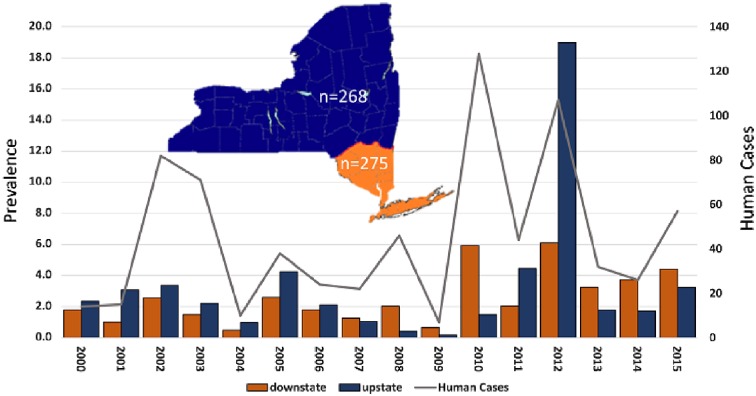
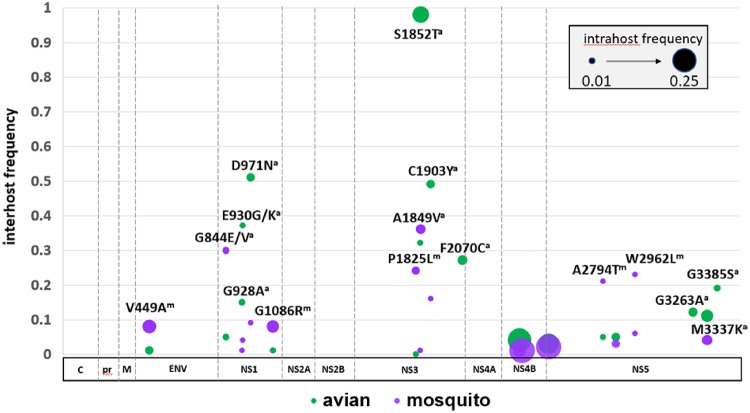
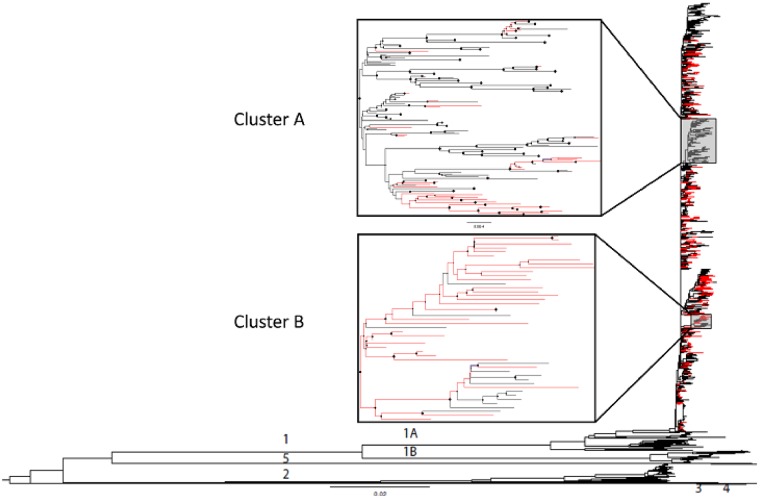
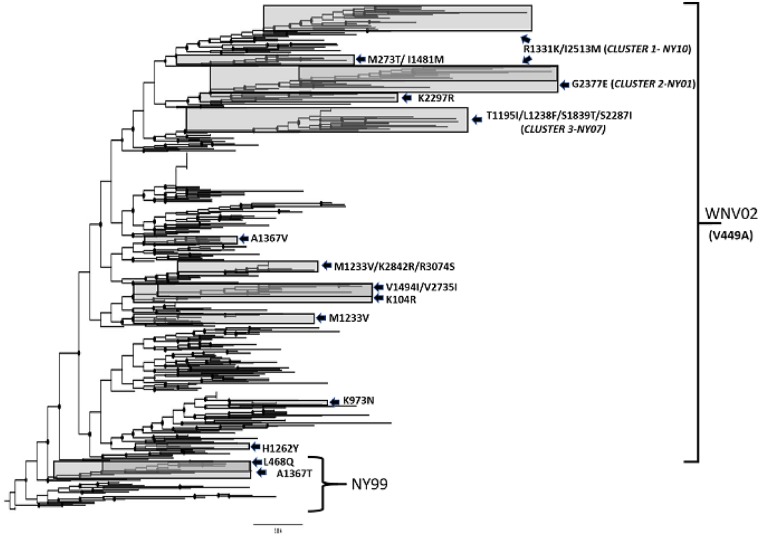
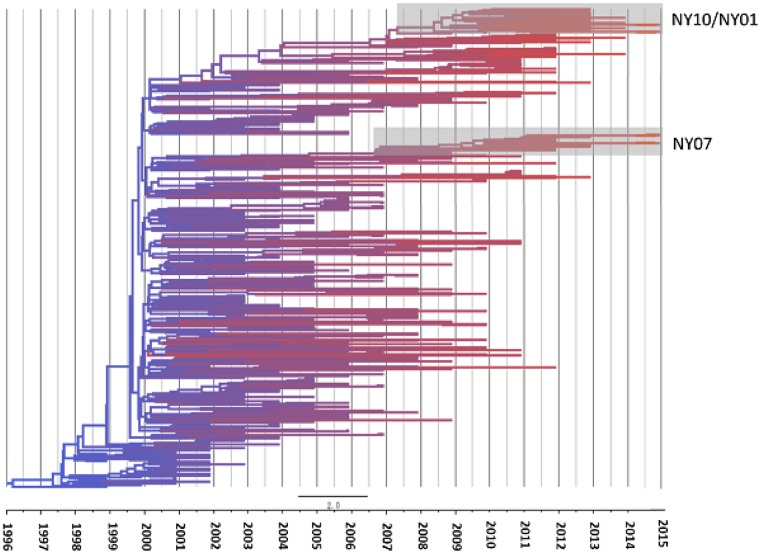
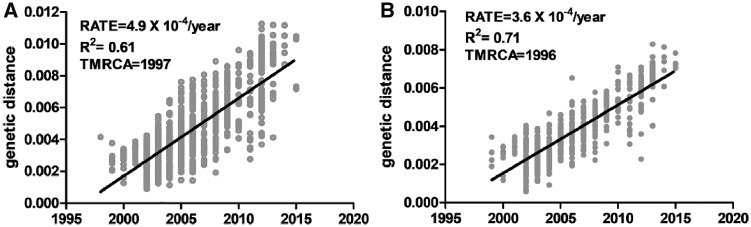
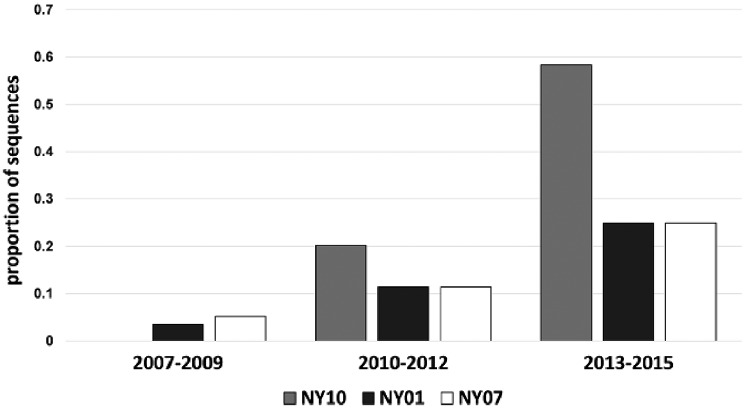
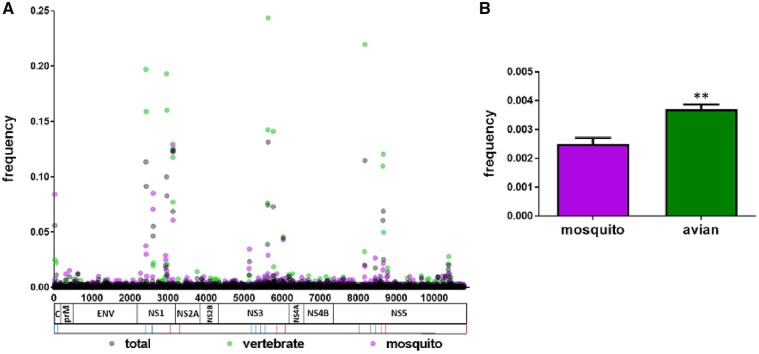
Following its introduction into New York State (NYS) in 1999, (WNV; , ) underwent a rapid expansion throughout the USA and into Canada and Latin America. WNV has been characterized as being evolutionarily stable, with weak geographic structure, a dominance of purifying selection and limited adaptive change. We analyzed all available full-genome WNV sequences, focusing on the 543 available sequences from NYS, which included 495 newly sequenced 2000-15 isolates. In addition, we analyzed deep-sequencing data from 317 of these isolates. While our data are generally in agreement with the limited pace of evolutionary change and broad geographic and temporal mixing identified in other studies, we have identified some important exceptions. Most notably, there are 14 codons which demonstrated evidence of positive selection as determined by multiple models, including some positions with evidence of selection in NYS exclusively. Coincident with increased WNV activity, genotypes possessing one or more of these mutations, designated NY01, NY07, and NY10, have increased in prevalence in recent years and displaced historic strains. In addition, we have found a geographical bias with many of these mutations, which suggests selective pressures and adaptations could be regional. Lastly, our deep-sequencing data suggest both increased overall diversity in avian tissue isolates relative to mosquito isolates and multiple non-synonymous minority variants that are both host-specific and retained over time and space. Together, these data provide novel insight into the evolutionary pressures on WNV and the need for continued genetic surveillance and characterization of emergent strains.
1999年西尼罗河病毒(WNV)被引入纽约州后,迅速在美国各地传播,并蔓延至加拿大和拉丁美洲。WNV具有进化稳定、地理结构薄弱、纯化选择占主导且适应性变化有限的特点。我们分析了所有可用的WNV全基因组序列,重点关注来自纽约州的543条可用序列,其中包括495条2000 - 2015年新测序的分离株。此外,我们还分析了其中317个分离株的深度测序数据。虽然我们的数据总体上与其他研究中确定的有限进化变化速度以及广泛的地理和时间混合情况一致,但我们也发现了一些重要的例外情况。最值得注意的是,有14个密码子经多种模型确定显示出正选择的证据,包括一些仅在纽约州有选择证据的位点。与WNV活性增加相一致,拥有这些突变中的一个或多个的基因型(命名为NY01、NY07和NY10)近年来流行率上升,并取代了历史菌株。此外,我们发现这些突变存在地理偏向性,这表明选择压力和适应性可能具有区域性。最后,我们的深度测序数据表明,与蚊子分离株相比,鸟类组织分离株的总体多样性增加,并且存在多种非同义少数变体,这些变体具有宿主特异性且在时间和空间上持续存在。总之,这些数据为WNV的进化压力以及对新出现菌株进行持续基因监测和特征分析的必要性提供了新的见解。