Faculty of Biology and Geology, Department of Molecular Biology and Biotechnologies, Babeș-Bolyai University, 400028 Cluj-Napoca, Romania.
Institute of Biological Research Cluj-Napoca, branch of NIRDBS Bucureşti, 400113 Cluj-Napoca, Romania.
Int J Mol Sci. 2019 Jul 24;20(15):3627. doi: 10.3390/ijms20153627.
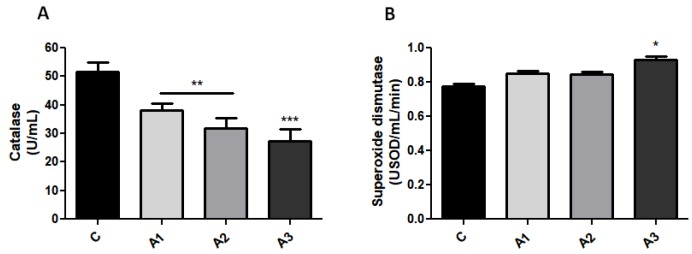
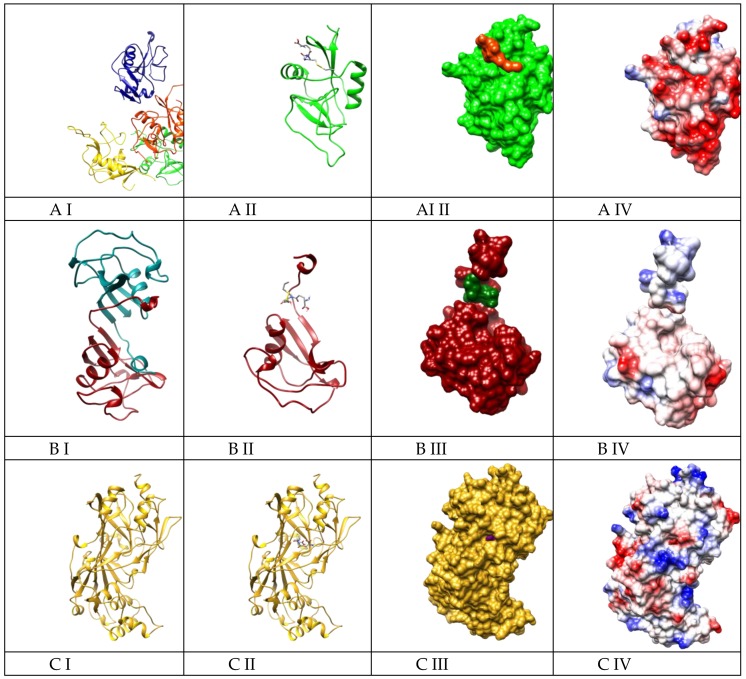
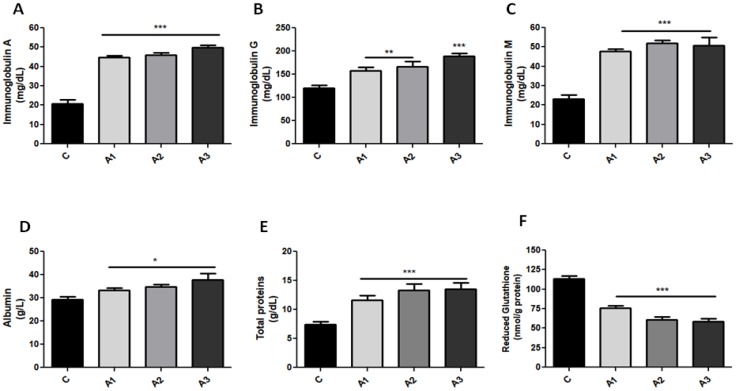
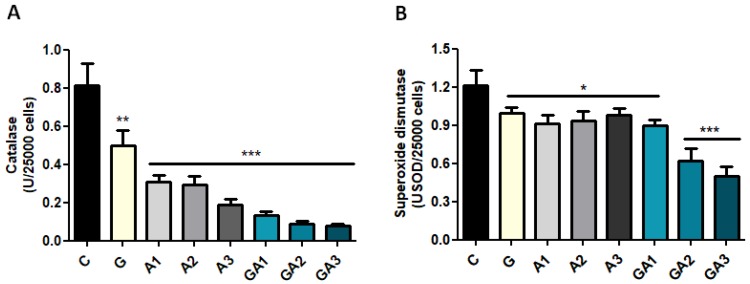
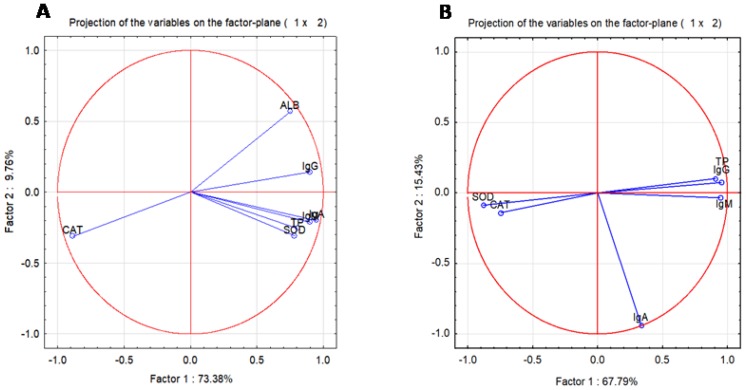
The allicin pleiotropic effects, which include anti-inflammatory, anti-oxidant, anti-tumoral, and antibacterial actions, were well demonstrated and correlated with various molecular pathways. The immunostimulatory mechanism of allicin has not been elucidated; however, there is a possible cytokine stimulation from immunoglobulin release caused by allicin. In this study, when Wistar female rats and CD19+ lymphocytes were treated with three different doses of allicin, immunoglobulins, glutathione, and oxidative stress markers were assayed. Molecular docking was performed between S-allylmercaptoglutathione (GSSA)-a circulating form of allicin in in vivo systems formed by the allicin interaction with glutathione (GSH)-and scavenger receptors class A and B from macrophages, as well as CD19+ B lymphocytes. Our data demonstrated a humoral immunostimulatory effect of allicin in rats and direct stimulation of B lymphocytes by S-allyl-mercapto-glutathione, both correlated with decreased catalase (CAT) activity. The molecular docking revealed that S-allyl-mercapto-glutathione interacting with Colec12, MARCO (class A), and SCARB1 (class B) scavenger receptors in in vitro tests demonstrates a direct stimulation of immunoglobulin secretion by GSSA in CD19+ B lymphocytes. These data collectively indicate that GSSA stimulates immunoglobulin secretion by binding on scavenger receptors class B type 1 (SCARB1) from CD19+ B lymphocytes.
大蒜素的多效作用,包括抗炎、抗氧化、抗肿瘤和抗菌作用,已得到充分证明,并与各种分子途径相关。大蒜素的免疫刺激机制尚未阐明;然而,可能存在由大蒜素引起的免疫球蛋白释放引起的细胞因子刺激。在这项研究中,当 Wistar 雌性大鼠和 CD19+淋巴细胞用三种不同剂量的大蒜素处理时,测定了免疫球蛋白、谷胱甘肽和氧化应激标志物。对 S-烯丙基巯基谷胱甘肽(GSSA)-体内系统中大蒜素与谷胱甘肽(GSH)相互作用形成的大蒜素的循环形式-与巨噬细胞的清道夫受体 A 型和 B 型以及 CD19+B 淋巴细胞进行了分子对接。我们的数据表明大蒜素在大鼠中具有体液免疫刺激作用,并且 S-烯丙基-巯基-谷胱甘肽直接刺激 B 淋巴细胞,这与过氧化氢酶(CAT)活性降低有关。分子对接表明,在体外试验中,S-烯丙基-巯基-谷胱甘肽与 Colec12、MARCO(A 型)和 SCARB1(B 型)清道夫受体相互作用,表明 GSSA 直接刺激 CD19+B 淋巴细胞中免疫球蛋白的分泌。这些数据共同表明,GSSA 通过与 CD19+B 淋巴细胞上的清道夫受体 B 型 1(SCARB1)结合来刺激免疫球蛋白的分泌。