Department of Cardiothoracic Surgery, Xiangya Hospital, Central South University, Changsha, Hunan, 410008, People's Republic of China.
Department of Clinical Pharmacology, Xiangya Hospital, Central South University, Changsha, 410008, People's Republic of China.
BMC Cardiovasc Disord. 2019 Jul 25;19(1):176. doi: 10.1186/s12872-019-1161-9.
It is well known that the genotype of ALDH2 is associated with coronary artery disease (CAD), and in-stent restenosis (ISR) is a primary complication of percutaneous coronary intervention (PCI), a primary recommended treatment for CAD. The aim of this study was to identify the relationship between aldehyde dehydrogenase 2 (ALDH2) genotype and in-stent restenosis (ISR).
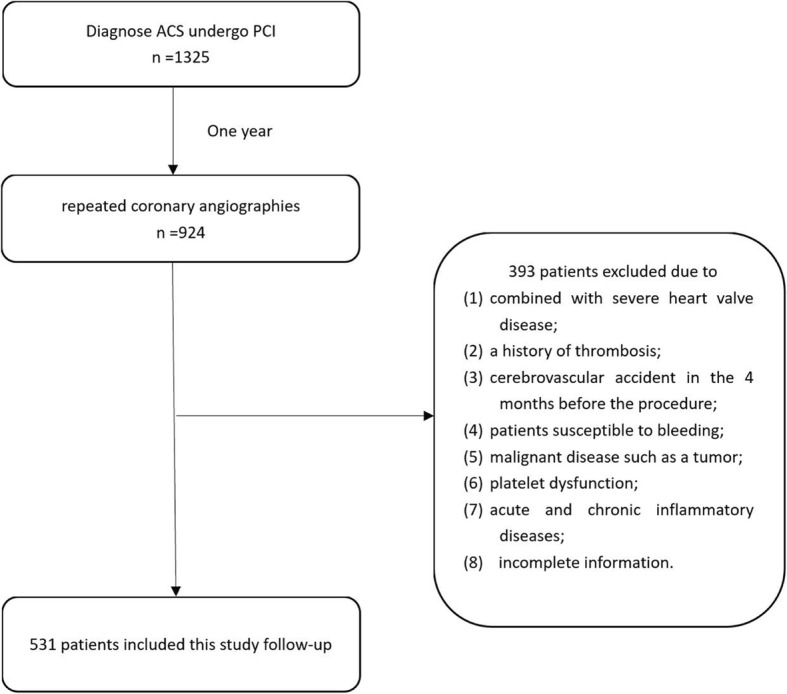
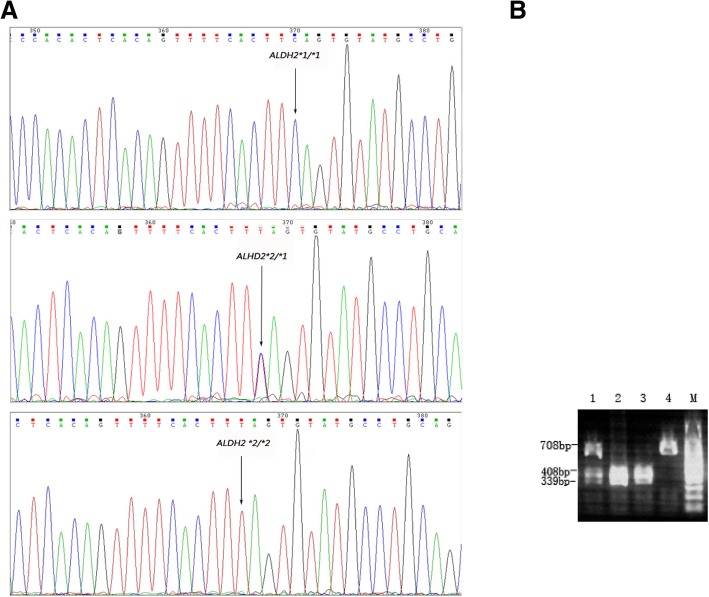
This study recruited 531 patients who were undergoing PCI at two Chinese hospitals from 2015 to 2017 and 183 were diagnosed with ISR after PCI during the one-year follow-up period. We used polymerase chain restriction fragment length polymorphism (PCR-RFLP) and sequencing to determine ALDH2 polymorphisms.
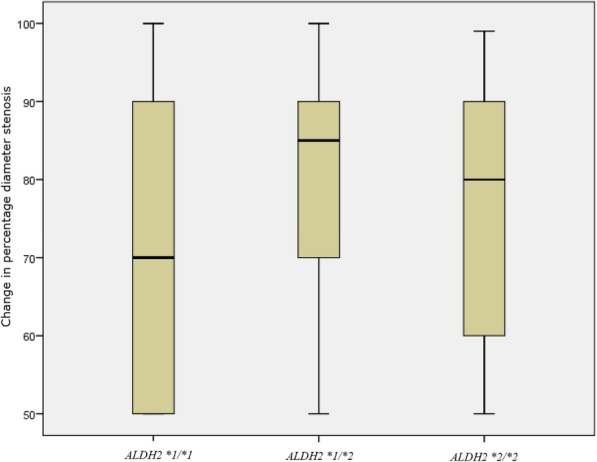
Among all 531 patients (mean age = 59.4 ± 9.8; 65.9% male), 68.7% carried the wild-type genotype, 28.4% were heterozygous for the mutation, and 2.8% were homozygous for the mutation. Multiple logistical regression analyses indicated no correlation between ALDH2 genotype and the occurrence of restenosis after PCI (OR = 1.448, 95% CI: 0.965-2.168, p = 0.073), though a significant association was observed for patients with diabetes (OR = 4.053, 95% CI: 1.668-10.449, p = 0.003).
In this study, we found that carrying an ALDH2*2 allele had no notable relationship with ISR one year after PCI but that it did have a significant association with complications in diabetic patients. Further studies with larger sample sizes will be necessary to reveal a consensus.
众所周知,ALDH2 基因型与冠状动脉疾病(CAD)有关,支架内再狭窄(ISR)是经皮冠状动脉介入治疗(PCI)的主要并发症,也是 CAD 的主要推荐治疗方法。本研究旨在确定醛脱氢酶 2(ALDH2)基因型与支架内再狭窄(ISR)之间的关系。
本研究纳入了 2015 年至 2017 年在中国的两家医院接受 PCI 的 531 例患者,在 1 年的随访期间,有 183 例患者在 PCI 后被诊断为 ISR。我们使用聚合酶链限制片段长度多态性(PCR-RFLP)和测序来确定 ALDH2 多态性。
在所有 531 例患者(平均年龄=59.4±9.8;65.9%为男性)中,68.7%为野生型基因型,28.4%为突变杂合子,2.8%为突变纯合子。多因素逻辑回归分析表明,ALDH2 基因型与 PCI 后再狭窄的发生无关(OR=1.448,95%CI:0.965-2.168,p=0.073),但在糖尿病患者中观察到显著相关性(OR=4.053,95%CI:1.668-10.449,p=0.003)。
在本研究中,我们发现携带 ALDH2*2 等位基因与 PCI 后 1 年的 ISR 无明显关系,但与糖尿病患者的并发症有显著关系。需要更大样本量的进一步研究来揭示共识。