Département de Médecine Translationnelle et Neurogénétique, Institut de Génétique et de Biologie Moléculaire et Cellulaire, Institut National de la Santé et de la Recherche Médicale Unité 964, Centre National de la Recherche Scientifique Unité Mixte de Recherche 7104, Université de Strasbourg, Illkirch, France.
Neuroscience Paris Seine, Institut de Biologie Paris Seine, Centre National de la Recherche Scientifique Unité Mixte de Recherche 8246/Institut National de la Santé et de la Recherche Médicale Unité 1130/Université Pierre et Marie Currie, Paris F-75005, France.
eNeuro. 2019 Aug 8;6(4). doi: 10.1523/ENEURO.0035-19.2019. Print 2019 Jul/Aug.
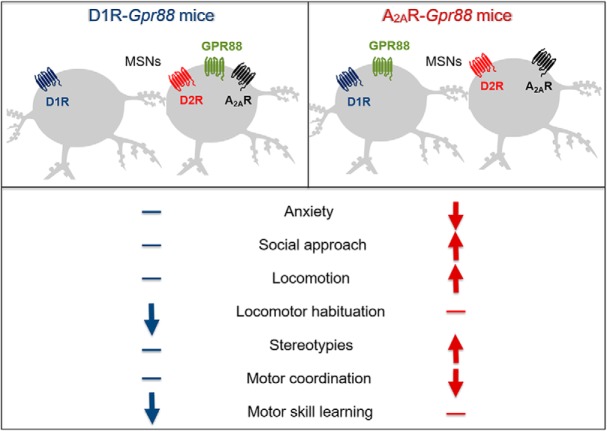
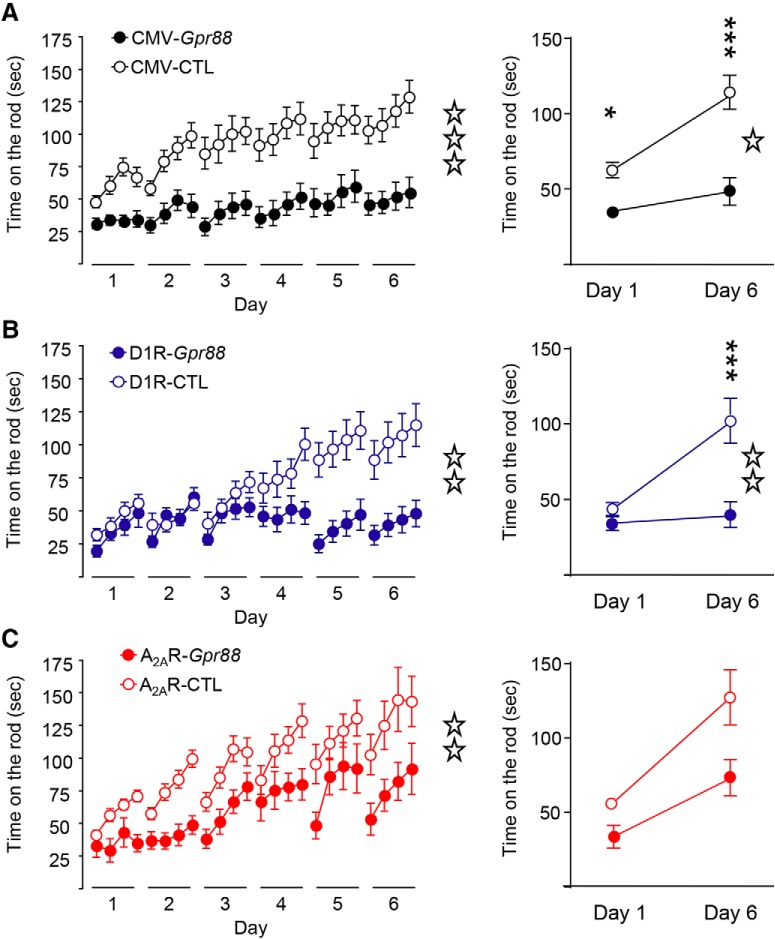
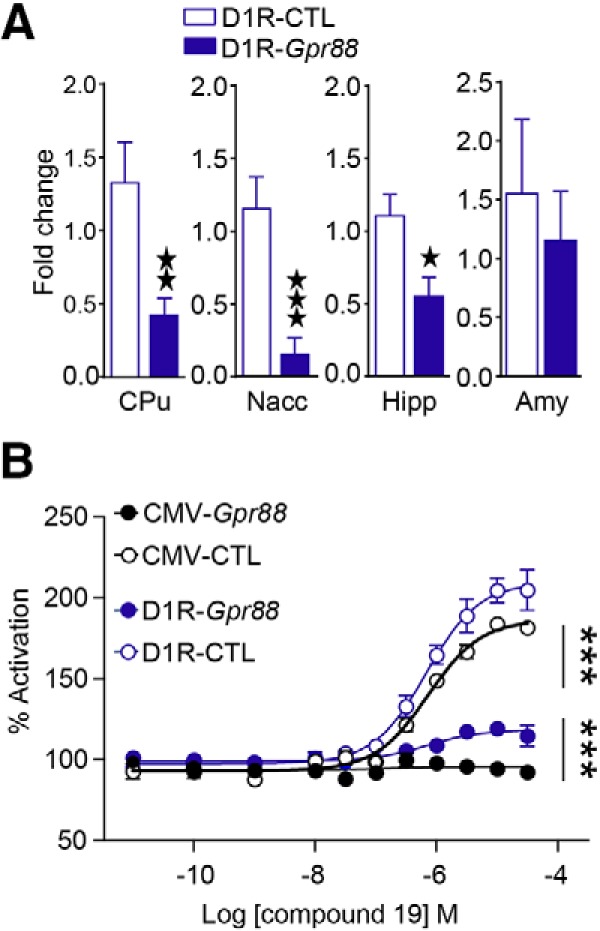
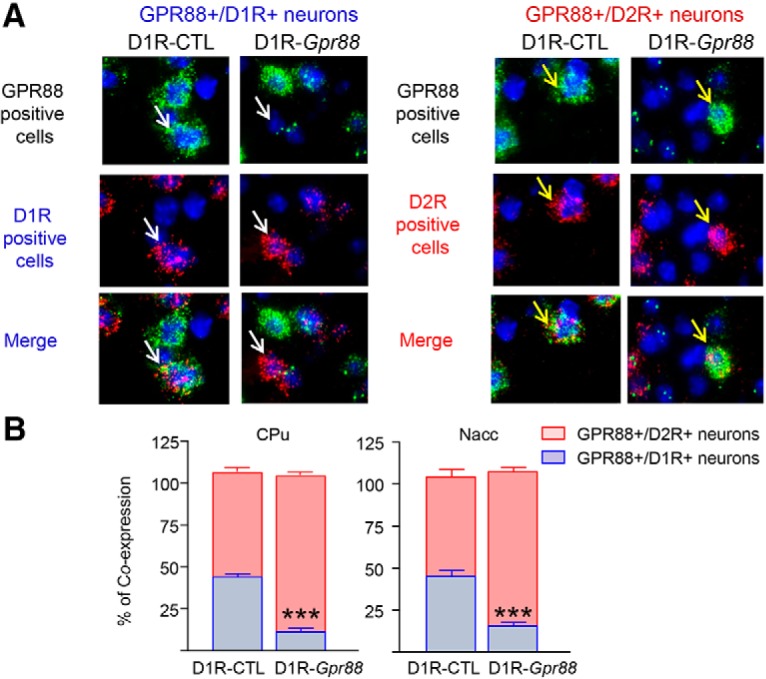
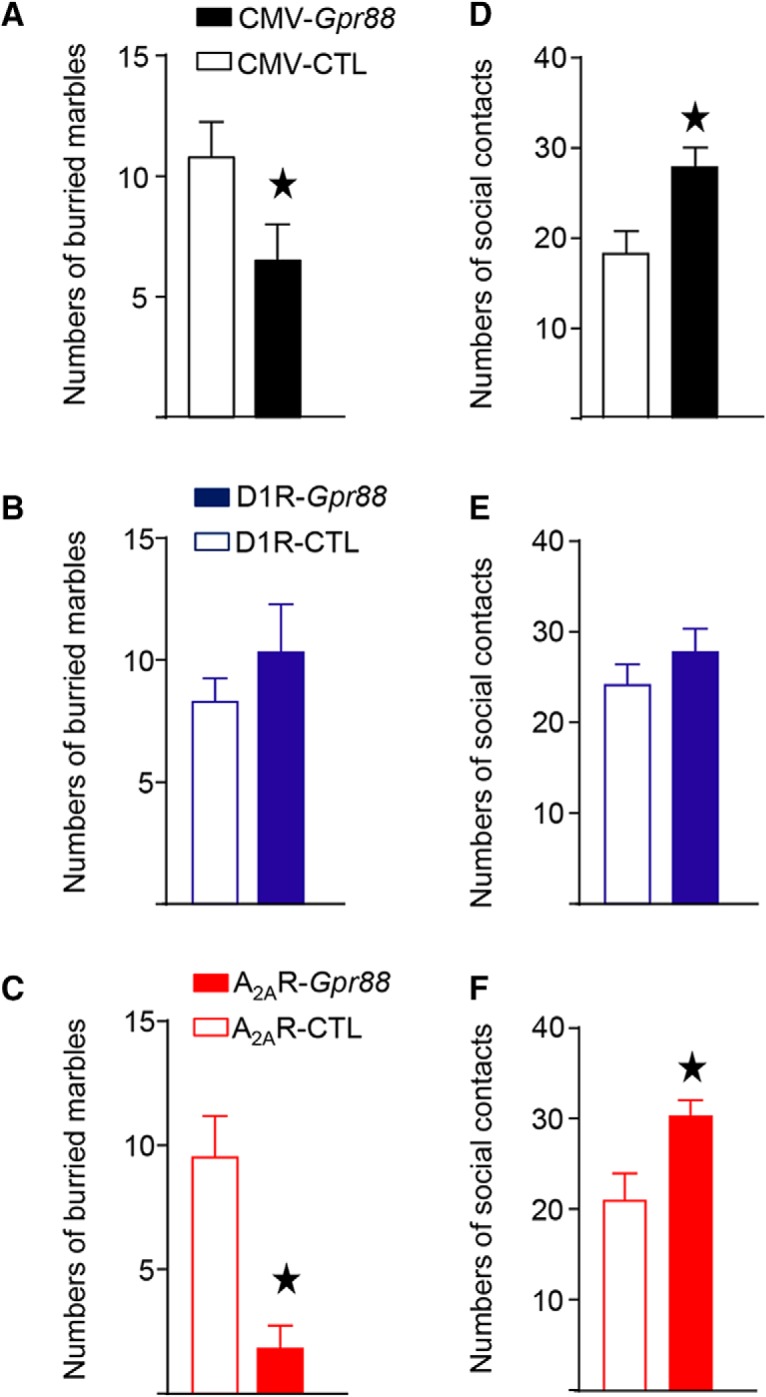
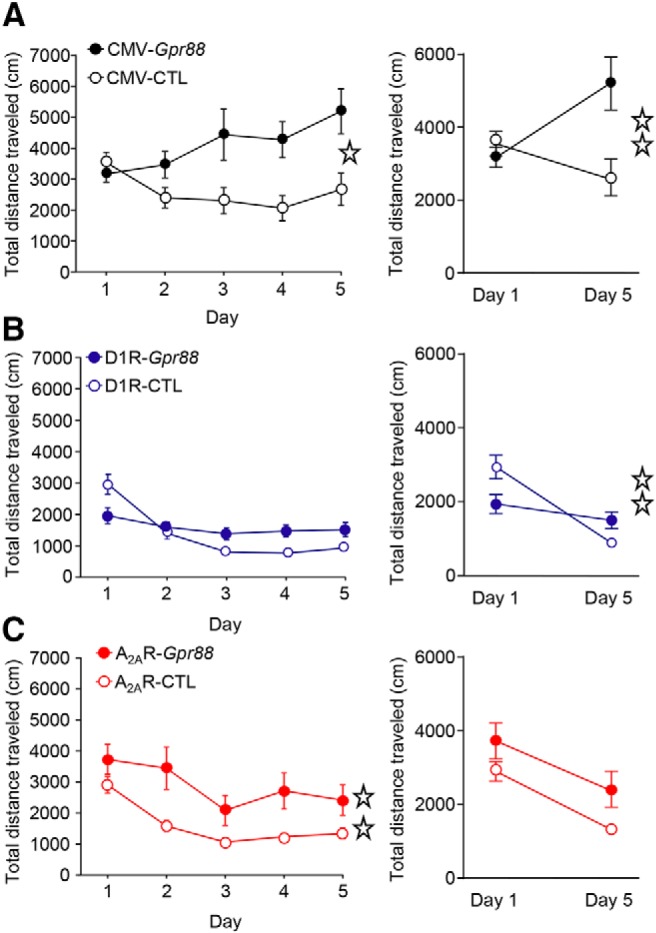
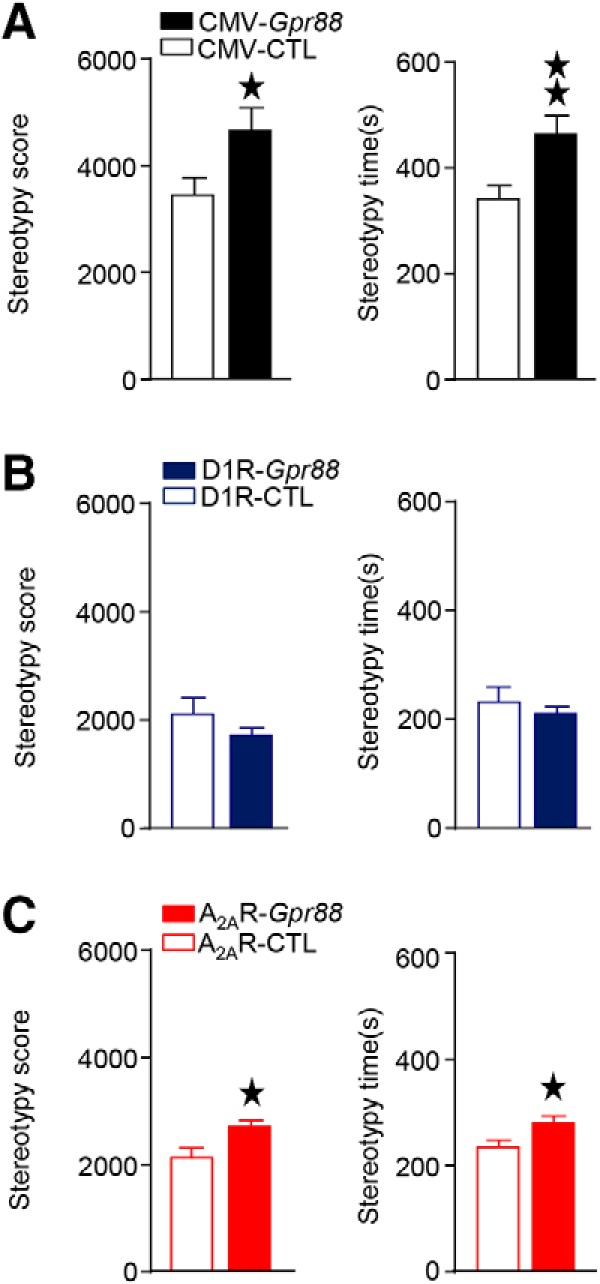
The orphan receptor GPR88 is highly expressed in D1 receptor (D1R)- and D2R-medium spiny neurons (MSNs) and has been associated to striatum-dependent functions in rodents. The total deletion of in mice was shown to decrease anxiety-like behaviors, increase stereotypies and locomotion, and impair motor coordination and motor learning. Knowing the opposing role of D1R- and D2R-MSNs, we here investigated the respective roles of GPR88 in the two MSN subtypes for these behaviors. To do so, we compared effects of a conditional gene knock-out (KO) in D1R-MSNs (D1R- mice) or D2R-MSNs (AR- mice) with effects of the total KO (CMV- mice). Overall, most phenotypes of CMV- mice were recapitulated in AR- mice, including reduced marble burying, increased social interactions, increased locomotor activity and stereotypies in the open field, and reduced motor coordination in the rotarod. Exceptions were the reduced habituation to the open field and reduced motor skill learning, which were observed in CMV- and D1R- mice, but not in AR- mice. D1R- mice otherwise showed no other phenotype in this study. Our data together show that GPR88 modulates the function of both D1R- and D2R-MSNs, and that GPR88 activity in these two neuron populations has very different and dissociable impacts on behavior. We suggest that GPR88 in D2R-MSNs shapes defensive and social behavior and contributes in maintaining the inhibition of basal ganglia outputs to control locomotion, stereotypies and motor coordination, while GPR88 in D1R-MSNs promotes novelty habituation and motor learning.
孤儿受体 GPR88 在 D1 受体 (D1R) 和 D2 受体-中等棘神经元 (MSNs) 中高度表达,并与啮齿动物纹状体依赖功能相关。在小鼠中完全缺失 被证明可以减少焦虑样行为,增加刻板行为和运动,损害运动协调和运动学习。鉴于 D1R-和 D2R-MSNs 的相反作用,我们在这里研究了 GPR88 在这两种 MSN 亚型中的各自作用。为此,我们比较了条件性 基因敲除 (KO) 在 D1R-MSNs(D1R- 小鼠)或 D2R-MSNs(AR- 小鼠)中的作用与总 KO(CMV- 小鼠)的作用。总的来说,CMV- 小鼠的大多数表型在 AR- 小鼠中都得到了再现,包括减少大理石掩埋、增加社交互动、增加开放场中的运动活动和刻板行为,以及减少旋转棒上的运动协调。例外的是对开放场的适应减少和运动技能学习减少,这在 CMV-和 D1R- 小鼠中观察到,但在 AR- 小鼠中没有观察到。在这项研究中,D1R- 小鼠除此之外没有表现出其他表型。我们的数据共同表明,GPR88 调节 D1R-和 D2R-MSNs 的功能,并且 GPR88 在这两种神经元群体中的活性对行为有非常不同和可分离的影响。我们建议,D2R-MSNs 中的 GPR88 塑造防御和社交行为,并有助于抑制基底神经节输出以控制运动、刻板行为和运动协调,而 D1R-MSNs 中的 GPR88 促进新奇性适应和运动学习。