Thoracic Oncology Service, Division of Solid Tumor Oncology, Department of Medicine, Memorial Sloan Kettering Cancer Center, New York, NY, USA.
Diagnostic Molecular Pathology Service, Department of Pathology, Memorial Sloan Kettering Cancer Center, New York, NY, USA.
Acta Oncol. 2019 Nov;58(11):1634-1639. doi: 10.1080/0284186X.2019.1645354. Epub 2019 Jul 26.
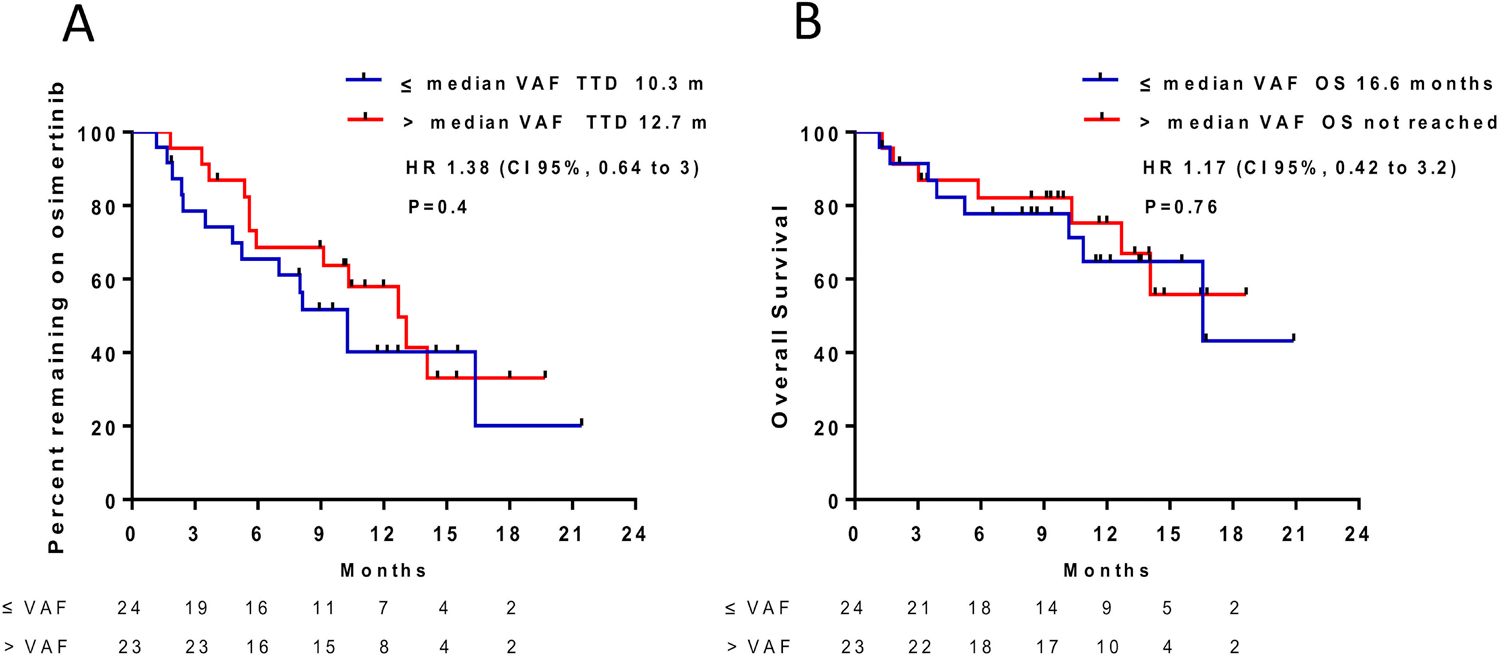
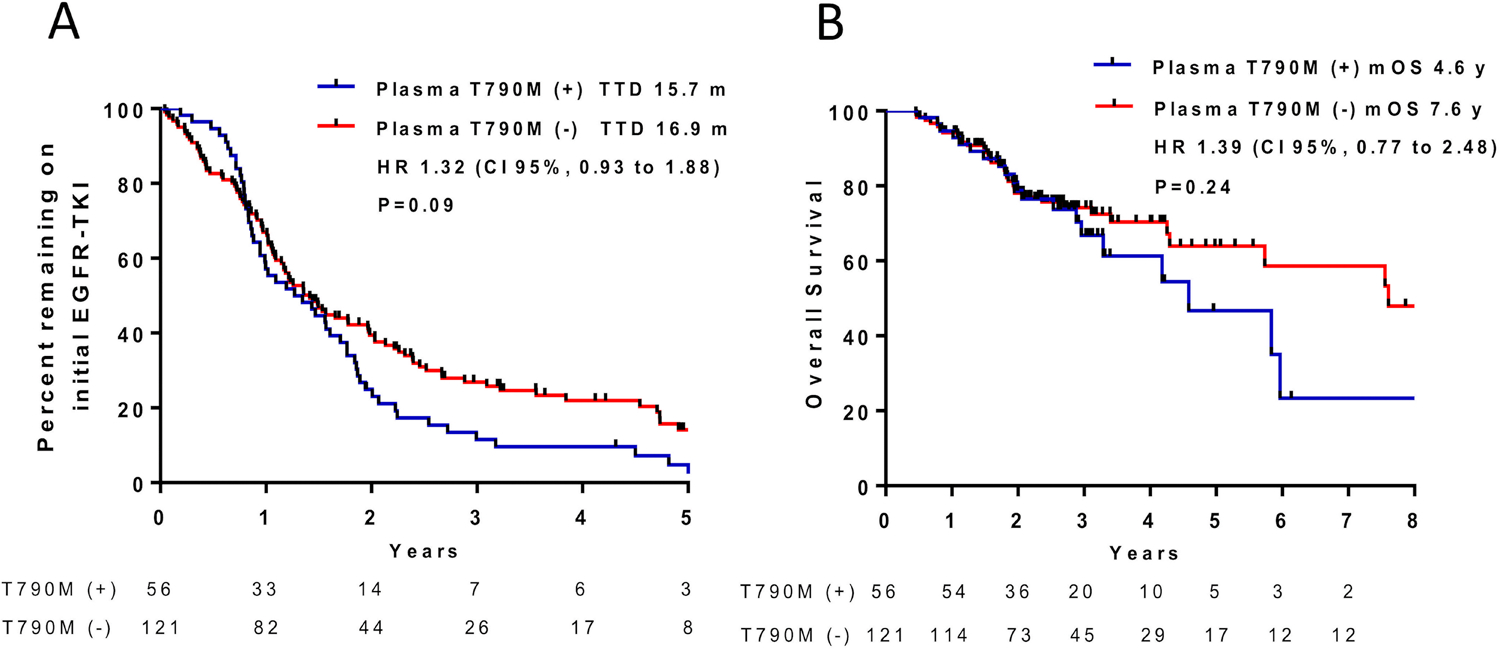
Plasma cfDNA evaluation at acquired resistance to targeted therapies in lung cancer is routine, however, reports of extended clinical application and pitfalls in laboratory practice are still limited. In this study we describe our experience with cfDNA testing using T790M as a prototype. Patients with metastatic -mutant NSCLC patients who underwent plasma T790M testing at acquired resistance to EGFR tyrosine kinase inhibitors (EGFR-TKI) from January 2016 through August 2017 were identified. Molecular laboratory records were reviewed to assess performance of testing by digital PCR, concordance between plasma and tissue testing, turnaround time (TAT), plasma T790M variant allele frequency (VAF), and its correlations with metastatic sites and clinical outcomes. 177 patients underwent T790M cfDNA testing during this period. Plasma T790M was positive in 32% of patients. The median TAT was shorter for plasma T790M compared to tissue PCR (9 vs. 15 days, < .0001), and led to osimertinib use in 84% of positive patients. In 52 patients with plasma and tissue T790M evaluation, the concordance was 77%. Plasma T790M VAF did not correlate with time to osimertinib discontinuation ( = .4). Plasma T790M status correlated with a higher number of metastatic sites (4 vs. 3, < .001) and bone metastases ( = .0002). Plasma T790M testing had shorter TAT compared to tissue testing, however, it was longer than anticipated. Test sensitivity is higher in patients with osseous metastases and with higher metastatic burden suggesting a more limited role for early detection. T790M VAF was not associated with clinical outcomes.
在肺癌获得性靶向治疗耐药时,血浆 cfDNA 评估已常规进行,但有关其临床应用扩展和实验室实践中的问题的报告仍有限。在这项研究中,我们以 T790M 为例描述了我们使用 cfDNA 检测的经验。从 2016 年 1 月至 2017 年 8 月,对接受过 EGFR 酪氨酸激酶抑制剂(EGFR-TKI)治疗后发生转移性 -突变型 NSCLC 获得性耐药并进行血浆 T790M 检测的患者进行了鉴定。回顾分子实验室记录,以评估数字 PCR 检测的性能、血浆与组织检测的一致性、周转时间(TAT)、血浆 T790M 变体等位基因频率(VAF)及其与转移部位和临床结果的相关性。在此期间,有 177 名患者接受了 T790M cfDNA 检测。32%的患者血浆 T790M 阳性。与组织 PCR 相比,血浆 T790M 的中位 TAT 更短(9 天 vs. 15 天,<0.0001),并且在 84%的阳性患者中导致使用奥希替尼。在 52 名具有血浆和组织 T790M 评估的患者中,一致性为 77%。血浆 T790M VAF 与奥希替尼停药时间无关(=0.4)。血浆 T790M 状态与更多的转移部位(4 个 vs. 3 个,<0.001)和骨转移(=0.0002)相关。与组织检测相比,血浆 T790M 检测的 TAT 更短,但比预期的要长。在有骨转移和更高转移负荷的患者中,检测灵敏度更高,这表明早期检测的作用更有限。T790M VAF 与临床结果无关。