Department of Civil Engineering, Aalto University, Espoo, Finland.
Finnish Institute of Occupational Health, Helsinki, Finland.
Indoor Air. 2019 Nov;29(6):903-912. doi: 10.1111/ina.12591. Epub 2019 Sep 11.
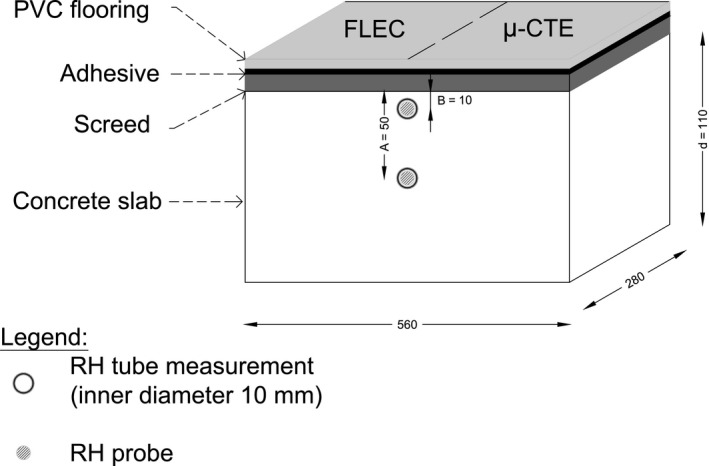
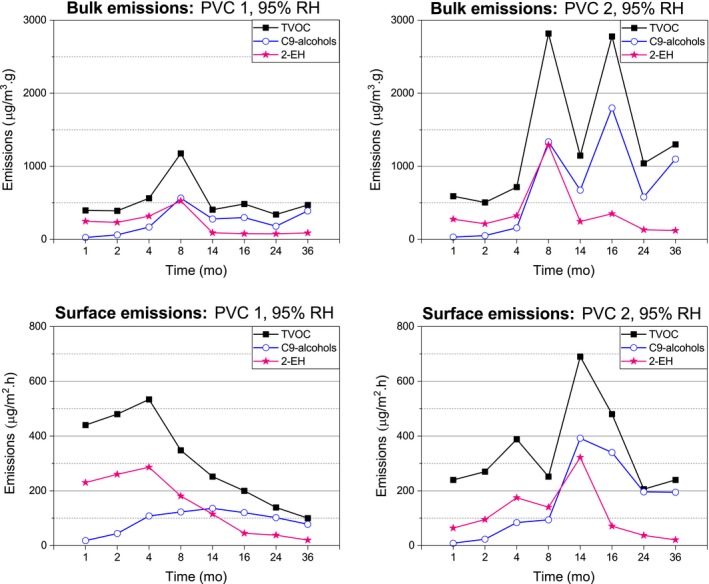
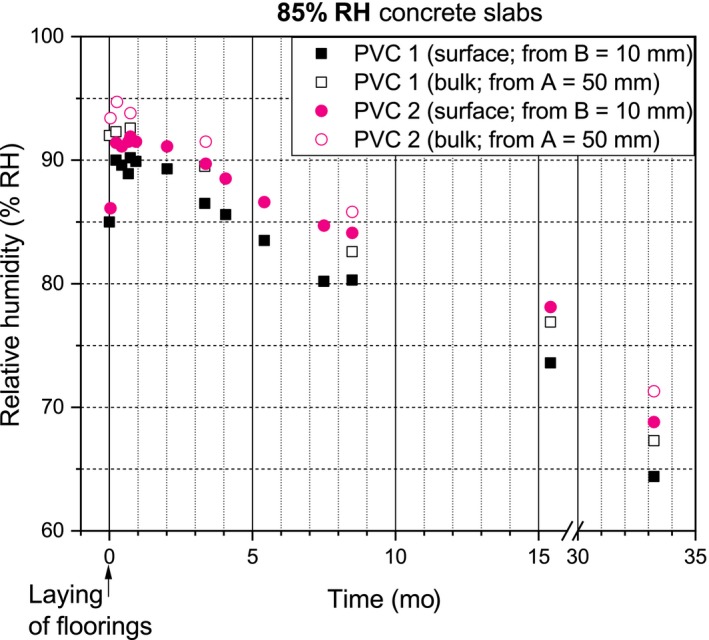
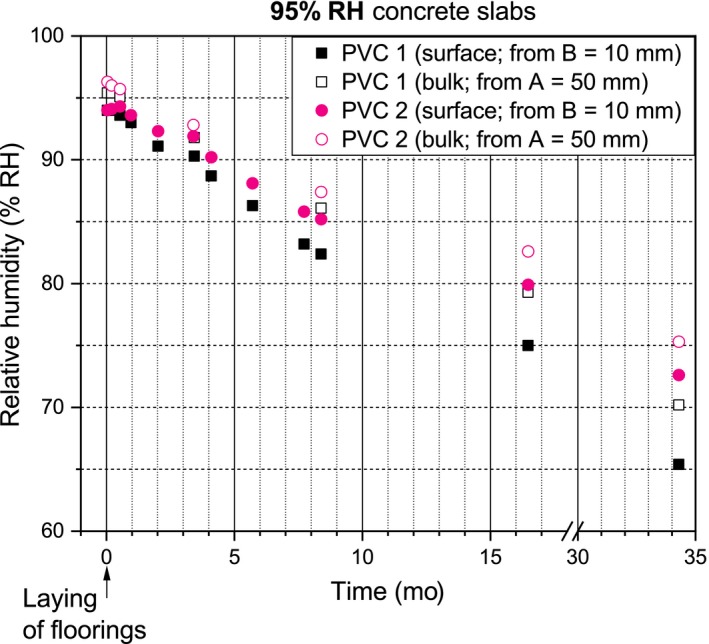
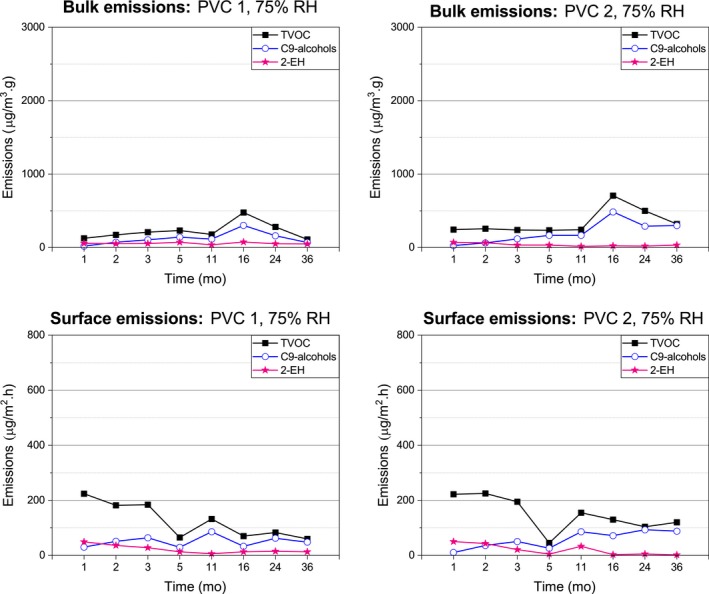
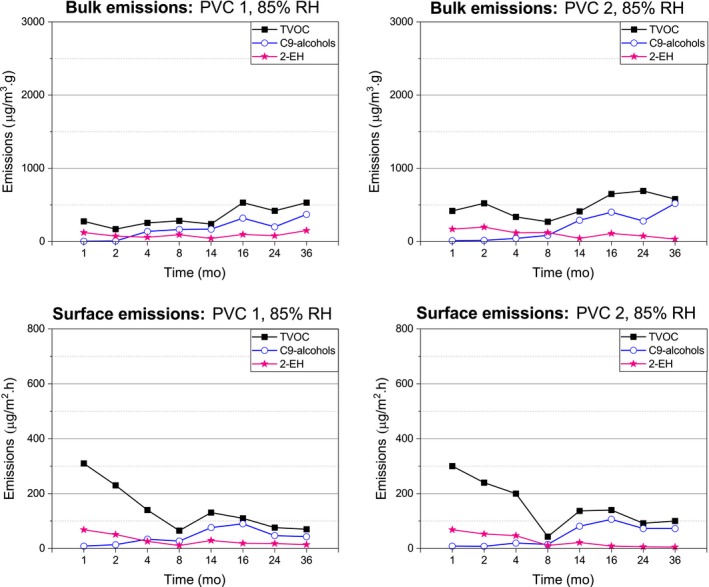
Degrading 2-ethylhexyl-containing PVC floorings (eg DEHP-PVC floorings) and adhesives emit 2-ethylhexanol (2-EH) in the indoor air. The danger of flooring degradation comes from exposing occupants to harmful phthalates plasticisers (eg DEHP), but not from 2-EH as such. Since the EU banned the use of phthalates in sensitive applications, the market is shifting to use DEHP-free and alternative types of plasticisers in PVC products. However, data on emissions from DEHP-free PVC floorings are scarce. This study aimed at assessing the surface and bulk emissions of two DEHP-free PVC floorings over three years. The floorings were glued on the screed layer of concrete casts at 75%, 85%, and 95% RH. The volatile organic compounds (VOCs) were actively sampled using FLEC (surface emissions) and micro-chamber/thermal extractor (µ-CTE, bulk emissions) onto Tenax TA adsorbents and analyzed with TD-GC-MS. 2-EH, C9-alcohols, and total volatile organic compound (TVOC) emissions are reported. Emissions at 75% and 85% RH were similar. As expected, the highest emissions occurred at 95% RH. 2-EH emissions originated from the adhesive. Because the two DEHP-free floorings tested emitted C9-alcohols at all tested RH, it makes the detection of flooring degradation harder, particularly if the adhesive used does not emit 2-EH.
降解含 2-乙基己基的 PVC 地板(如 DEHP-PVC 地板)和粘合剂会在室内空气中释放 2-乙基己醇(2-EH)。地板降解的危险来自于将有害物质邻苯二甲酸酯增塑剂(如 DEHP)暴露给使用者,而不是 2-EH 本身。由于欧盟禁止在敏感应用中使用邻苯二甲酸酯,市场正在转向在 PVC 产品中使用无 DEHP 和替代类型的增塑剂。然而,关于无 DEHP PVC 地板排放的数据却很少。本研究旨在评估两种无 DEHP PVC 地板在三年内的表面和整体排放情况。地板以 75%、85%和 95%的相对湿度粘在混凝土铸模的底层上。使用 FLEC(表面排放)和微室/热提取器(µ-CTE,整体排放)主动采集挥发性有机化合物(VOCs),并使用 TD-GC-MS 对 Tenax TA 吸附剂进行分析。报告了 2-EH、C9 醇和总挥发性有机化合物(TVOC)的排放情况。75%和 85%相对湿度下的排放情况相似。如预期的那样,95%相对湿度下的排放最高。2-EH 的排放来自于粘合剂。由于所测试的两种无 DEHP 地板在所有测试的相对湿度下都排放 C9 醇,这使得地板降解的检测更加困难,特别是如果使用的粘合剂不释放 2-EH。