Saleh Reem, Taha Rowaida Z, Sasidharan Nair Varun, Alajez Nehad M, Elkord Eyad
Cancer Research Center, Qatar Biomedical Research Institute (QBRI), Hamad Bin Khalifa University (HBKU), Qatar Foundation (QF), Doha P.O. Box 34110, Qatar.
Cancers (Basel). 2019 Jul 25;11(8):1050. doi: 10.3390/cancers11081050.
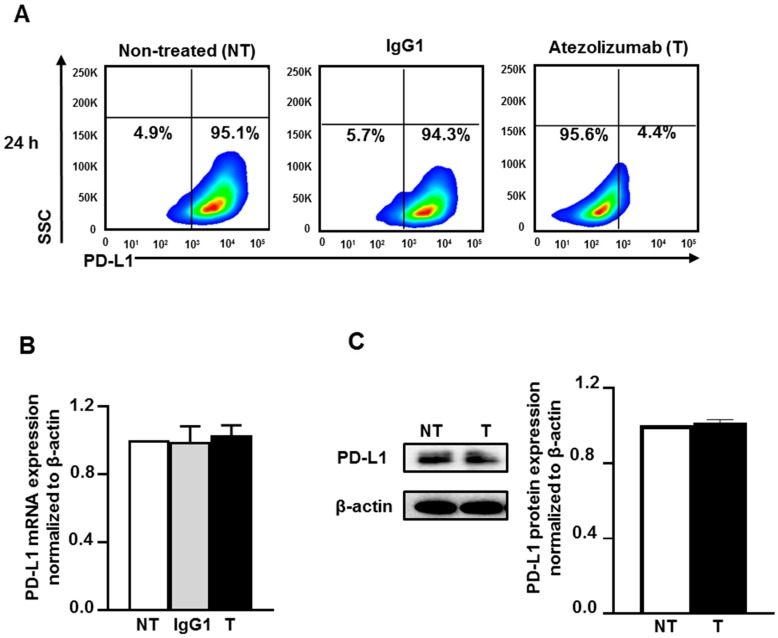
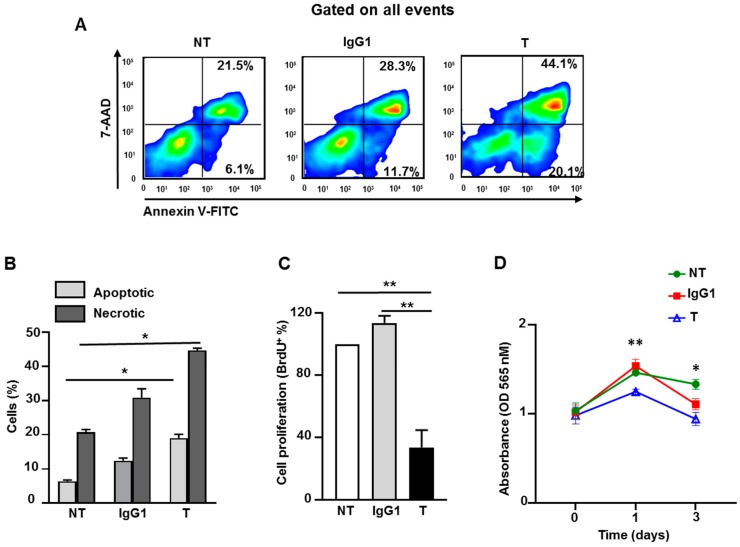
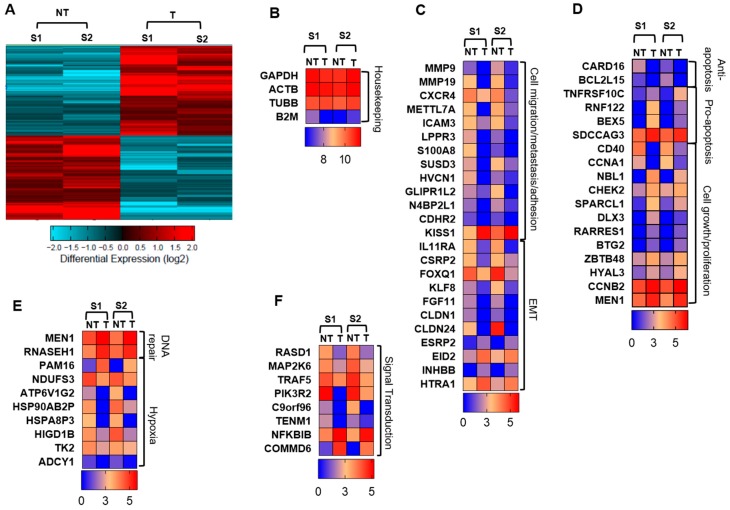
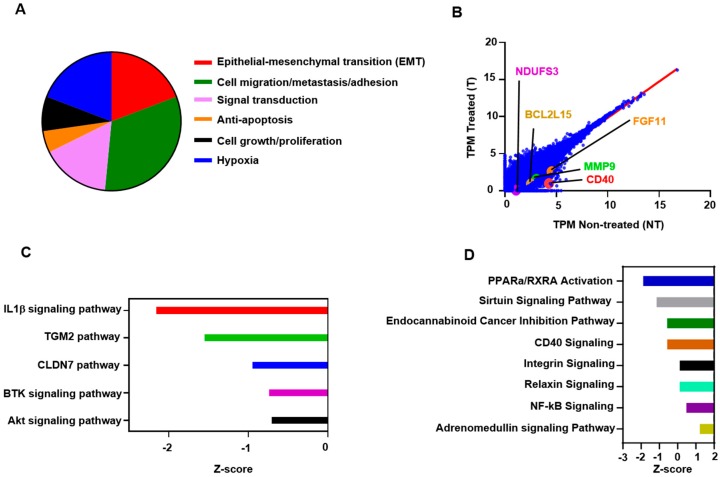
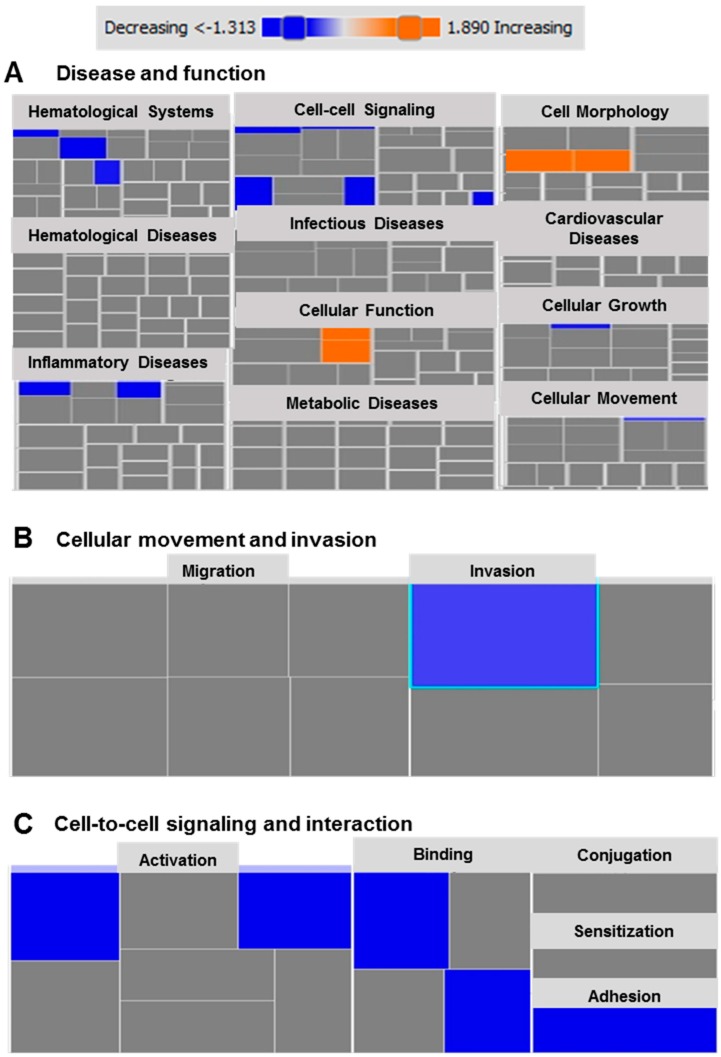
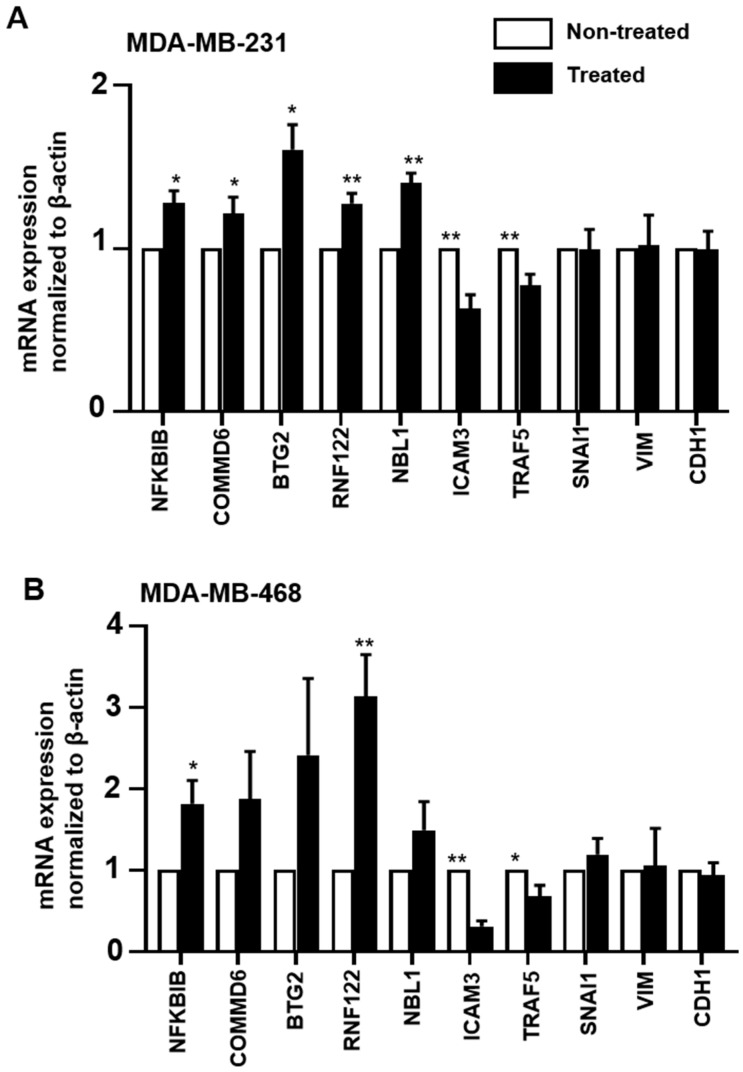
Triple negative breast cancer (TNBC) is the most aggressive type of breast cancer, which shows resistance to common breast cancer therapies, as it lacks the expression of the most common breast cancer targets. Therefore, TNBC treatment remains a challenge. Targeting programmed cell death-ligand 1 (PD-L1) by monoclonal antibodies (mAbs), for example, atezolizumab, has revolutionized the treatment for various cancer types. However, the therapeutic efficacy of targeting PD-L1 in TNBC is currently under investigation. In this study, we investigated the molecular mechanisms by which the human TNBC cell line MDA-MB-231, expressing PD-L1, responds to atezolizumab, using RNA-Seq. Transcriptome analysis revealed 388 upregulated and 362 downregulated genes in response to atezolizumab treatment. The expression of selected genes, from RNA-Seq data, was subsequently validated using RT-qPCR in the MDA-MB-231 and MDA-MB-468 TNBC cells following atezolizumab treatment. Bioinformatics analysis revealed that atezolizumab downregulates genes promoting cell migration/invasion and metastasis, epithelial-mesenchymal transition (EMT), cell growth/proliferation/survival, and hypoxia. On the contrary, genes associated with apoptosis and DNA repair were upregulated in response to atezolizumab treatment. Gene set enrichment analyses revealed that a significant number of these genes are related to the NF-kB, PI3K/Akt/mTOR, MAPK, and CD40 signaling pathways. Using functional assays, we confirmed that atezolizumab increases MDA-MB-231 cell apoptosis/necrosis, and reduces their proliferation and viability. Collectively, our findings provide novel insights into the molecular mechanisms/signaling pathways by which atezolizumab exerts inhibitory effects on TNBC, thereby inhibiting EMT/metastasis, tumor growth/survival, and the induction of hypoxia.
三阴性乳腺癌(TNBC)是最具侵袭性的乳腺癌类型,由于缺乏最常见的乳腺癌靶点表达,它对常见的乳腺癌治疗方法具有抗性。因此,TNBC的治疗仍然是一项挑战。例如,通过单克隆抗体(mAb)靶向程序性细胞死亡配体1(PD-L1),如阿特珠单抗,已经彻底改变了各种癌症类型的治疗方法。然而,目前正在研究在TNBC中靶向PD-L1的治疗效果。在本研究中,我们使用RNA测序研究了表达PD-L1的人TNBC细胞系MDA-MB-231对阿特珠单抗作出反应的分子机制。转录组分析显示,在阿特珠单抗治疗后,有388个基因上调,362个基因下调。随后,在阿特珠单抗治疗后的MDA-MB-231和MDA-MB-468 TNBC细胞中,使用逆转录定量聚合酶链反应(RT-qPCR)对RNA测序数据中选定基因的表达进行了验证。生物信息学分析表明,阿特珠单抗下调促进细胞迁移/侵袭和转移、上皮-间质转化(EMT)、细胞生长/增殖/存活以及缺氧的基因。相反,与细胞凋亡和DNA修复相关的基因在阿特珠单抗治疗后上调。基因集富集分析显示,这些基因中有相当数量与核因子κB(NF-κB)、磷脂酰肌醇-3-激酶/蛋白激酶B/哺乳动物雷帕霉素靶蛋白(PI3K/Akt/mTOR)、丝裂原活化蛋白激酶(MAPK)和CD40信号通路相关。通过功能试验,我们证实阿特珠单抗增加MDA-MB-231细胞凋亡/坏死,并降低其增殖和活力。总的来说,我们的研究结果为阿特珠单抗对TNBC发挥抑制作用的分子机制/信号通路提供了新的见解,从而抑制EMT/转移、肿瘤生长/存活以及缺氧诱导。