National Malaria and Leishmania Control Programme, Ministry of Public Health, Kabul, Afghanistan.
World Health Organization, Kabul, Afghanistan.
Malar J. 2019 Jul 26;18(1):249. doi: 10.1186/s12936-019-2884-x.
Insecticide resistance of Anopheles stephensi, the main malaria vector in eastern Afghanistan, has been reported previously. This study describes the biochemical and molecular mechanisms of resistance to facilitate effective vector control and insecticide resistance management.
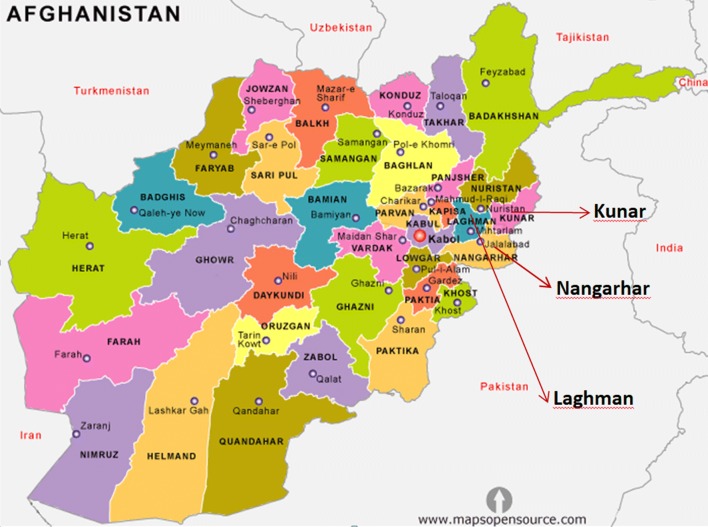
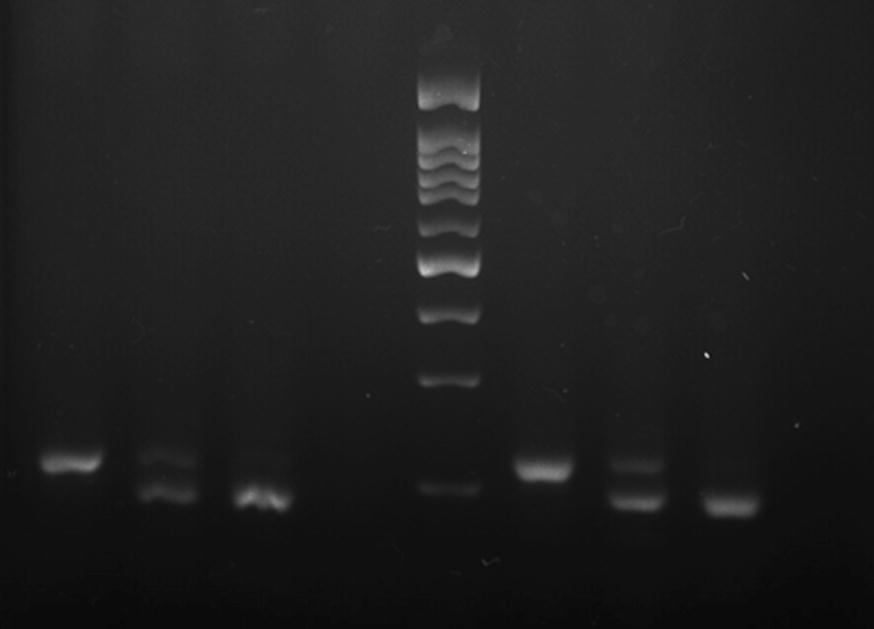
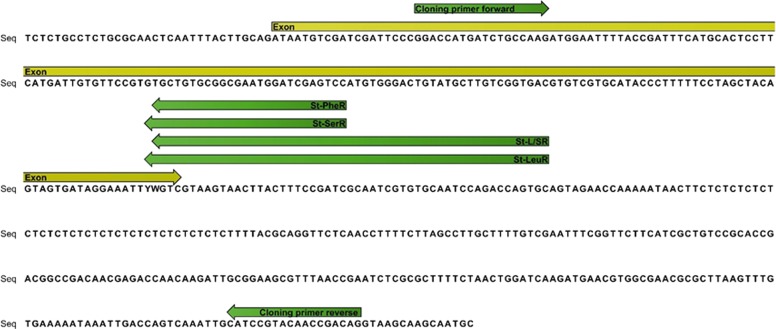
Mosquito larvae were collected from the provinces of Kunar, Laghman and Nangarhar from 2014 to 2017. The susceptibility of the reared 3-4 days old adults was tested with deltamethrin 0.05%, bendiocarb 0.1%, malathion 5%, permethrin 0.75% and DDT 4%. Cytochrome P450 content and general esterase, glutathione S-transferase (GST) and acetylcholinesterase (AChE) activities were measured in the three field populations and the results were compared with those of the laboratory susceptible An. stephensi Beech strain. Two separate allele-specific PCR assays were used to identify L1014, L1014F and L1014S mutations in the voltage gated sodium channel gene of An. stephensi. Probit analysis, ANOVA and Hardy-Weinberg equilibrium were used to analyse bioassay, biochemical assay and gene frequency data respectively.
The population of An. stephensi from Kunar was susceptible to bendiocarb, apart from this, all populations were resistant to all the other insecticides tested. The differences between all values for cytochrome P450s, general esterases, GSTs and AChE inhibition rates in the Kunar, Laghman and Nangarhar populations were statistically significant when compared to the Beech strain, excluding GST activities between Kunar and Beech due to the high standard deviation in Kunar. The three different sodium channel alleles [L1014 (wild type), L1014F (kdr west) and L1014S (kdr east)] were all segregated in the Afghan populations. The frequencies of kdr east mutation were 22.9%, 32.7% and 35% in Kunar, Laghman and Nangarhar populations respectively. Kdr west was at the lowest frequency of 4.44%.
Resistance to different groups of insecticides in the field populations of An. stephensi from Kunar, Laghman and Nangarhar Provinces of Afghanistan is caused by a range of metabolic and site insensitivity mechanisms, including esterases, cytochrome P450s and GSTs combined with AChE and sodium channel target site insensitivity. The intensity and frequency of these mechanisms are increasing in these populations, calling for urgent reorientation of vector control programmes and implementation of insecticide resistance management strategies.
先前已有报道称,阿富汗东部主要疟疾传播媒介致倦库蚊对杀虫剂已产生抗药性。本研究旨在描述其抗药性的生化和分子机制,以促进有效控制病媒和管理杀虫剂抗性。
从 2014 年至 2017 年,从库纳尔、拉格曼和楠格哈尔三省采集蚊幼虫。对饲养 3-4 天的成虫进行测试,使用的杀虫剂有氯菊酯 0.05%、丁醚脲 0.1%、马拉硫磷 5%、氯氰菊酯 0.75%和滴滴涕 4%。在三个野外种群中测量细胞色素 P450 含量和一般酯酶、谷胱甘肽 S-转移酶 (GST) 和乙酰胆碱酯酶 (AChE) 活性,并将结果与实验室敏感的致倦库蚊比伊株进行比较。使用两个单独的等位基因特异性 PCR 检测来鉴定致倦库蚊电压门控钠通道基因中的 L1014、L1014F 和 L1014S 突变。采用概率单位分析、方差分析和哈迪-温伯格平衡分别分析生物测定、生化测定和基因频率数据。
库纳尔种群对丁醚脲敏感,除此之外,所有种群对测试的所有其他杀虫剂均具有抗药性。库纳尔、拉格曼和楠格哈尔种群的细胞色素 P450s、一般酯酶、GSTs 和 AChE 抑制率的所有值与比伊株相比均存在统计学差异,除了由于库纳尔种群的标准偏差较大而导致 GST 活性在库纳尔和比伊株之间没有差异。阿富汗种群中存在三种不同的钠通道等位基因 [L1014(野生型)、L1014F(kdr west)和 L1014S(kdr east)]。库纳尔、拉格曼和楠格哈尔种群的 kdr east 突变频率分别为 22.9%、32.7%和 35%。kdr west 的频率最低,为 4.44%。
库纳尔、拉格曼和楠格哈尔三省致倦库蚊野外种群对不同杀虫剂组的抗药性是由一系列代谢和靶标不敏感机制引起的,包括酯酶、细胞色素 P450s 和 GSTs 与 AChE 和钠通道靶标不敏感相结合。这些机制的强度和频率在这些种群中正在增加,这就要求紧急调整病媒控制方案,并实施杀虫剂抗性管理策略。