School of Molecular and Cellular Biology, Faculty of Biological Sciences and Astbury Centre for Structural and Molecular Biology, University of Leeds, Leeds, LS2 9JT, UK.
University of Ghent, Corneel Heymanslaan 10, B-9000 Ghent, Belgium.
Nucleic Acids Res. 2019 Sep 26;47(17):9296-9312. doi: 10.1093/nar/gkz640.
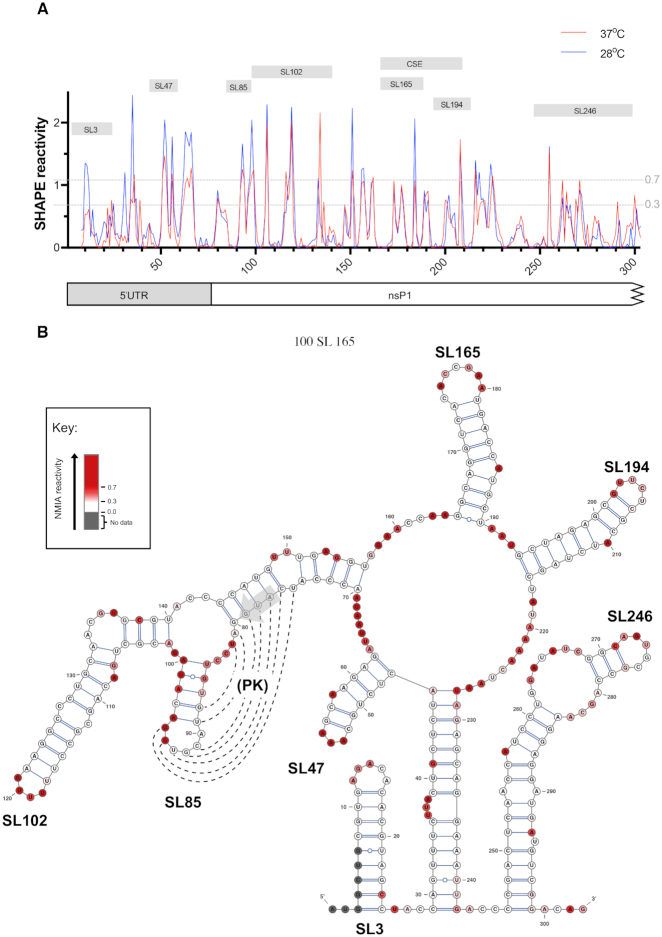
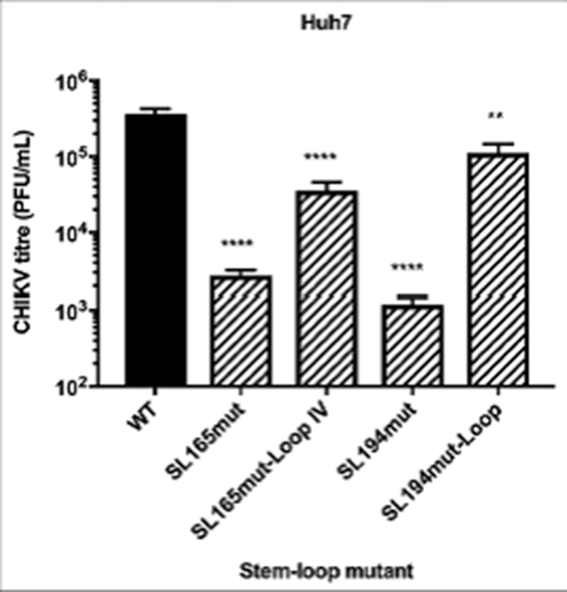
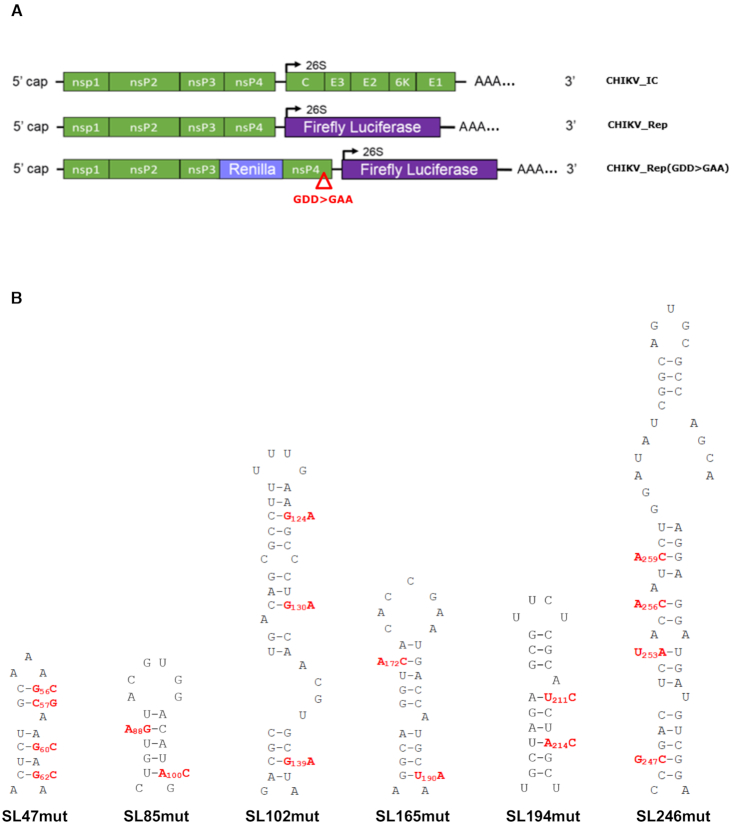
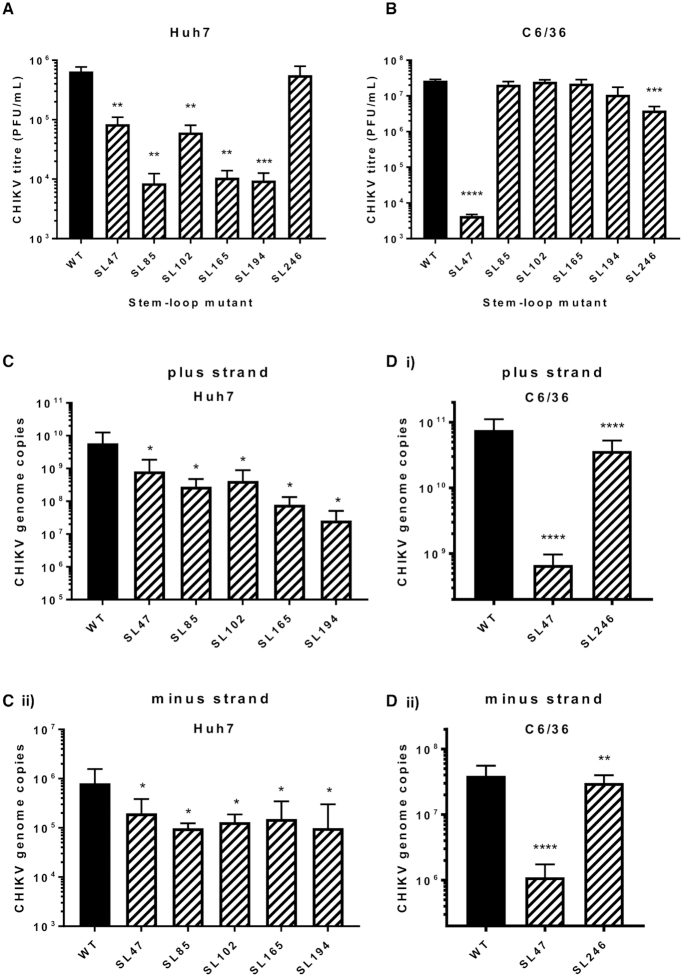
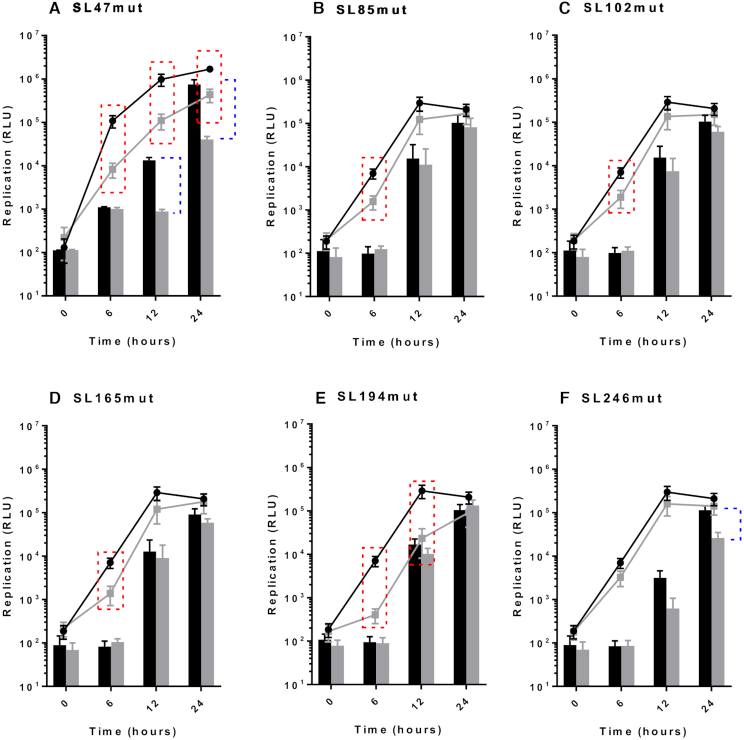
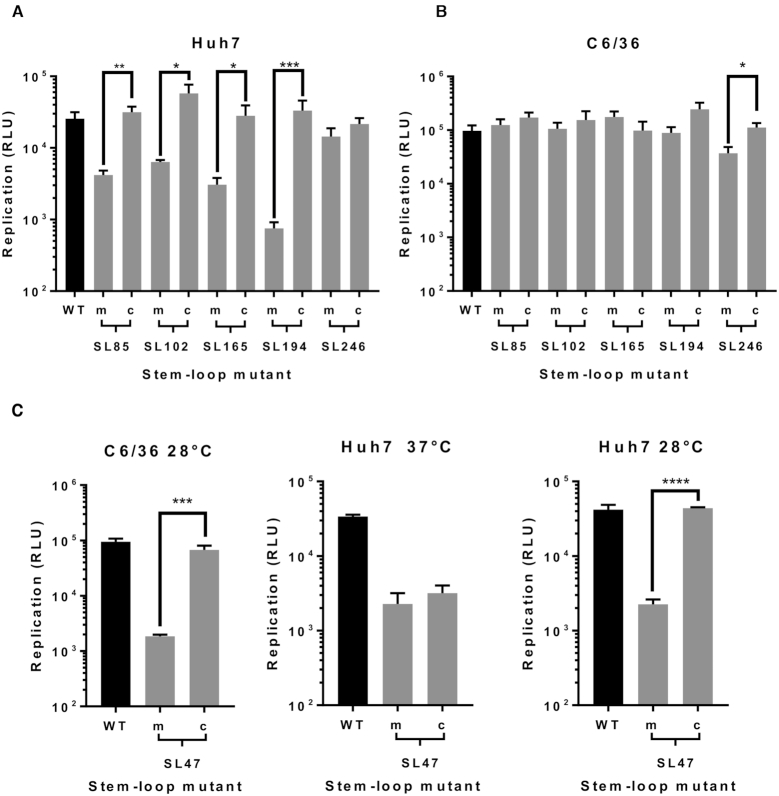
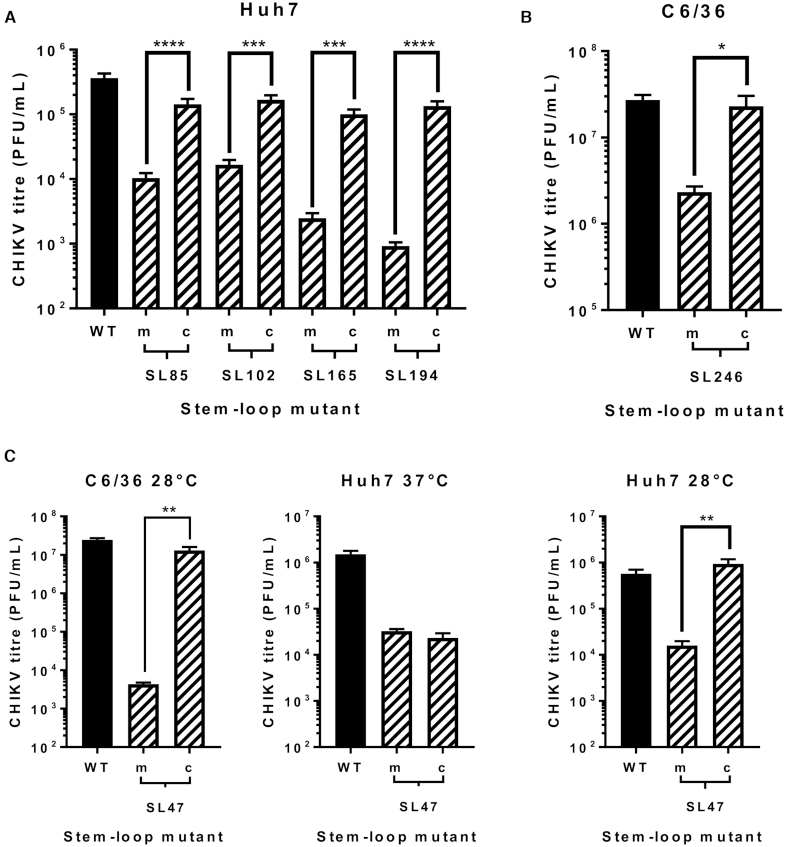
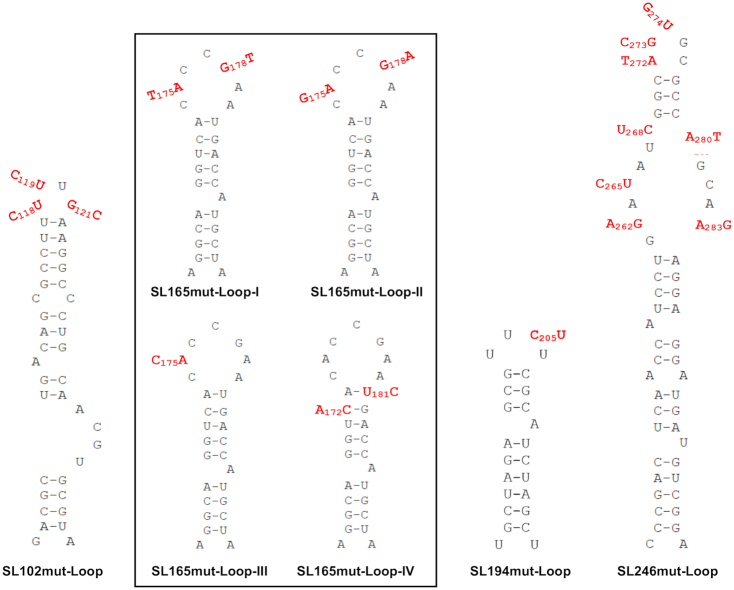
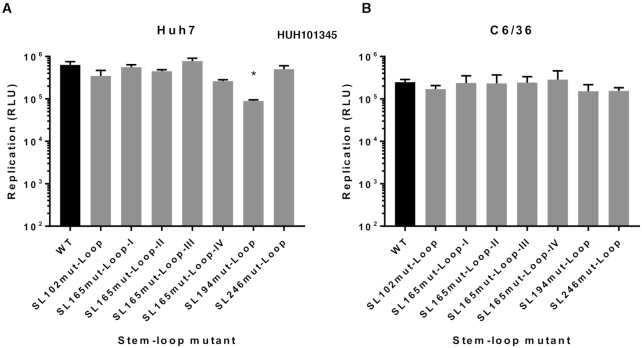
Chikungunya virus (CHIKV) is a re-emerging, pathogenic Alphavirus transmitted to humans by Aedes spp. mosquitoes. We have mapped the RNA structure of the 5' region of the CHIKV genome using selective 2'-hydroxyl acylation analysed by primer extension (SHAPE) to investigate intramolecular base-pairing at single-nucleotide resolution. Taking a structure-led reverse genetic approach, in both infectious virus and sub-genomic replicon systems, we identified six RNA replication elements essential to efficient CHIKV genome replication - including novel elements, either not previously analysed in other alphaviruses or specific to CHIKV. Importantly, through a reverse genetic approach we demonstrate that the replication elements function within the positive-strand genomic copy of the virus genome, in predominantly structure-dependent mechanisms during efficient replication of the CHIKV genome. Comparative analysis in human and mosquito-derived cell lines reveal that a novel element within the 5'UTR is essential for efficient replication in both host systems, while those in the adjacent nsP1 encoding region are specific to either vertebrate or invertebrate host cells. In addition to furthering our knowledge of fundamental aspects of the molecular virology of this important human pathogen, we foresee that results from this study will be important for rational design of a genetically stable attenuated vaccine.
基孔肯雅热病毒(CHIKV)是一种重新出现的致病性甲病毒,通过埃及伊蚊属的蚊子传播给人类。我们使用选择性 2'-羟基酰化分析引物延伸(SHAPE)来绘制 CHIKV 基因组 5'区域的 RNA 结构,以研究单核苷酸分辨率的分子内碱基配对。通过结构导向的反向遗传方法,在感染性病毒和亚基因组复制子系统中,我们鉴定了六个对 CHIKV 基因组复制至关重要的 RNA 复制元件 - 包括新的元件,这些元件以前在其他甲病毒中没有被分析过,或者是 CHIKV 特有的。重要的是,通过反向遗传方法,我们证明这些复制元件在病毒基因组的正链基因组拷贝内发挥作用,在 CHIKV 基因组的有效复制过程中主要依赖于结构的机制。在人源和蚊源细胞系中的比较分析表明,UTR 内的一个新元件对于两种宿主系统中的有效复制都是必需的,而在相邻的编码 nsP1 的区域内的元件则是特异性的,分别针对脊椎动物或无脊椎动物宿主细胞。除了增进我们对这种重要人类病原体分子病毒学基本方面的了解外,我们预计这项研究的结果对于合理设计遗传稳定的减毒疫苗将是重要的。