Sheu-Gruttadauria Jessica, Pawlica Paulina, Klum Shannon M, Wang Sonia, Yario Therese A, Schirle Oakdale Nicole T, Steitz Joan A, MacRae Ian J
Department of Integrative Structural and Computational Biology, The Scripps Research Institute, La Jolla, CA 92037, USA.
Department of Molecular Biophysics and Biochemistry, Howard Hughes Medical Institute, Yale University School of Medicine, New Haven, CT 06536, USA.
Mol Cell. 2019 Sep 19;75(6):1243-1255.e7. doi: 10.1016/j.molcel.2019.06.019. Epub 2019 Jul 25.
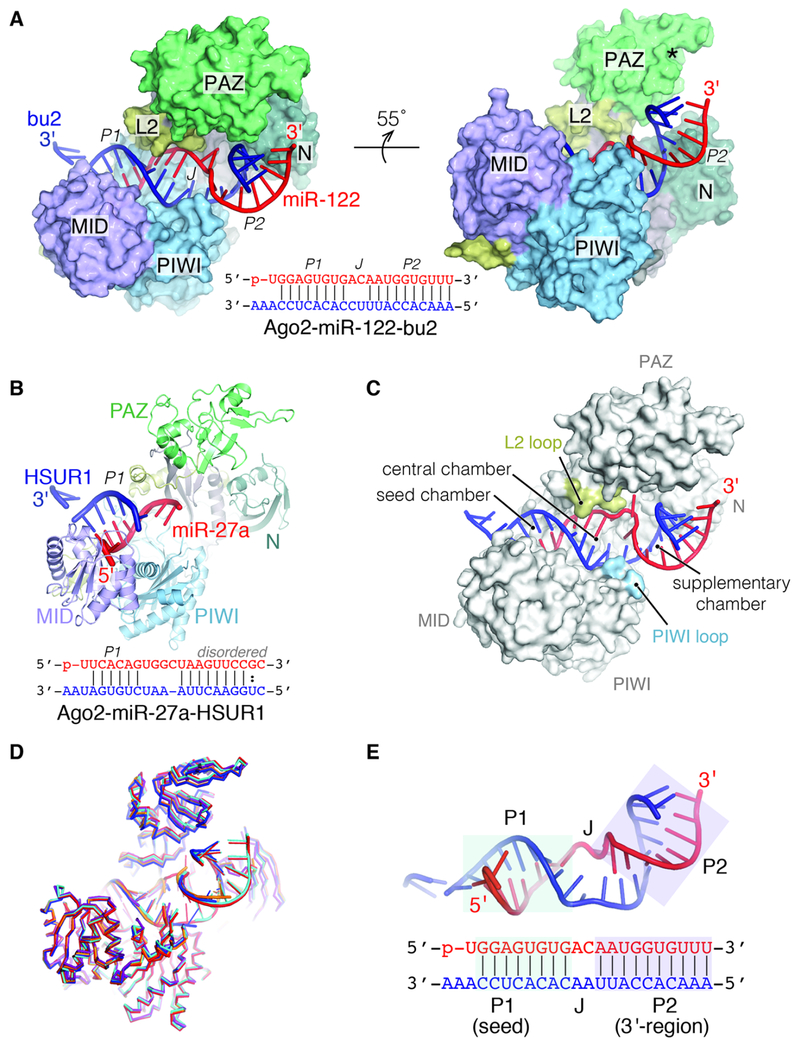
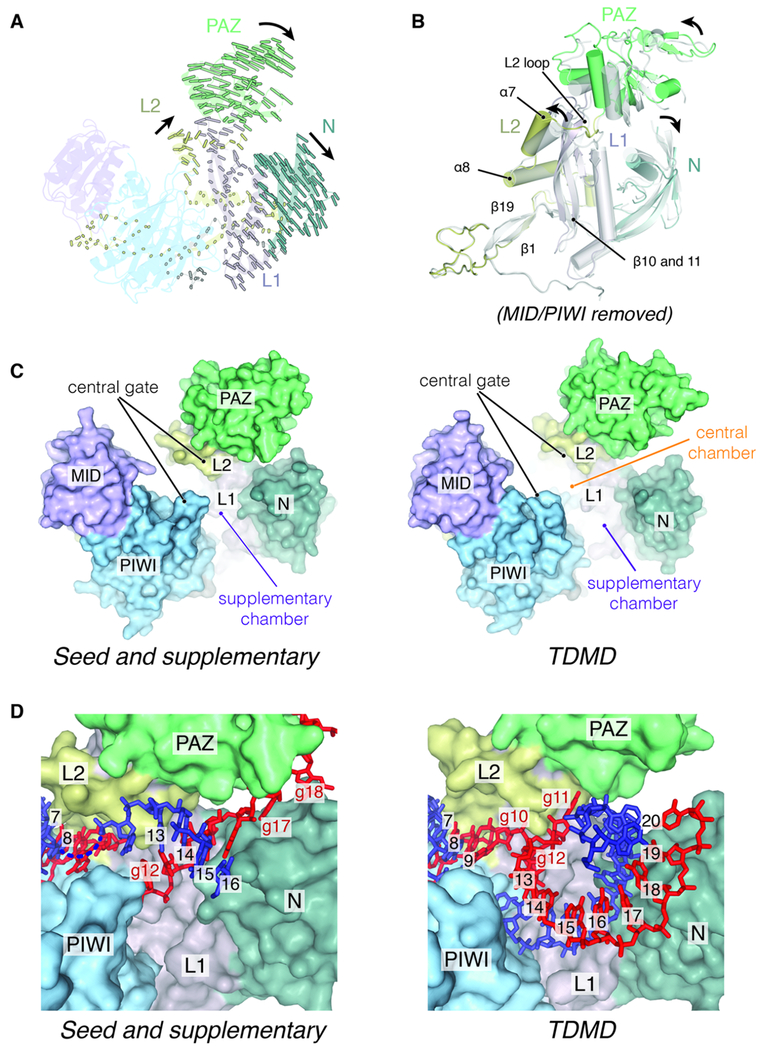
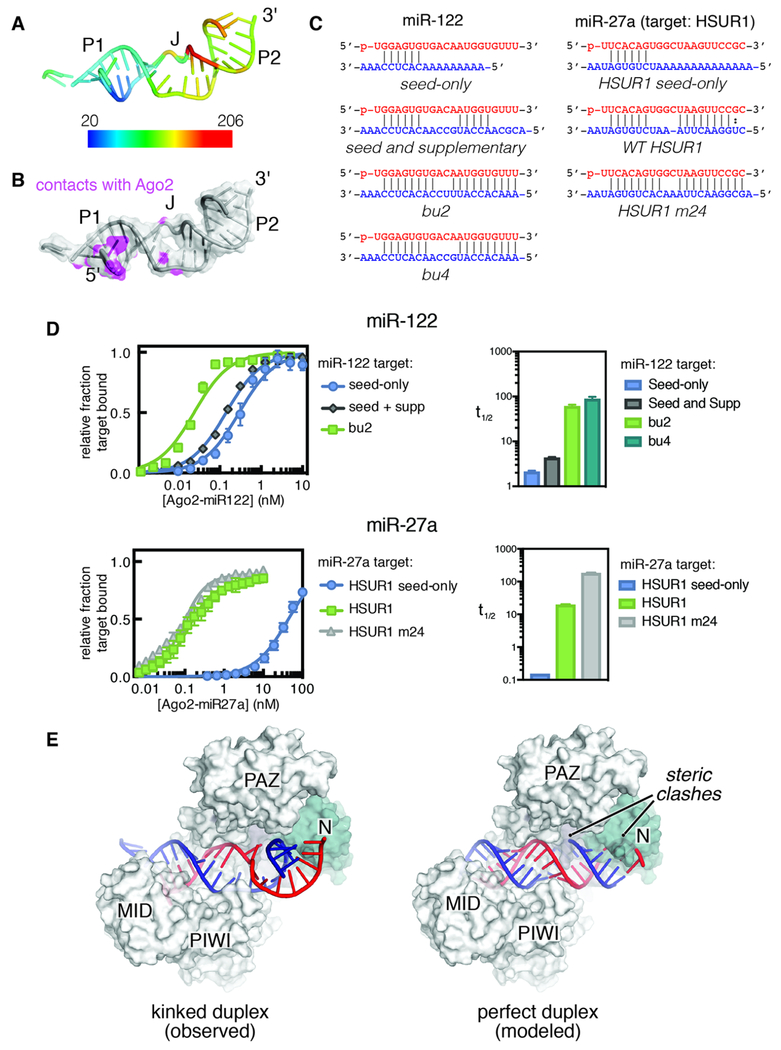
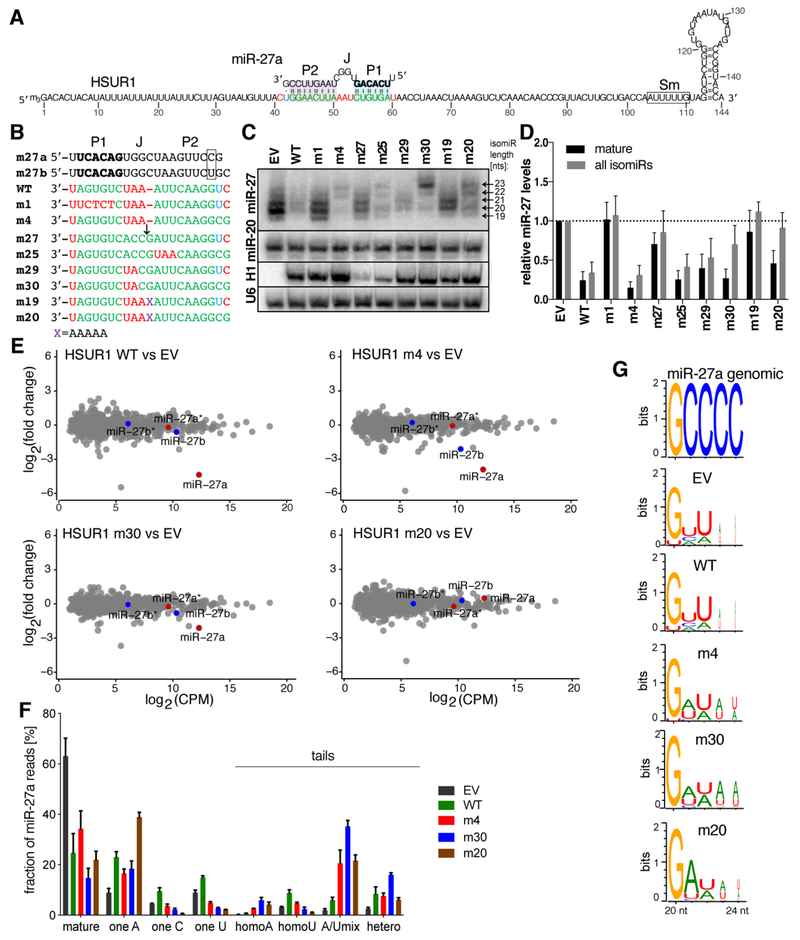
MicroRNAs (miRNAs) broadly regulate gene expression through association with Argonaute (Ago), which also protects miRNAs from degradation. However, miRNA stability is known to vary and is regulated by poorly understood mechanisms. A major emerging process, termed target-directed miRNA degradation (TDMD), employs specialized target RNAs to selectively bind to miRNAs and induce their decay. Here, we report structures of human Ago2 (hAgo2) bound to miRNAs and TDMD-inducing targets. miRNA and target form a bipartite duplex with an unpaired flexible linker. hAgo2 cannot physically accommodate the RNA, causing the duplex to bend at the linker and display the miRNA 3' end for enzymatic attack. Altering 3' end display by changing linker flexibility, changing 3' end complementarity, or mutationally inducing 3' end release impacts TDMD efficiency, leading to production of distinct 3'-miRNA isoforms in cells. Our results uncover the mechanism driving TDMD and reveal 3' end display as a key determinant regulating miRNA activity via 3' remodeling and/or degradation.
微小RNA(miRNA)通过与AGO蛋白(AGO)结合广泛调节基因表达,AGO蛋白还能保护miRNA不被降解。然而,已知miRNA的稳定性存在差异,且其受尚未完全了解的机制调控。一个主要的新出现过程,称为靶标导向的miRNA降解(TDMD),利用特殊的靶标RNA选择性地与miRNA结合并诱导其降解。在此,我们报道了与miRNA和诱导TDMD的靶标结合的人AGO2(hAGO2)的结构。miRNA和靶标形成一个具有未配对柔性接头的二分双链体。hAGO2无法物理容纳该RNA,导致双链体在接头处弯曲,并使miRNA的3'端暴露以进行酶促攻击。通过改变接头柔性、改变3'端互补性或通过突变诱导3'端释放来改变3'端暴露会影响TDMD效率,导致细胞中产生不同的3'-miRNA异构体。我们的结果揭示了驱动TDMD的机制,并表明3'端暴露是通过3'重塑和/或降解调节miRNA活性的关键决定因素。