Bomberg Malin, Claesson Liljedahl Lillemor, Lamminmäki Tiina, Kontula Anne
VTT Technical Research Centre of Finland Ltd., Espoo, Finland.
Svensk Kärnbränslehantering AB, Solna, Sweden.
Front Microbiol. 2019 Jul 11;10:1583. doi: 10.3389/fmicb.2019.01583. eCollection 2019.
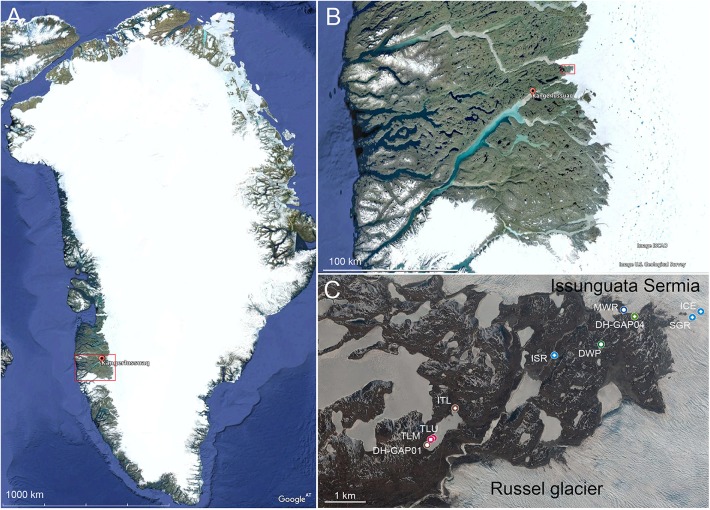
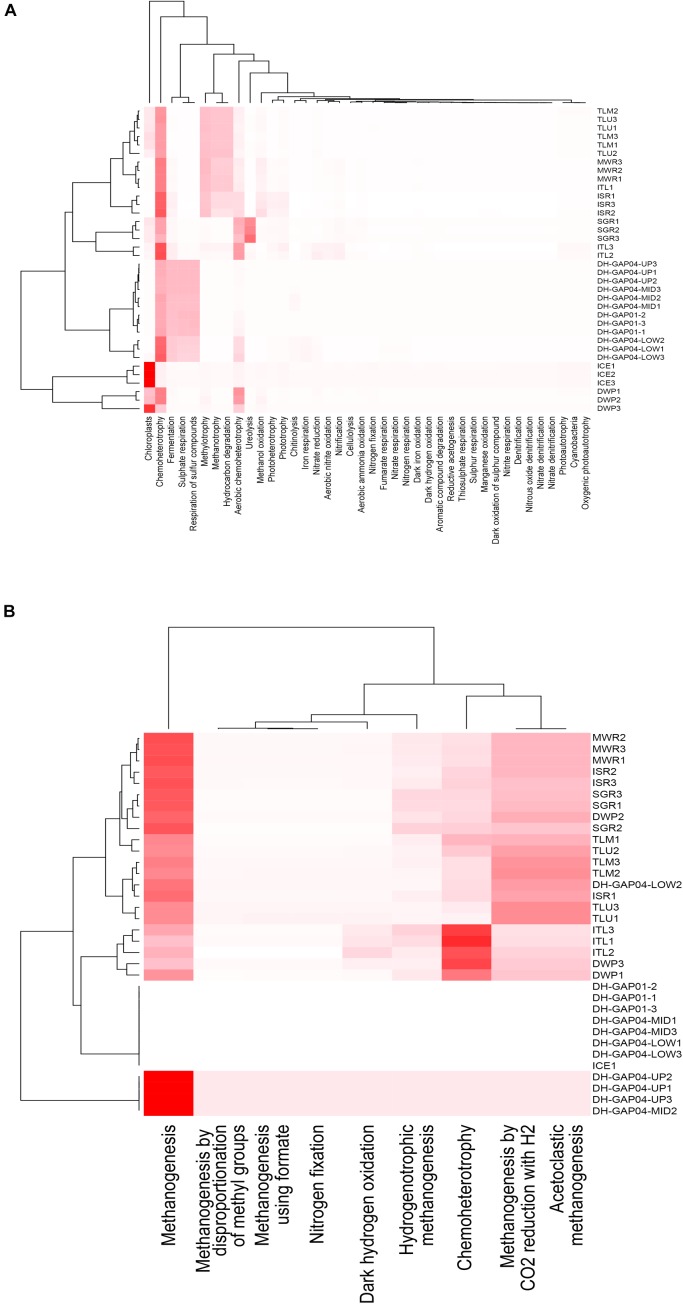
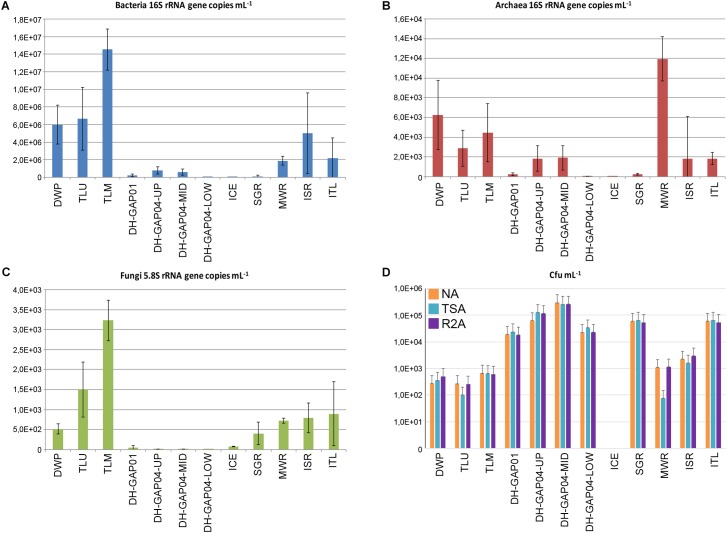
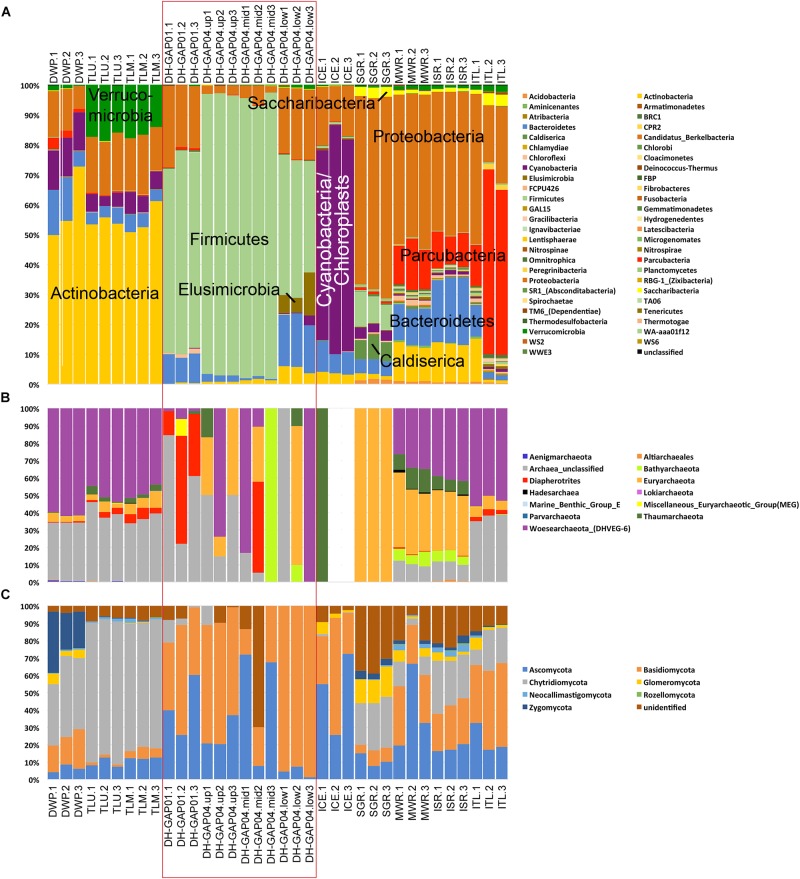
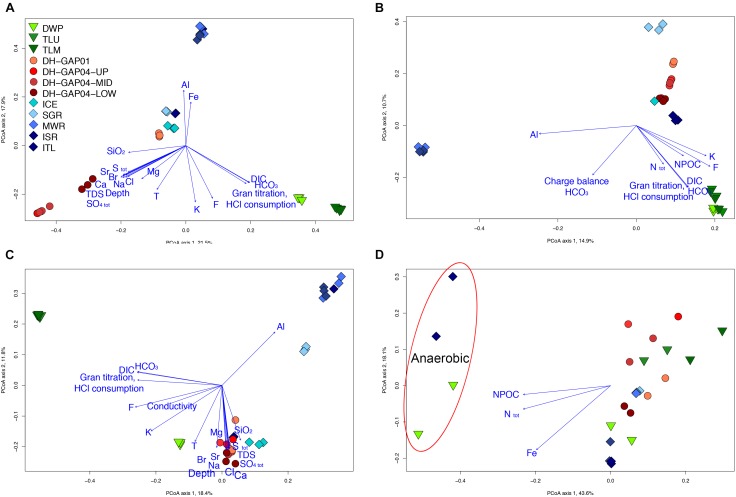
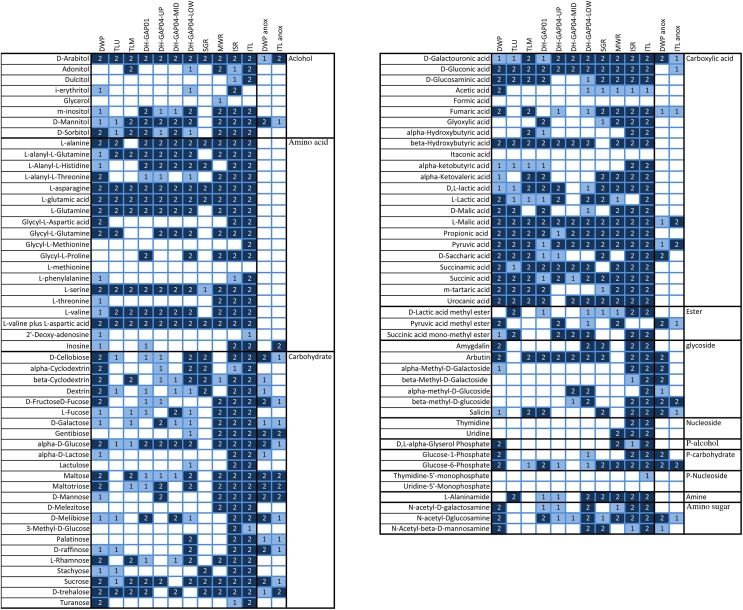
The Greenland Analog Project (GAP) study area in the vicinity of Kangarlussuaq, Western Greenland, was sampled for surface water and deep groundwater in order to determine the composition and estimate the metabolic features of the microbial communities in water bodies separated by permafrost. The sampling sites comprised a freshwater pond, talik lake, deep anoxic groundwater, glacier ice and supraglacial river, meltwater river and melting permafrost active layer. The microbial communities were characterized by amplicon sequencing of the bacterial and archaeal 16S rRNA genes and fungal ITS1 spacer. In addition, bacterial, archaeal and fungal numbers were determined by qPCR and plate counts, and the utilization pattern of carbon and nitrogen substrates was determined with Biolog AN plates and metabolic functions were predicted with FAPROTAX. Different sample types were clearly distinguishable from each other based on community composition, microbial numbers, and substrate utilization patterns, forming four groups, (1) pond/lake, (2) deep groundwater, (3) glacial ice, and (4) meltwater. Bacteria were the most abundant microbial domain, ranging from 0.2-1.4 × 10 16S rRNA gene copies mL in pond/lake and meltwater, 0.1-7.8 × 10 copies mL in groundwater and less than 10 copies mL in ice. The number of archaeal 16S and fungal 5.8S rRNA genes was generally less than 6.0 × 10 and 1.5 × 10, respectively. N-fixing and methane-oxidizing Actinomycetes, Bacteroidetes and Verrucomicrobia were the dominant microorganisms in the pond/lake samples, whereas iron reducing sp. dominated the deep anaerobic groundwater. The glacial ice was inhabited by Cyanobacteria, which were mostly Chloroplast-like. The meltwater contained methano- and methylotrophic Proteobacteria, but had also high relative abundances of the nano-sized Parcubacteria. The archaea composed approximately 1% of the 16S rRNA gene pool in the pond/lake samples with nano-sized Woesearchaeota as the dominating taxon, while in the other sample types archaea were almost negligent. Fungi were also most common in the pond/lake communities, were zoospore-forming Chytridiomycetes dominated. Our results show highly diverse microbial communities inhabiting the different cold Greenlandic aqueous environments and show clear segregation of the microbial communities according to habitat, with distinctive dominating metabolic features specifically inhabiting defined environmental niches and a high relative abundance of putatively parasitic or symbiotic nano-sized taxa.
为了确定被永久冻土分隔的水体中微生物群落的组成并估计其代谢特征,在西格陵兰康克鲁斯瓦克附近的格陵兰模拟项目(GAP)研究区域采集了地表水和深层地下水样本。采样地点包括一个淡水池塘、融区湖、深层缺氧地下水、冰川冰和冰上河流、融水河以及融化的永久冻土活动层。通过对细菌和古菌的16S rRNA基因以及真菌ITS1间隔区进行扩增子测序来表征微生物群落。此外,通过定量PCR和平板计数确定细菌、古菌和真菌的数量,并用Biolog AN平板确定碳和氮底物的利用模式,并用FAPROTAX预测代谢功能。根据群落组成、微生物数量和底物利用模式,不同的样本类型能够清晰地区分开来,形成了四组:(1)池塘/湖泊,(2)深层地下水,(3)冰川冰,(4)融水。细菌是最丰富的微生物类群,在池塘/湖泊和融水中,16S rRNA基因拷贝数为0.2 - 1.4×10 mL,在地下水中为0.1 - 7.8×10拷贝/mL,在冰中则少于10拷贝/mL。古菌16S和真菌5.8S rRNA基因的数量通常分别少于6.0×10和1.5×10。固氮和甲烷氧化放线菌、拟杆菌门和疣微菌门是池塘/湖泊样本中的优势微生物,而铁还原菌在深层厌氧地下水中占主导地位。冰川冰中有蓝细菌栖息,其中大部分类似叶绿体。融水中含有甲烷营养和甲基营养的变形菌门,但纳米级别的 Parcubacteria相对丰度也很高。在池塘/湖泊样本中,古菌约占16S rRNA基因库的1%,以纳米级别的Woesearchaeota为主要分类群,而在其他样本类型中,古菌几乎可以忽略不计。真菌在池塘/湖泊群落中也最为常见,以形成游动孢子的壶菌门为主。我们的研究结果表明,格陵兰不同寒冷水环境中栖息着高度多样化的微生物群落,并且微生物群落根据栖息地明显分离,具有特定栖息于特定环境生态位的独特主导代谢特征,以及相对丰度较高的假定寄生或共生的纳米级分类群。