State Key Laboratory for Conservation and Utilization of Subtropical Agro-bioresources, College of Life Science and Technology, Guangxi University, Nanning, China.
Jiangsu Key Laboratory for Microbes and Functional Genomics, College of Life Sciences, Nanjing Normal University, Nanjing, China.
Front Cell Infect Microbiol. 2019 Jul 10;9:222. doi: 10.3389/fcimb.2019.00222. eCollection 2019.
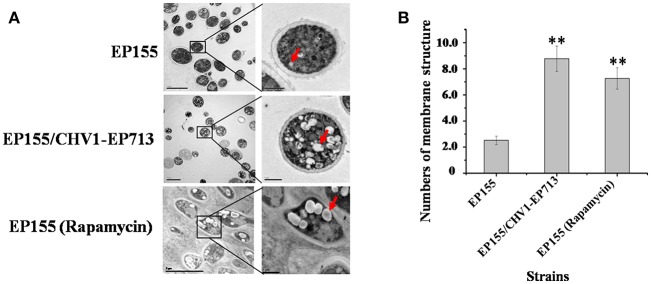
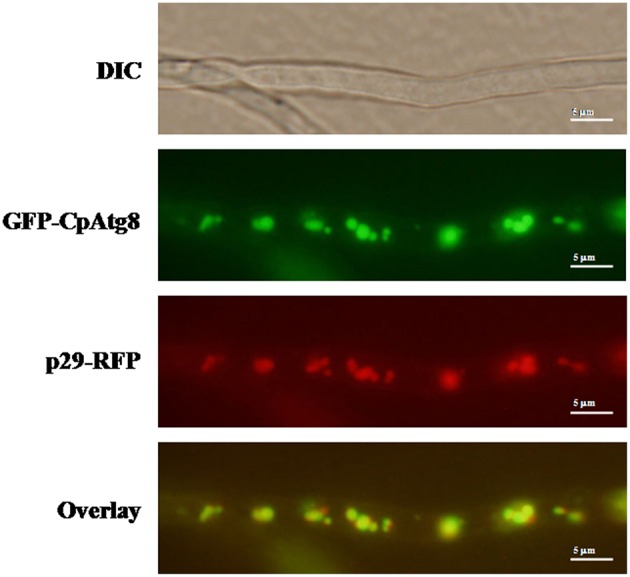
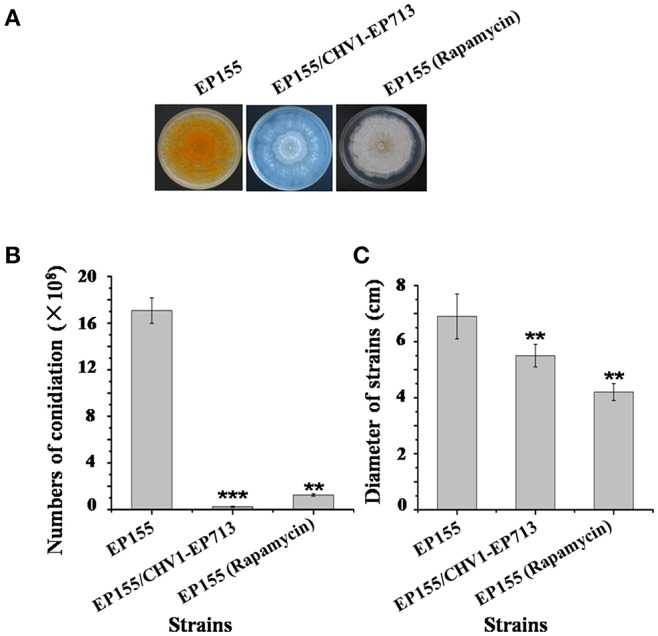
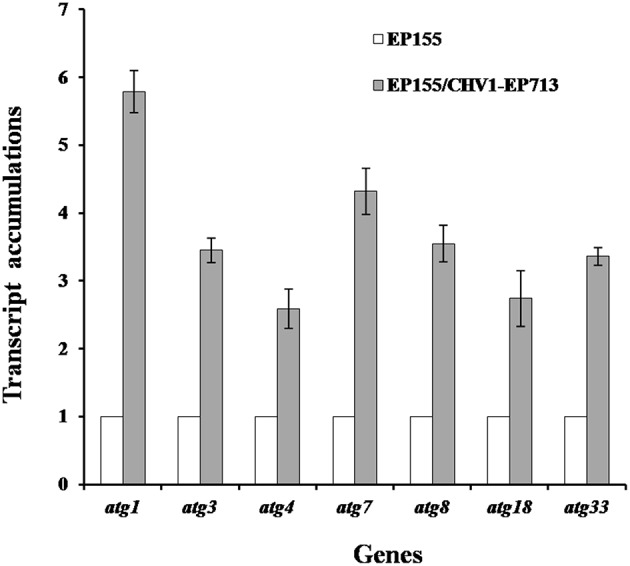
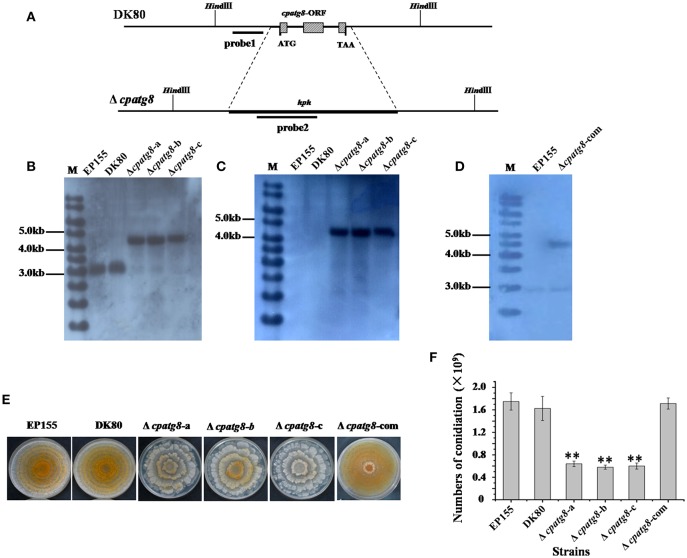
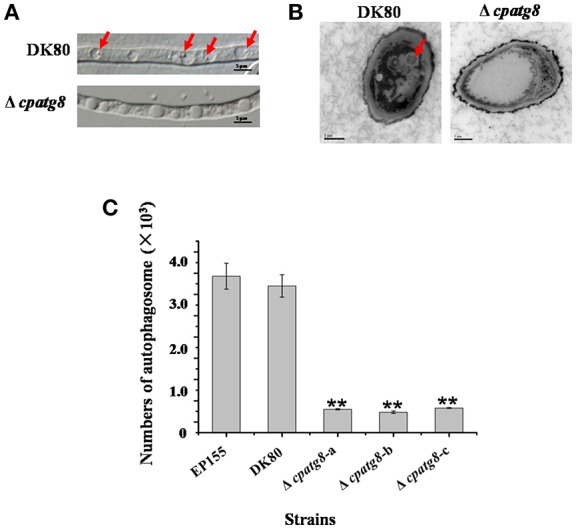
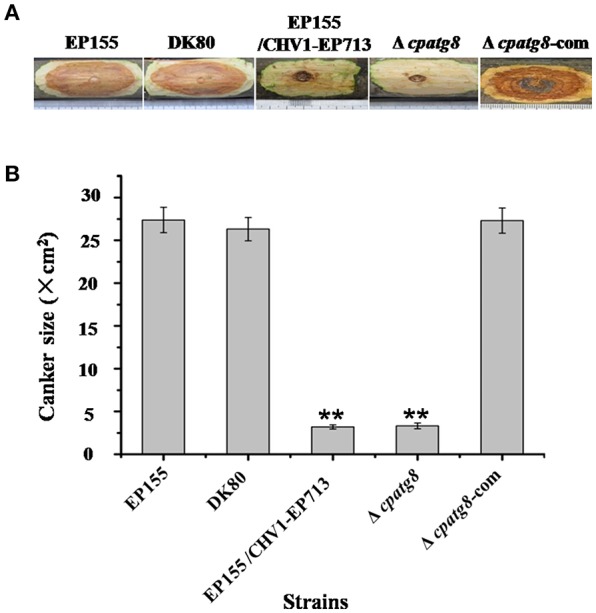
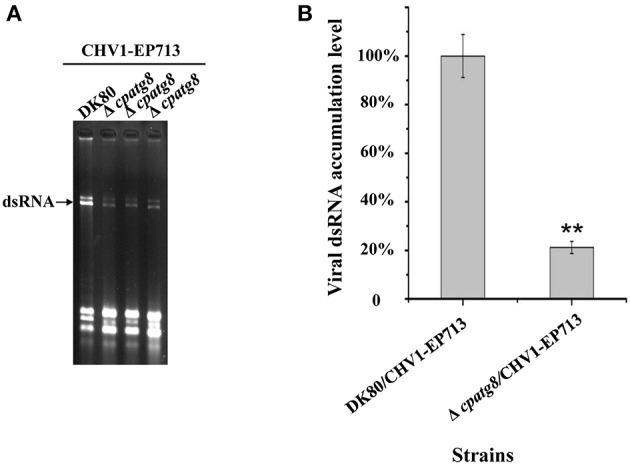
Autophagy is a degradation system in the cell, involved in the turnover of cellular components, development, differentiation, immune responses, protection against pathogens, and cell death. Autophagy is induced by nutrient starvation, in which cytoplasmic components and organelles are digested vacuoles/lysosomes. In this study, by using electron microscopy, we observed that hypovirus CHV1-EP713 infection of , the causative agent of chestnut blight disease, caused proliferation of autophagic-like vesicles. This phenomenon could be mimicked by treating the wild-type strain of the fungus EP155 with the autophagy induction drug rapamycin. Some of the hypovirulence-associated traits, including reduced pigmentation and conidiation, were also observed in the rapamycin-treated EP155. Quantitative reverse transcriptase polymerase chain reaction (qRT-PCR) revealed that genes involved in autophagy were up-regulated in expression. Deletion of , a gene encoding a homolog of ATG8 in , resulted in attenuation of virulence and reduction in sporulation, as well as accumulation of the double-stranded viral RNA. Furthermore, virus-encoded p29 protein was found to co-localize with CpATG8, implying that the viral protein may interfere with the function of CpATG8. Taken together, these findings show that can be regulated by the hypovirus and is required for virulence and development of the fungus and accumulation of viral dsRNA in chestnut blight fungus.
自噬是细胞内的一种降解系统,参与细胞成分的周转、发育、分化、免疫反应、抵抗病原体和细胞死亡。自噬是由营养饥饿诱导的,其中细胞质成分和细胞器被消化成液泡/溶酶体。在这项研究中,通过电子显微镜观察到,栗疫病病原菌的弱毒 CHV1-EP713 感染导致自噬样小泡的增殖。用自噬诱导药物雷帕霉素处理真菌 EP155 的野生型菌株可以模拟这种现象。在雷帕霉素处理的 EP155 中还观察到一些与弱毒力相关的特征,包括色素沉着和分生孢子形成减少。定量逆转录聚合酶链反应(qRT-PCR)显示,参与自噬的基因表达上调。敲除,一个编码 ATG8 同源物的基因,导致毒力减弱和产孢减少,以及双链病毒 RNA 的积累。此外,还发现病毒编码的 p29 蛋白与 CpATG8 共定位,这表明该病毒蛋白可能干扰 CpATG8 的功能。总之,这些发现表明 可以被弱毒体调控,并且是真菌毒力和发育以及栗疫病真菌中病毒 dsRNA 积累所必需的。