Department of Pediatrics, University of Cincinnati College of Medicine, Cincinnati, OH, USA.
Division of General & Community Pediatrics and Hospital Medicine, Cincinnati Children's Hospital Medical Center, Cincinnati, OH, USA.
Pediatr Res. 2020 Jan;87(2):227-234. doi: 10.1038/s41390-019-0513-6. Epub 2019 Jul 29.
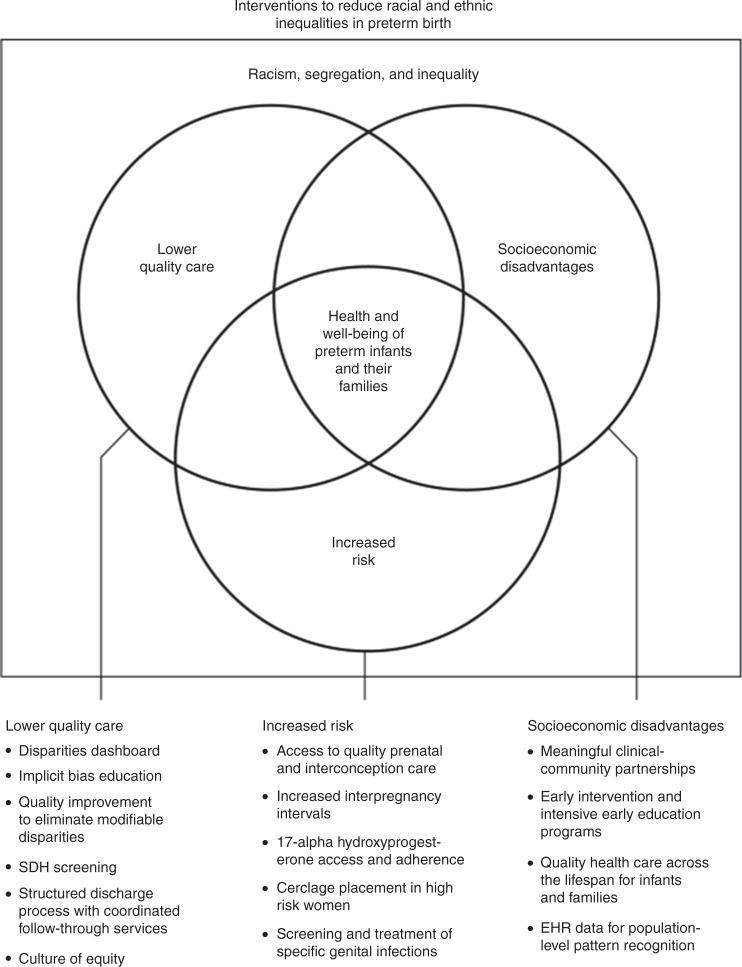
Racism, segregation, and inequality contribute to health outcomes and drive health disparities across the life course, including for newborn infants and their families. In this review, we address their effects on the health and well-being of newborn infants and their families with a focus on preterm birth. We discuss three causal pathways: increased risk; lower-quality care; and socioeconomic disadvantages that persist into infancy, childhood, and beyond. For each pathway, we propose specific interventions and research priorities that may remedy the adverse effects of racism, segregation, and inequality. Infants and their families will not realize the full benefit of advances in perinatal and neonatal care until we, collectively, accept our responsibility for addressing the range of determinants that shape long-term outcomes.
种族主义、隔离和不平等导致了整个生命过程中的健康结果和健康差距,包括对新生儿及其家庭的影响。在这篇综述中,我们重点讨论了种族主义、隔离和不平等对新生儿及其家庭健康和福祉的影响,特别是对早产儿的影响。我们讨论了三个因果途径:增加风险;护理质量下降;以及持续到婴儿期、儿童期和以后的社会经济劣势。对于每个途径,我们提出了具体的干预措施和研究重点,这些措施和重点可能会纠正种族主义、隔离和不平等的不利影响。除非我们共同承担起解决影响长期结果的一系列决定因素的责任,否则,只要我们还存在种族主义、隔离和不平等问题,新生儿及其家庭就无法充分受益于围产期和新生儿护理的进步。