Duncan Skyla A, Dixit Saurabh, Sahu Rajnish, Martin David, Baganizi Dieudonné R, Nyairo Elijah, Villinger Francois, Singh Shree R, Dennis Vida A
Center for NanoBiotechnology & Life Sciences Research, Department of Biological Sciences, Alabama State University, 915 South Jackson Street, Montgomery, AL 36104, USA.
New Iberia Research Center, University of Louisiana at Lafayette, 4401 W Admiral Doyle Drive, New Iberia, LA 70560, USA.
Nanomaterials (Basel). 2019 Jul 26;9(8):1074. doi: 10.3390/nano9081074.
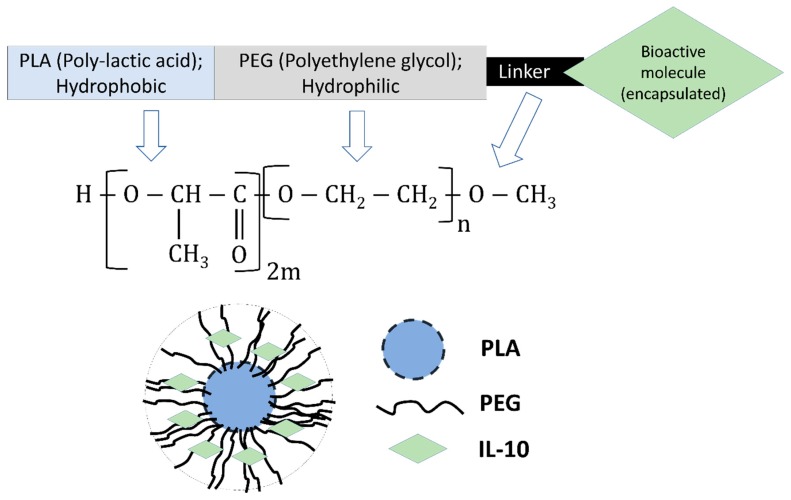
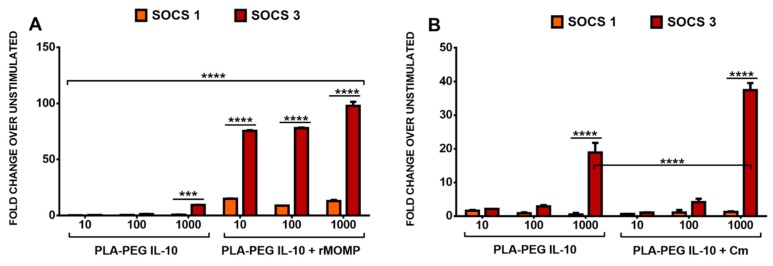
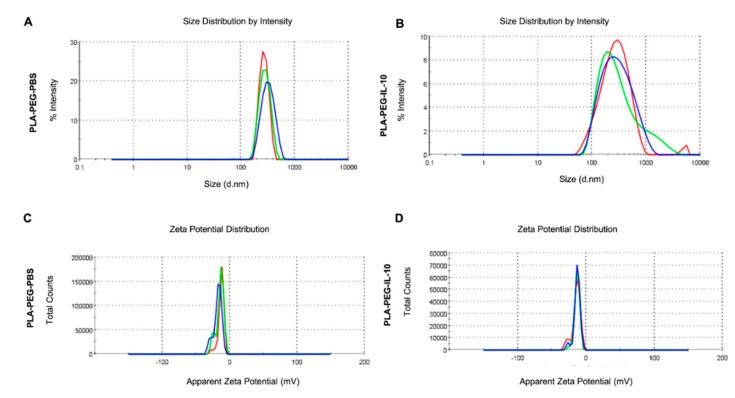
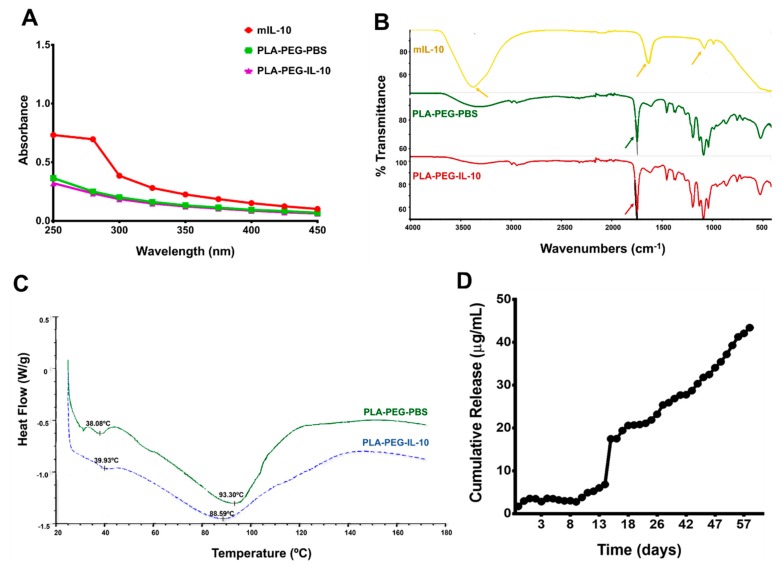
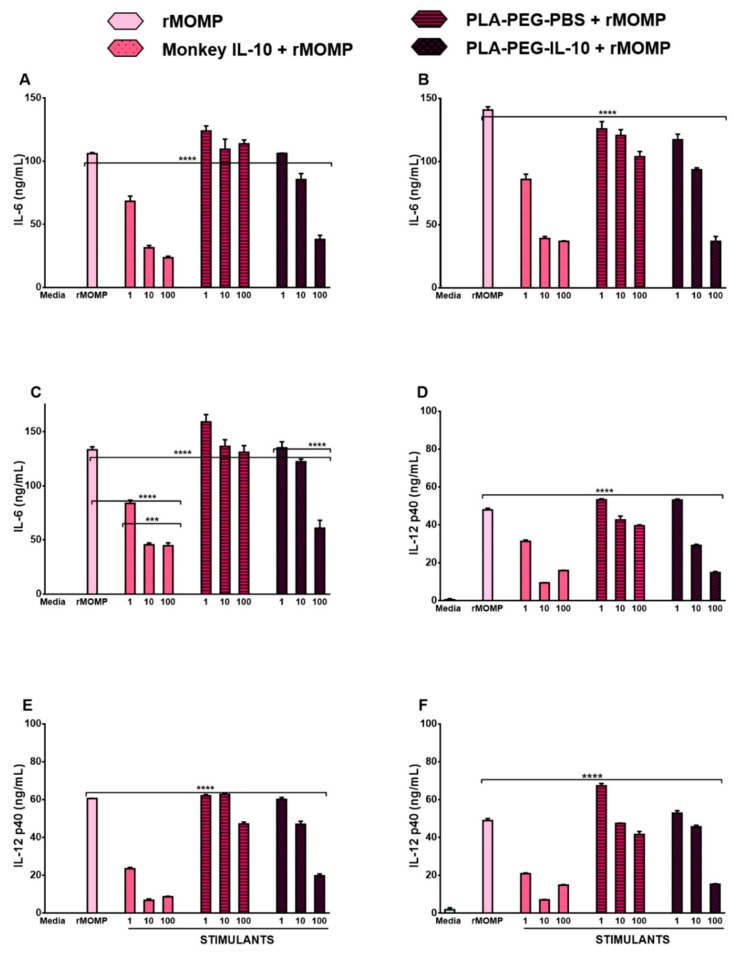
Inflammation, as induced by the presence of cytokines and chemokines, is an integral part of chlamydial infections. The anti-inflammatory cytokine, interleukin (IL)-10, has been reported to efficiently suppress the secretion of inflammatory cytokines triggered by in mouse macrophages. Though IL-10 is employed in clinical applications, its therapeutic usage is limited due to its short half-life. Here, we document the successful encapsulation of IL-10 within the biodegradable polymeric nanoparticles of PLA-PEG (Poly (lactic acid)-Poly (ethylene glycol), to prolong its half-life. Our results show the encapsulated-IL-10 size (238 nm), zeta potential (-14.2 mV), polydispersity index (0.256), encapsulation efficiency (77%), and a prolonged slow release pattern up to 60 days. Temperature stability of encapsulated-IL-10 was favorable, demonstrating a heat capacity of up to 89 °C as shown by differential scanning calorimetry analysis. Encapsulated-IL-10 modulated the release of IL-6 and IL-12p40 in stimulated macrophages in a time- and concentration-dependent fashion, and differentially induced SOCS1 and SOCS3 as induced by chlamydial stimulants in macrophages. Our finding offers the tremendous potential for encapsulated-IL-10 not only for chlamydial inflammatory diseases but also biomedical therapeutic applications.
由细胞因子和趋化因子引发的炎症是衣原体感染不可或缺的一部分。据报道,抗炎细胞因子白细胞介素(IL)-10能有效抑制小鼠巨噬细胞中由衣原体刺激引发的炎性细胞因子的分泌。尽管IL-10已应用于临床,但因其半衰期短,其治疗用途受到限制。在此,我们记录了将IL-10成功封装于聚乳酸-聚乙二醇(PLA-PEG)的可生物降解聚合物纳米颗粒中,以延长其半衰期。我们的结果显示,封装后的IL-10大小约为238纳米,zeta电位为-14.2毫伏,多分散指数为0.256,封装效率约为77%,且呈现长达60天的延长缓释模式。通过差示扫描量热分析表明,封装后的IL-10温度稳定性良好,热容量高达89℃。封装后的IL-10以时间和浓度依赖的方式调节刺激巨噬细胞中IL-6和IL-12p40的释放,并在巨噬细胞中由衣原体刺激物诱导时差异诱导SOCS1和SOCS3。我们的发现表明,封装后的IL-10不仅在衣原体炎性疾病方面,而且在生物医学治疗应用方面都具有巨大潜力。