
自组织映射基因表达图谱挖掘揭示HPV阳性头颈部鳞状细胞癌的预后分层
Mining of Self-Organizing Map Gene-Expression Portraits Reveals Prognostic Stratification of HPV-Positive Head and Neck Squamous Cell Carcinoma.
作者信息
Locati Laura D, Serafini Mara S, Iannò Maria F, Carenzo Andrea, Orlandi Ester, Resteghin Carlo, Cavalieri Stefano, Bossi Paolo, Canevari Silvana, Licitra Lisa, De Cecco Loris
机构信息
Head and Neck Medical Oncology Department, Fondazione IRCCS Istituto Nazionale dei Tumori di Milano, 20133 Milan, Italy.
Integrated Biology Platform, Department of Applied Research and Technology Development, Fondazione IRCCS Istituto Nazionale dei Tumori di Milano, 20133 Milan, Italy.
出版信息
Cancers (Basel). 2019 Jul 26;11(8):1057. doi: 10.3390/cancers11081057.
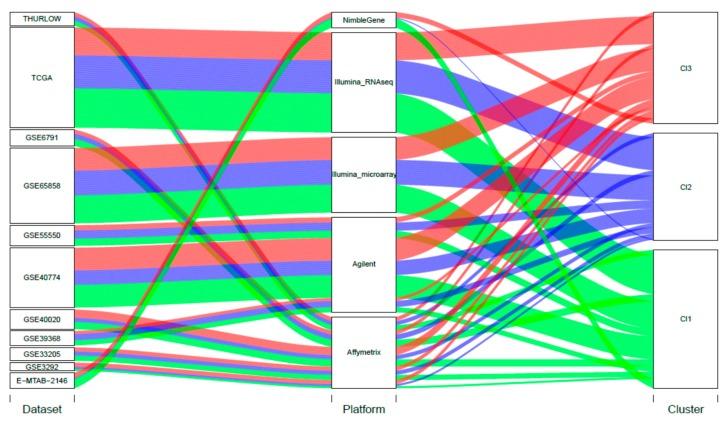
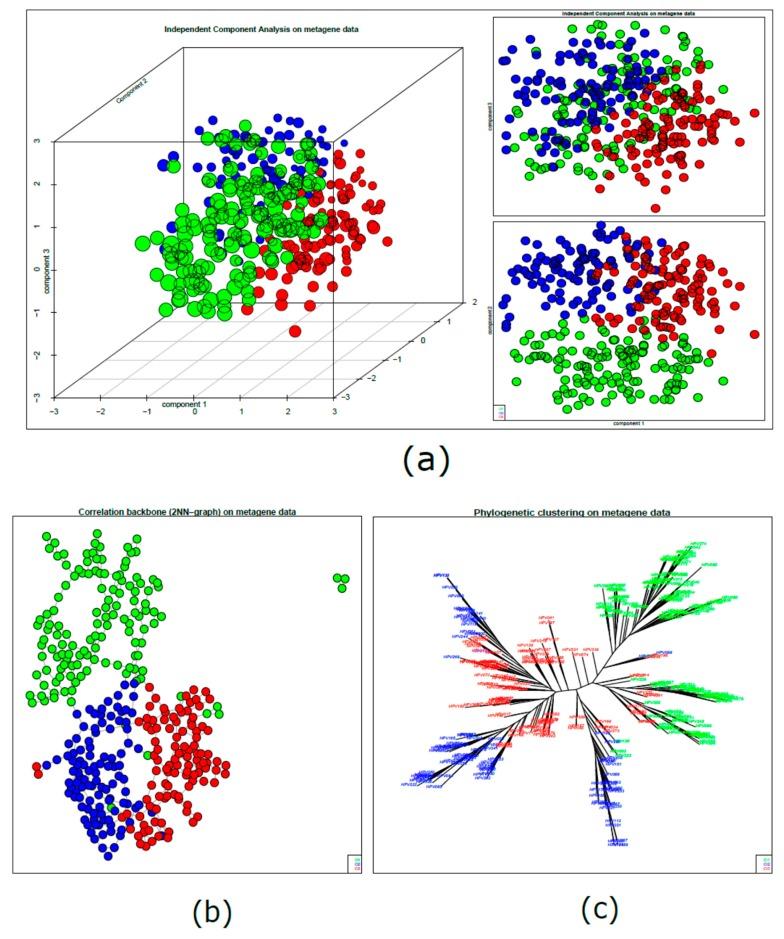
Patients (pts) with head and neck squamous cell carcinoma (HNSCC) have different epidemiologic, clinical, and outcome behaviors in relation to human papillomavirus (HPV) infection status, with HPV-positive patients having a 70% reduction in their risk of death. Little is known about the molecular heterogeneity in HPV-related cases. In the present study, we aim to disclose the molecular subtypes with potential biological and clinical relevance. Through a literature review, 11 studies were retrieved with a total of 346 gene-expression data points from HPV-positive HNSCC pts. Meta-analysis and self-organizing map (SOM) approaches were used to disclose relevant meta-gene portraits. Unsupervised consensus clustering provided evidence of three biological subtypes in HPV-positive HNSCC: Cl1, immune-related; Cl2, epithelial-mesenchymal transition-related; Cl3, proliferation-related. This stratification has a prognostic relevance, with Cl1 having the best outcome, Cl2 the worst, and Cl3 an intermediate survival rate. Compared to recent literature, which identified immune and keratinocyte subtypes in HPV-related HNSCC, we confirmed the former and we separated the latter into two clusters with different biological and prognostic characteristics. At present, this paper reports the largest meta-analysis of HPV-positive HNSCC studies and offers a promising molecular subtype classification. Upon further validation, this stratification could improve patient selection and pave the way for the development of a precision medicine therapeutic approach.
头颈部鳞状细胞癌(HNSCC)患者在人类乳头瘤病毒(HPV)感染状况方面具有不同的流行病学、临床和预后行为,HPV阳性患者的死亡风险降低70%。目前对于HPV相关病例中的分子异质性了解甚少。在本研究中,我们旨在揭示具有潜在生物学和临床相关性的分子亚型。通过文献综述,我们检索到11项研究,共获得来自HPV阳性HNSCC患者的346个基因表达数据点。采用荟萃分析和自组织映射(SOM)方法来揭示相关的元基因图谱。无监督一致性聚类为HPV阳性HNSCC中的三种生物学亚型提供了证据:Cl1,与免疫相关;Cl2,与上皮-间质转化相关;Cl3,与增殖相关。这种分层具有预后相关性,Cl1的预后最佳,Cl2最差,Cl3的生存率居中。与最近在HPV相关HNSCC中鉴定出免疫和角质形成细胞亚型的文献相比,我们证实了前者,并将后者分为具有不同生物学和预后特征的两个聚类。目前,本文报道了对HPV阳性HNSCC研究的最大规模荟萃分析,并提供了一种有前景的分子亚型分类。经过进一步验证,这种分层可以改善患者选择,并为精准医学治疗方法的发展铺平道路。




 Zotero 插件