Division of Neurology, Stroke Department, Tel-Aviv Sorasky Medical Center, 6 Weizmann St., Tel Aviv-Jaffa, Israel.
Sackler School of Medicine, Tel Aviv University, Tel Aviv-Jaffa, Israel.
BMC Neurol. 2019 Jul 29;19(1):178. doi: 10.1186/s12883-019-1405-4.
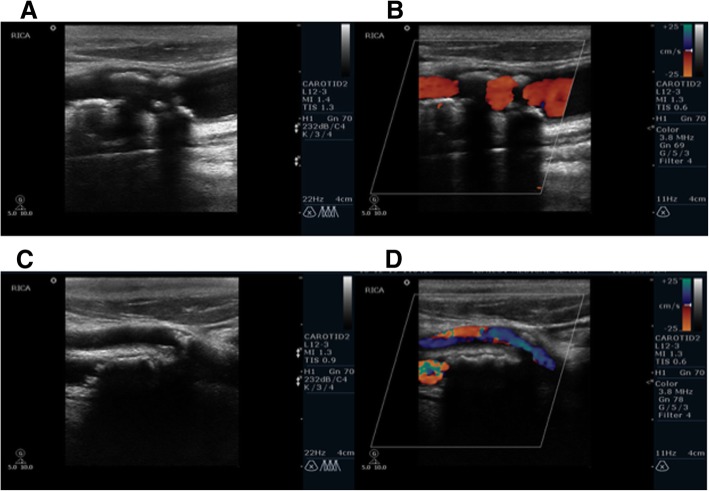
B-mode and Color Doppler ultrasonography (CDUS) are the methods of choice for screening and determining the degree of Carotid artery stenosis. The evaluation of stenosis with calcification may be hampered by a common CDUS artifact known as acoustic shadow (AS). Our objective was to assess the change in reliability of CDUS readings in the presence of an AS artifact.
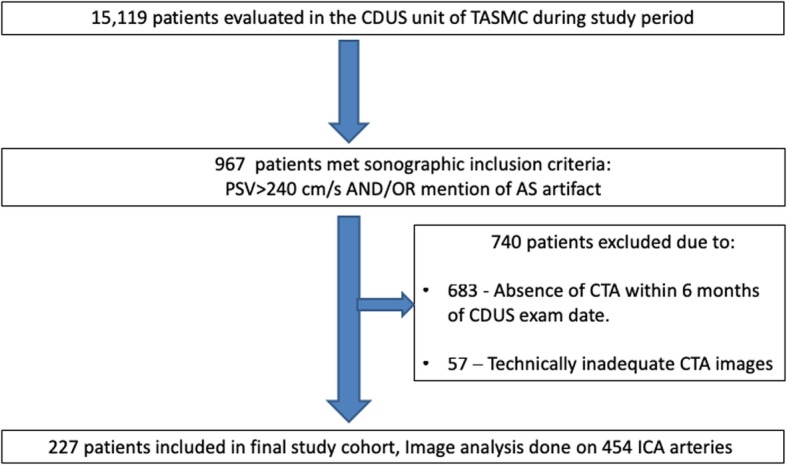
Single center retrospective observational study. Included were patients with either an AS artifact or high-grade stenosis (defined by peak systolic velocity (PSV) > 240 cm/s) demonstrated in CDUS, and had a CT angiography (CTA) done within 6 months of the sonographic exam. All subjects were identified through the Tel-Aviv Sorasky medical center (TASMC) CDUS unit registry from which clinical information was extracted. CDUS images were manually reviewed grading AS magnitude. All CTAs were reviewed and reconstructed for accurate assessment of percent stenosis and were used as gold standard.
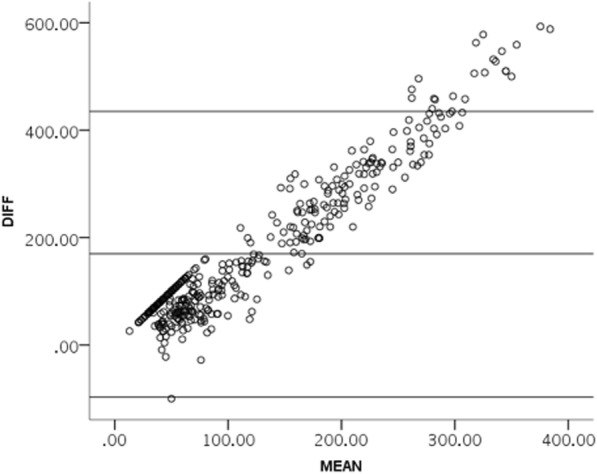
The study cohort included 227 consecutive patients (corresponding with 454 internal carotid arteries) meeting inclusion criteria. 43.2% of the arteries (n = 195) had an AS artifact present on CDUS, regardless of percent stenosis, with a large artifact present in 6.7% arteries (n = 30). Older age was significantly related to the presence of AS artifact (p < 0.001). In the study cohort as a whole there was a strong correlation between percent stenosis on CTA and PSV values (Pearson's r 0.672, p < 0.001) regardless of AS existence. The CDUS sensitivity and specificity for predicting severe stenosis were 82 and 73% respectively. The presence of a small AS slightly diminished the correlation between CDUS and CTA results without compromising CDUS reliability. A large AS severely affected the correlation between CDUS and CTA exams (Pearson's r = 0.24, p = 0.27) and reduced CDUS reliability with a sensitivity and specificity of 62%.
The presence of a large AS severely degrades the accuracy of the routine CDUS measurements. In these cases, the patient should be referred to a CDUS exam including doppler-measurement of periorbital arteries and intracranial arteries in addition to other imaging modalities such as CTA or MRA in order to assess future stroke risk.
B 型和彩色多普勒超声(CDUS)是筛查和确定颈动脉狭窄程度的首选方法。钙化引起的狭窄评估可能会受到一种常见的 CDUS 伪影——声影(AS)的阻碍。我们的目的是评估存在 AS 伪影时 CDUS 读数的可靠性变化。
单中心回顾性观察研究。纳入的患者在 CDUS 中均显示有 AS 伪影或重度狭窄(定义为收缩期峰值速度(PSV)>240cm/s),并在超声检查后 6 个月内进行 CT 血管造影(CTA)检查。所有受试者均通过特拉维夫索拉斯基医疗中心(TASMC)CDUS 单位登记处识别,从中提取临床信息。手动审查 CDUS 图像以分级 AS 程度。所有 CTA 均进行回顾性重建,以准确评估狭窄程度,并作为金标准。
研究队列包括 227 例连续患者(对应 454 条颈内动脉),符合纳入标准。43.2%(n=195)的动脉在 CDUS 上存在 AS 伪影,无论狭窄程度如何,6.7%(n=30)的动脉存在大的 AS 伪影。年龄较大与 AS 伪影的存在显著相关(p<0.001)。在整个研究队列中,CTA 上的狭窄程度与 PSV 值之间存在很强的相关性(Pearson's r 0.672,p<0.001),无论 AS 的存在与否。CDUS 预测严重狭窄的灵敏度和特异性分别为 82%和 73%。小的 AS 存在略微降低了 CDUS 和 CTA 结果之间的相关性,但不影响 CDUS 的可靠性。大的 AS 严重影响了 CDUS 和 CTA 检查之间的相关性(Pearson's r=0.24,p=0.27),并降低了 CDUS 的可靠性,灵敏度和特异性分别为 62%。
大的 AS 的存在严重降低了常规 CDUS 测量的准确性。在这些情况下,应将患者转介至包括多普勒测量眶周动脉和颅内动脉的 CDUS 检查,以及其他成像方式,如 CTA 或 MRA,以评估未来的中风风险。