Alkaff Raihana Nadra, Kamigaki Taro, Saito Mayuko, Ariyanti Fajar, Iriani Dewi Utami, Oshitani Hitoshi
1Department of Virology, Tohoku University Graduate School of Medicine, 2-1, Seiryo-machi, Aoba-ku, Sendai, 980-8575 Japan.
2Public Health Study Program, Faculty of Health Sciences, Syarif Hidayatullah State Islamic University Jakarta, Kampus 2, Jl. Kertamukti No.5, Ciputat, Tangerang Selatan, Banten 15419 Indonesia.
Trop Med Health. 2019 Jul 18;47:45. doi: 10.1186/s41182-019-0173-6. eCollection 2019.
The incidence of antimicrobial resistance has been increasing worldwide in the past decades, which includes resistance to bacteria that cause common childhood illnesses, such as acute respiratory infections and diarrhea. Numerous children with those common illnesses are treated with antibiotics. However, in such cases, antibiotic treatment is not required. Community-based studies focusing on antibiotic use among children are still limited. This study aimed to identify the prevalence of antibiotic use for common childhood illnesses and to investigate factors associated with antibiotic use in children under 5 years old as well as female caregivers in a rural community in Indonesia.
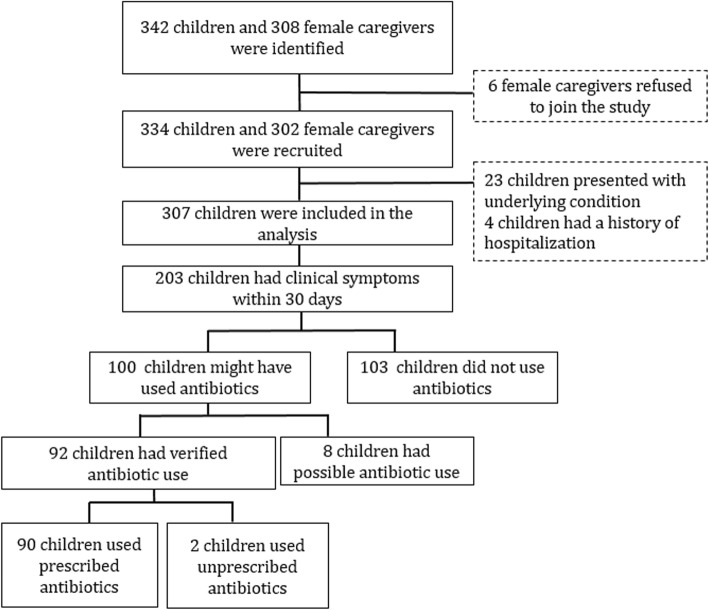
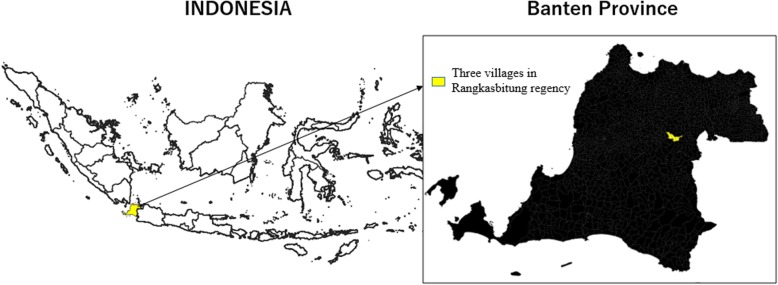
A cross-sectional study of 334 children in three villages of Banten Province, located in the western part of Java Island, was conducted in May 2018. Female caregivers who were responsible for providing medications to children were interviewed. We obtained information such as demographic data, any common clinical illness within the last 30 days, and antibiotic usage during an episode of illness. We excluded children with underlying disease that require a regular follow-up and children who were hospitalized in the last 30 days in the analysis. Antibiotic use answered by female caregivers was verified by checking its package or showing photos of various antibiotics to the female caregivers. Crushed antibiotics were confirmed with health professionals.
A total of 203 children had clinical symptoms, and the most common symptom was fever and respiratory symptoms. In total, 49.3% received antibiotics, and 66% of them were prescribed by private health professionals. Only two children received antibiotics without a prescription. The most common antibiotic used among children was amoxicillin.
The high prevalence of antibiotic use was observed in children under 5 years of age, and the major source to obtain antibiotics was to consult health professionals. Training on appropriate antibiotic use must be conducted for health professionals in not only public but also private sectors.
在过去几十年中,全球范围内抗菌药物耐药性的发生率一直在上升,这包括对导致常见儿童疾病(如急性呼吸道感染和腹泻)的细菌产生耐药性。许多患有这些常见疾病的儿童都接受了抗生素治疗。然而,在这些情况下,并不需要使用抗生素治疗。关注儿童抗生素使用情况的社区研究仍然有限。本研究旨在确定印度尼西亚一个农村社区中5岁以下儿童以及女性照料者因常见儿童疾病使用抗生素的流行情况,并调查与抗生素使用相关的因素。
2018年5月,在爪哇岛西部万丹省的三个村庄对334名儿童进行了横断面研究。对负责给儿童用药的女性照料者进行了访谈。我们获取了诸如人口统计学数据、过去30天内的任何常见临床疾病以及疾病发作期间的抗生素使用情况等信息。在分析中,我们排除了患有需要定期随访的基础疾病的儿童以及过去30天内住院的儿童。通过检查抗生素包装或向女性照料者展示各种抗生素的照片来核实她们所回答的抗生素使用情况。碾碎的抗生素由卫生专业人员进行确认。
共有203名儿童出现临床症状,最常见的症状是发热和呼吸道症状。总共有49.3%的儿童接受了抗生素治疗,其中66%是由私人卫生专业人员开的药。只有两名儿童在没有处方的情况下接受了抗生素治疗。儿童中最常用的抗生素是阿莫西林。
在5岁以下儿童中观察到抗生素使用的高流行率,获取抗生素的主要来源是咨询卫生专业人员。不仅要对公共部门的卫生专业人员,而且要对私营部门的卫生专业人员进行关于合理使用抗生素的培训。