Ahmed Mesbah Uddin, Baquilod Mario, Deola Claudio, Tu Nguyen Dong, Anh Dang Duc, Grasso Cindy, Gautam Anu, Hamzah Wan Mansor, Heng Seng, Iamsirithaworn Sopon, Kadim Musal, Kar S K, Le Thi Quynh Mai, Lopez Anna Lena, Lynch Julia, Memon Iqbal, Mengel Martin, Long Vu Ngoc, Pandey Basu Dev, Quadri Firdausi, Saadatian-Elahi Mitra, Gupta Sanjukta Sen, Sultan Ashraf, Sur Dipika, Tan Dang Quang, Ha Hoang Thi Thu, Hein Nguyen Tran, Lan Phan Trong, Upreti Shyam Raj, Endtz Hubert, Ganguly N K, Legros Dominique, Picot Valentina, Nair G Balakrish
Bangladesh Pediatric Association, Shahbag, Dhaka, Bangladesh.
Ministry of Health, Manila, Philippines.
BMC Proc. 2018 Dec 7;12(Suppl 13):62. doi: 10.1186/s12919-018-0158-1. eCollection 2018.
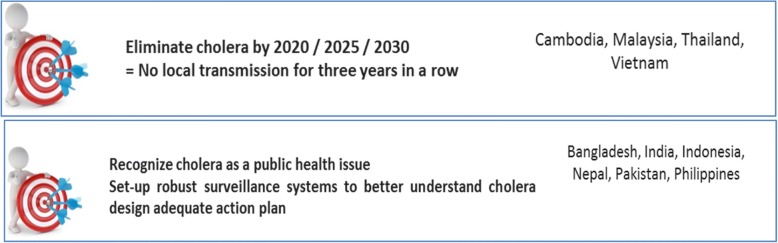
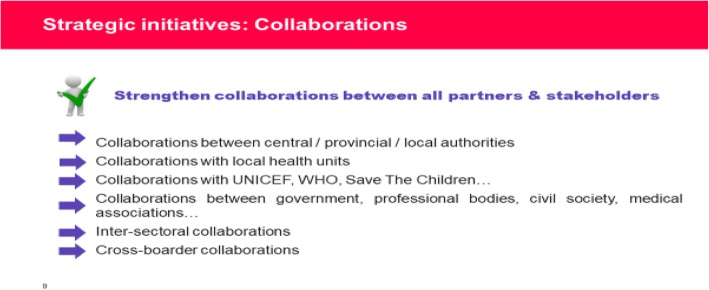
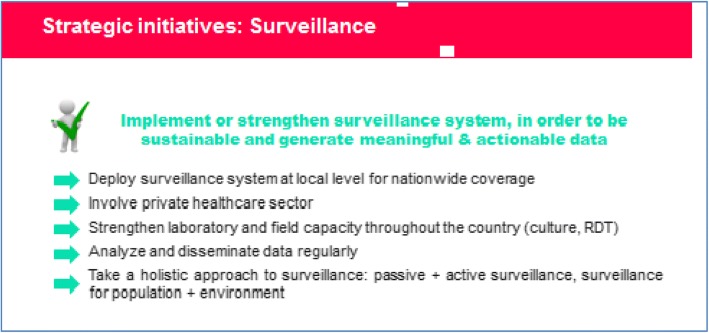
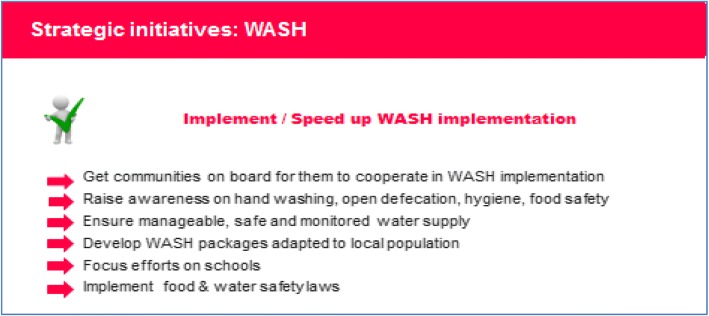
Cholera remains a major public health problem in many countries. Poor sanitation and inappropriate clean water supply, insufficient health literacy and community mobilization, absence of national plans and cross-border collaborations are major factors impeding optimal control of cholera in endemic countries. In March 2017, a group of experts from 10 Asian cholera-prone countries that belong to the Initiative against Diarrheal and Enteric Diseases in Africa and Asia (IDEA), together with representatives from the World Health Organization, the US National Institutes of Health, International Vaccine Institute, Agence de médecine préventive, NGOs (Save the Children) and UNICEF, met in Hanoi (Vietnam) to share progress in terms of prevention and control interventions on water, sanitation and hygiene (WASH), surveillance and oral cholera vaccine use. This paper reports on the country situation, gaps identified in terms of cholera prevention and control and strategic interventions to bridge these gaps.
霍乱在许多国家仍然是一个重大的公共卫生问题。卫生条件差、清洁水供应不当、健康素养不足和社区动员不力、缺乏国家计划和跨境合作是阻碍霍乱流行国家实现最佳控制的主要因素。2017年3月,来自10个亚洲霍乱高发国家的一组专家,这些国家属于亚洲和非洲腹泻及肠道疾病防治倡议(IDEA),与世界卫生组织、美国国立卫生研究院、国际疫苗研究所、预防医学机构、非政府组织(拯救儿童会)和联合国儿童基金会的代表在河内(越南)会面,分享在水、环境卫生和个人卫生(WASH)、监测及口服霍乱疫苗使用方面的预防和控制干预措施的进展情况。本文报告了各国的情况、在霍乱预防和控制方面发现的差距以及弥合这些差距的战略干预措施。