van Werkhoven Herman, Farina Kathryn A, Langley Mark H
Department of Health and Exercise Science, Appalachian State University, Boone, NC 28608, USA.
Department of Human Physiology, University of Oregon, Eugene, OR 97403, USA.
Sports (Basel). 2019 Jul 29;7(8):184. doi: 10.3390/sports7080184.
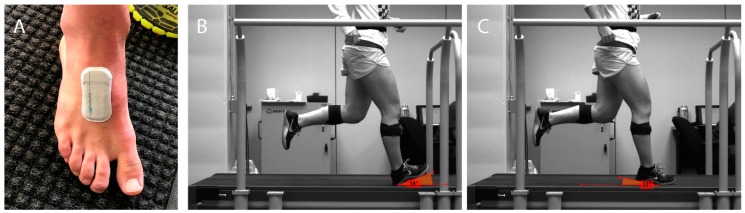
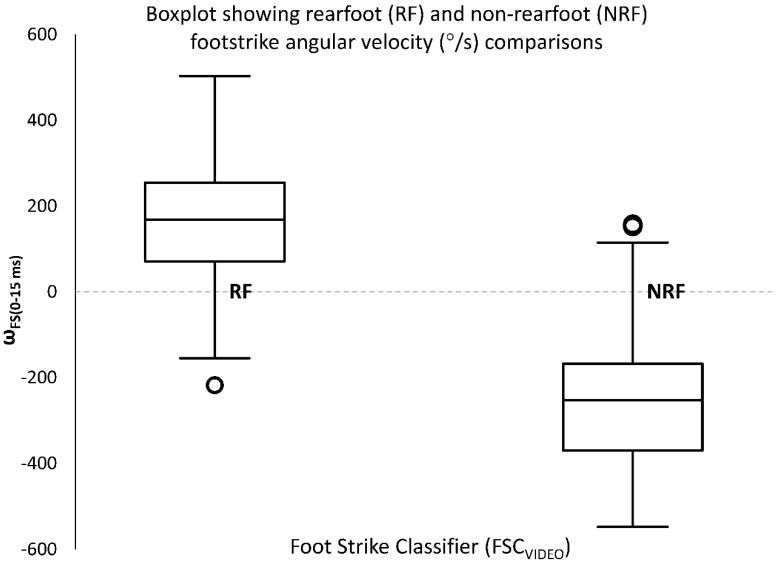
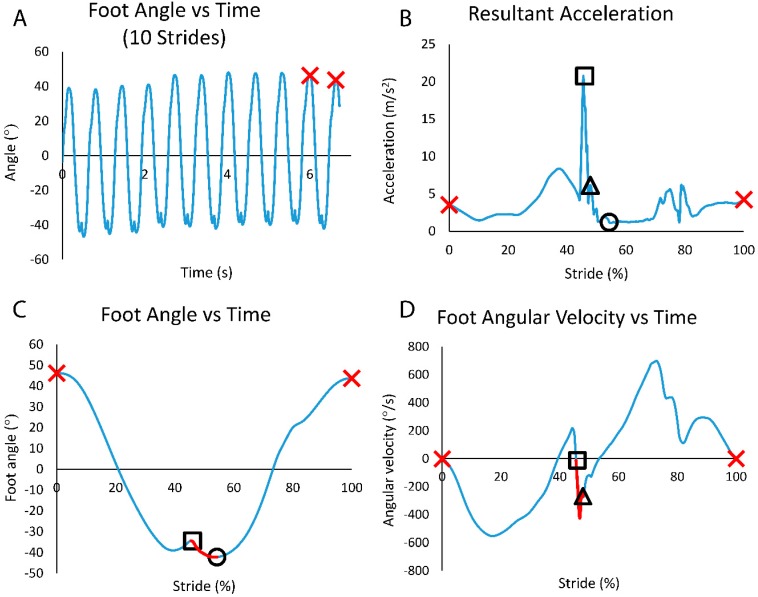
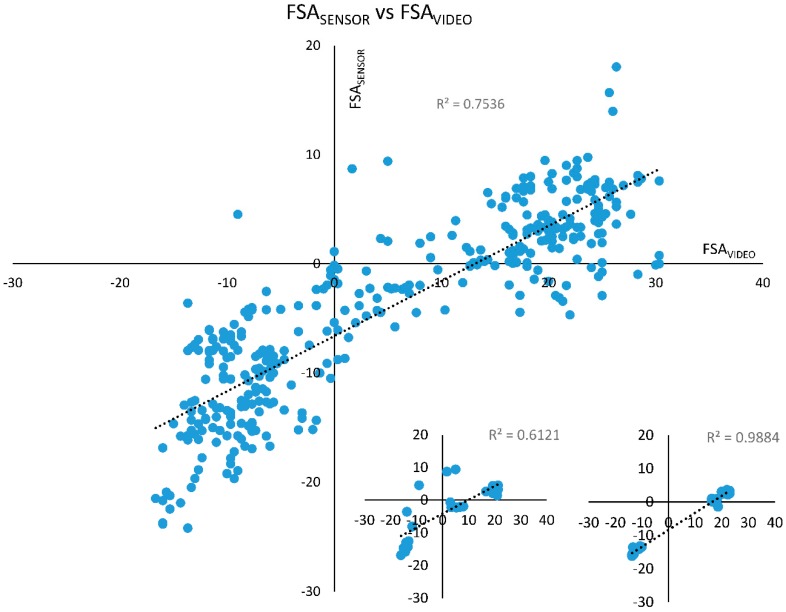
The potential association between running foot strike analysis and performance and injury metrics has created the need for reliable methods to quantify foot strike pattern outside the laboratory. Small, wireless inertial measurement units (IMUs) allow for unrestricted movement of the participants. Current IMU methods to measure foot strike pattern places small, rigid accelerometers and/or gyroscopes on the heel cap or on the instep of the shoe. The purpose of this study was to validate a thin, conformable IMU sensor placed directly on the dorsal foot surface to determine foot strike angles and pattern. Participants (n = 12) ran on a treadmill with different foot strike patterns while videography and sensor data were captured. Sensor measures were compared against traditional 2D video analysis techniques and the results showed that the sensor was able to accurately (92.2% success) distinguish between rearfoot and non-rearfoot foot strikes using an angular velocity cut-off value of 0°/s. There was also a strong and significant correlation between sensor determined foot strike angle and foot strike angle determined from videography analysis ( = 0.868, < 0.001), although linear regression analysis showed that the sensor underestimated the foot strike angle. Conformable sensors with the ability to attach directly to the human skin could improve the tracking of human dynamics and should be further explored.
跑步着地分析与运动表现及损伤指标之间的潜在关联,使得有必要采用可靠方法在实验室外量化着地模式。小型无线惯性测量单元(IMU)能让参与者自由活动。当前用于测量着地模式的IMU方法是将小型刚性加速度计和/或陀螺仪置于鞋跟帽或鞋面上。本研究的目的是验证一种直接置于足背表面的薄型贴合式IMU传感器,以确定着地角度和模式。12名参与者在跑步机上以不同着地模式跑步,同时采集摄像和传感器数据。将传感器测量结果与传统二维视频分析技术进行比较,结果表明,该传感器能够使用0°/s的角速度截止值准确地(成功率92.2%)区分后足着地和非后足着地。传感器确定的着地角度与摄像分析确定的着地角度之间也存在强且显著的相关性(r = 0.8