Pastorino Sara, Riondato Mattia, Uccelli Licia, Giovacchini Giampiero, Giovannini Elisabetta, Duce Valerio, Ciarmiello Andrea
Nuclear Medicine Department, S. Andrea Hospital, Via Vittorio Veneto 197, 19124 La Spezia, Italy.
Morphology, Surgery and Experimental Medicine Department, University of Ferrara, Via L. Borsari 46, 44121 Ferrara, Italy.
Curr Radiopharm. 2020;13(1):63-79. doi: 10.2174/1874471012666190729151540.
The rising incidence rate of prostate cancer (PCa) has promoted the development of new diagnostic and therapeutic radiopharmaceuticals during the last decades. Promising improvements have been achieved in clinical practice using prostate specific membrane antigen (PSMA) labeled agents, including specific antibodies and small molecular weight inhibitors. Focusing on molecular docking studies, this review aims to highlight the progress in the design of PSMA targeted agents for a potential use in nuclear medicine.
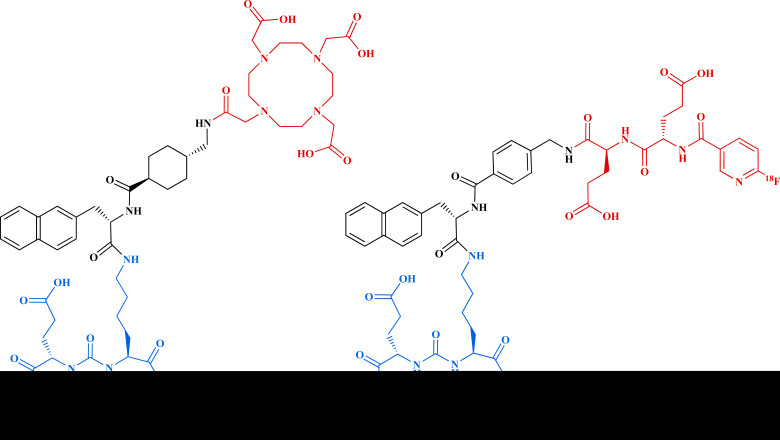
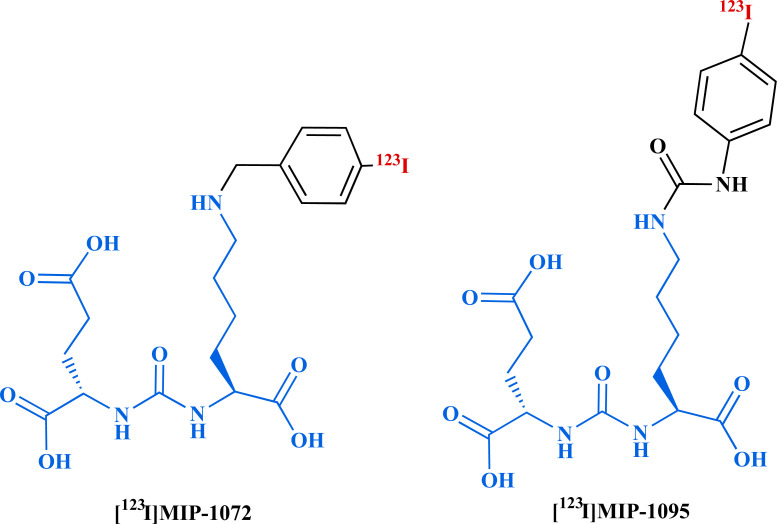
Although the first development of radiopharmaceuticals able to specifically recognize PSMA was exclusively oriented to macromolecule protein structure such as radiolabeled monoclonal antibodies and derivatives, the isolation of the crystal structure of PSMA served as the trigger for the synthesis and the further evaluation of a variety of low molecular weight inhibitors. Among the nuclear imaging probes and radiotherapeutics that have been developed and tested till today, labeled Glutamate-ureido inhibitors are the most prevalent PSMA-targeting agents for nuclear medicine applications.
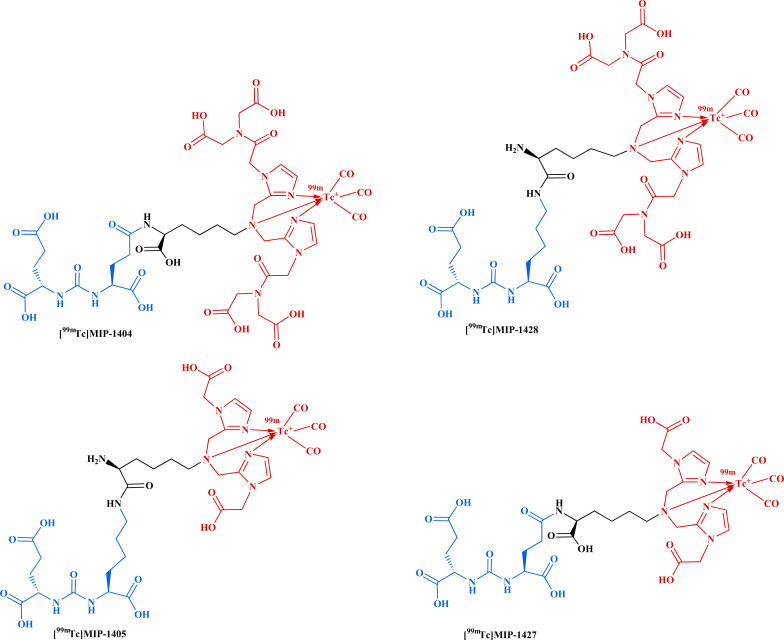
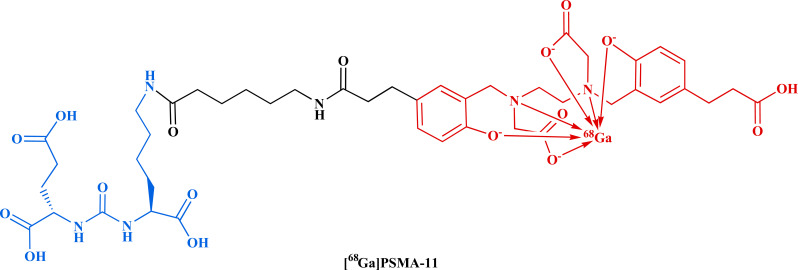
PSMA represents for researchers the most attractive target for the detection and treatment of patients affected by PCa using nuclear medicine modalities. [99mTc]MIP-1404 is considered the tracer of choice for SPECT imaging and [68Ga]PSMA-11 is the leading diagnostic for PET imaging by general consensus. [18F]DCFPyL and [18F]PSMA-1007 are clearly the emerging PET PSMA candidates for their great potential for a widespread commercial distribution. After paving the way with new imaging tools, academic and industrial R&Ds are now focusing on the development of PSMA inhibitors labeled with alpha or beta minus emitters for a theragnostic application.
在过去几十年中,前列腺癌(PCa)发病率的上升推动了新型诊断和治疗放射性药物的发展。使用前列腺特异性膜抗原(PSMA)标记的药物,包括特异性抗体和小分子抑制剂,在临床实践中已取得了有前景的进展。本综述聚焦于分子对接研究,旨在突出PSMA靶向药物设计方面的进展,以探讨其在核医学中的潜在应用。
尽管最初能够特异性识别PSMA的放射性药物的研发完全集中在大分子蛋白质结构上,如放射性标记的单克隆抗体及其衍生物,但PSMA晶体结构的分离引发了多种低分子量抑制剂的合成及进一步评估。在迄今已研发和测试的核成像探针及放射治疗药物中,标记的谷氨酸脲基抑制剂是核医学应用中最普遍的PSMA靶向药物。
对于研究人员而言,PSMA是利用核医学方法检测和治疗前列腺癌患者最具吸引力的靶点。[99mTc]MIP - 1404被认为是SPECT成像的首选示踪剂,而[68Ga]PSMA - 11是PET成像的主要诊断剂,这已成为普遍共识。[18F]DCFPyL和[18F]PSMA - 1007因其在广泛商业推广方面的巨大潜力,显然是新兴的PET PSMA候选药物。在用新的成像工具铺平道路之后,学术和工业研发目前正专注于开发标记有α或β-发射体的PSMA抑制剂,用于诊疗一体化应用。