Centre for Haematology, Imperial College London, London, UK.
J Thromb Haemost. 2019 Dec;17(12):2056-2068. doi: 10.1111/jth.14594. Epub 2019 Aug 9.
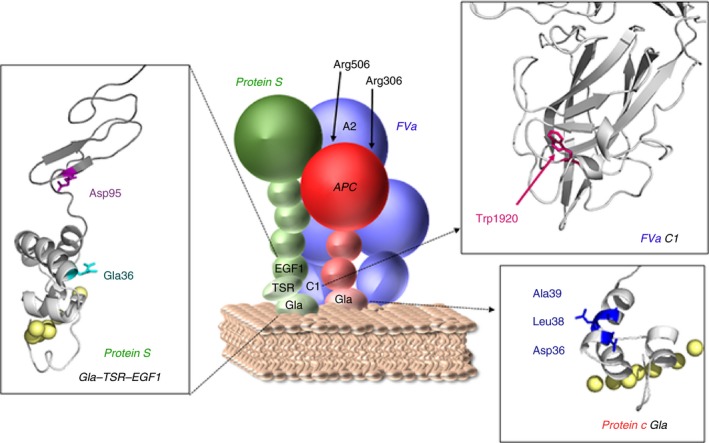
Activated protein C (APC)-mediated inactivation of factor (F)Va is greatly enhanced by protein S. For inactivation to occur, a trimolecular complex among FVa, APC, and protein S must form on the phospholipid membrane. However, direct demonstration of complex formation has proven elusive.
To elucidate the nature of the phospholipid-dependent interactions among APC, protein S, and FVa.
We evaluated binding of active site blocked APC to phospholipid-coated magnetic beads in the presence and absence of protein S and/or FVa. The importance of protein S and FV residues were evaluated functionally.
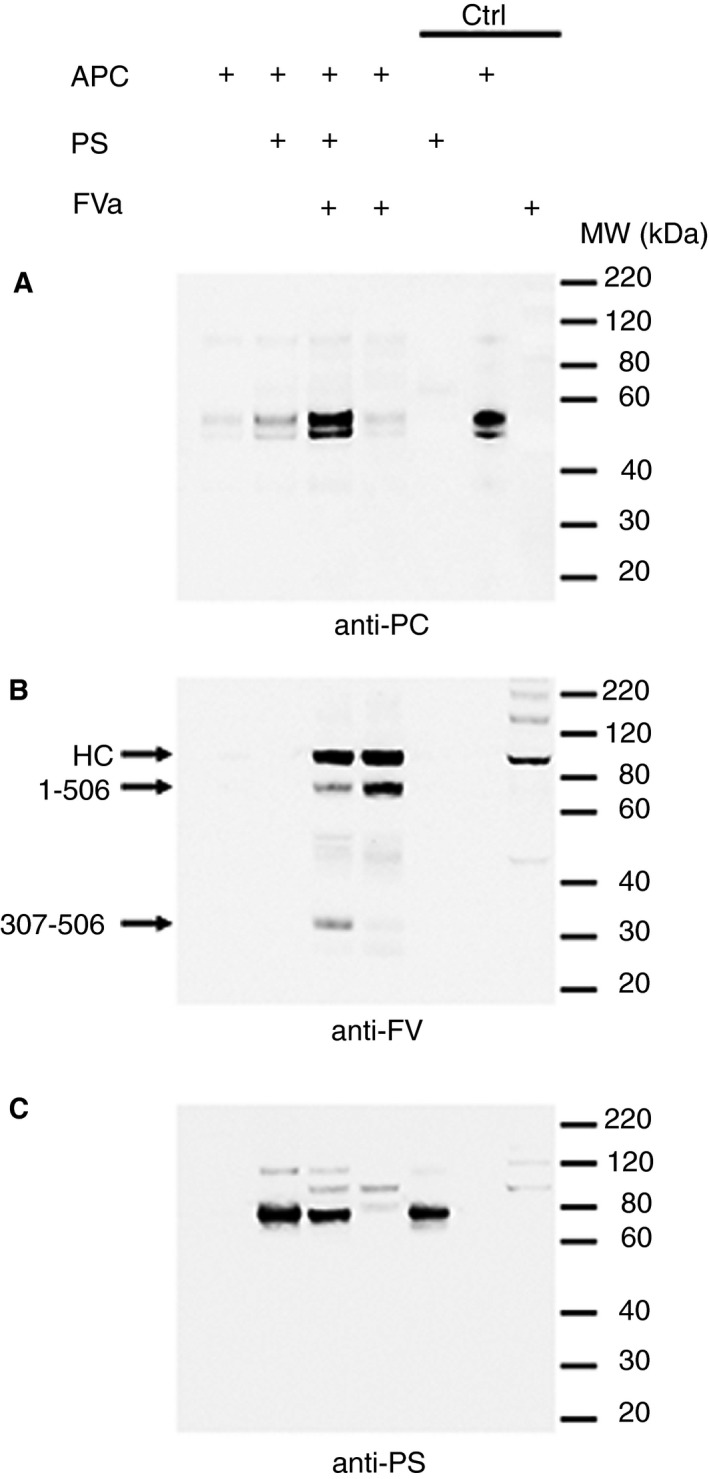
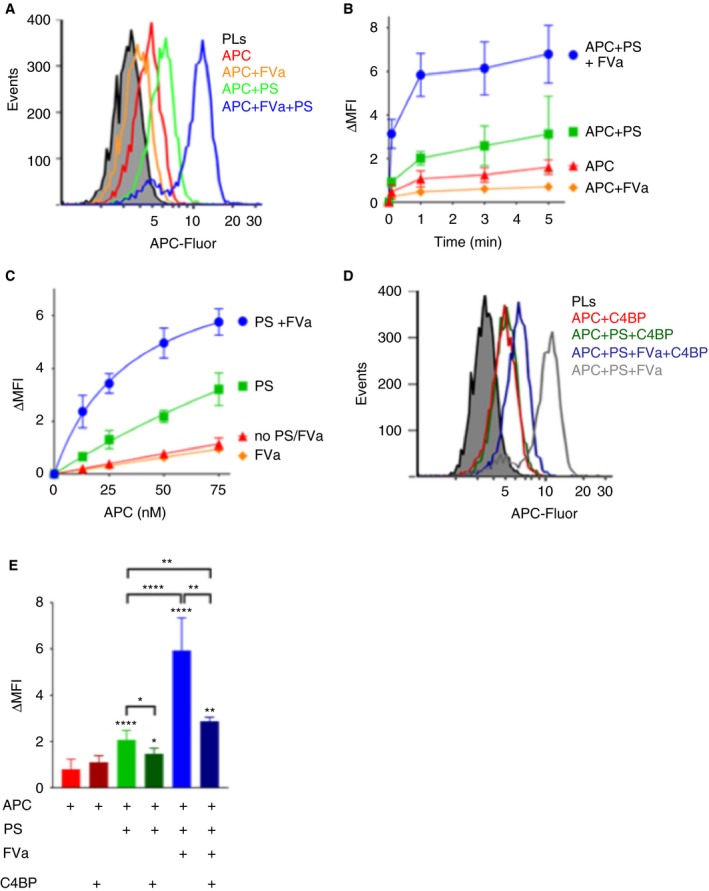
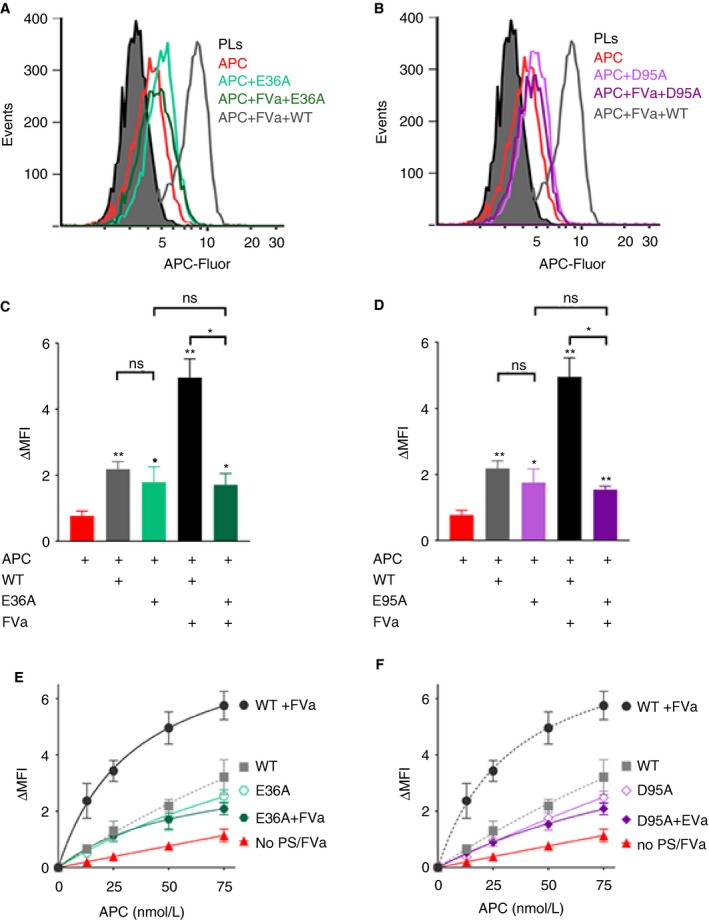
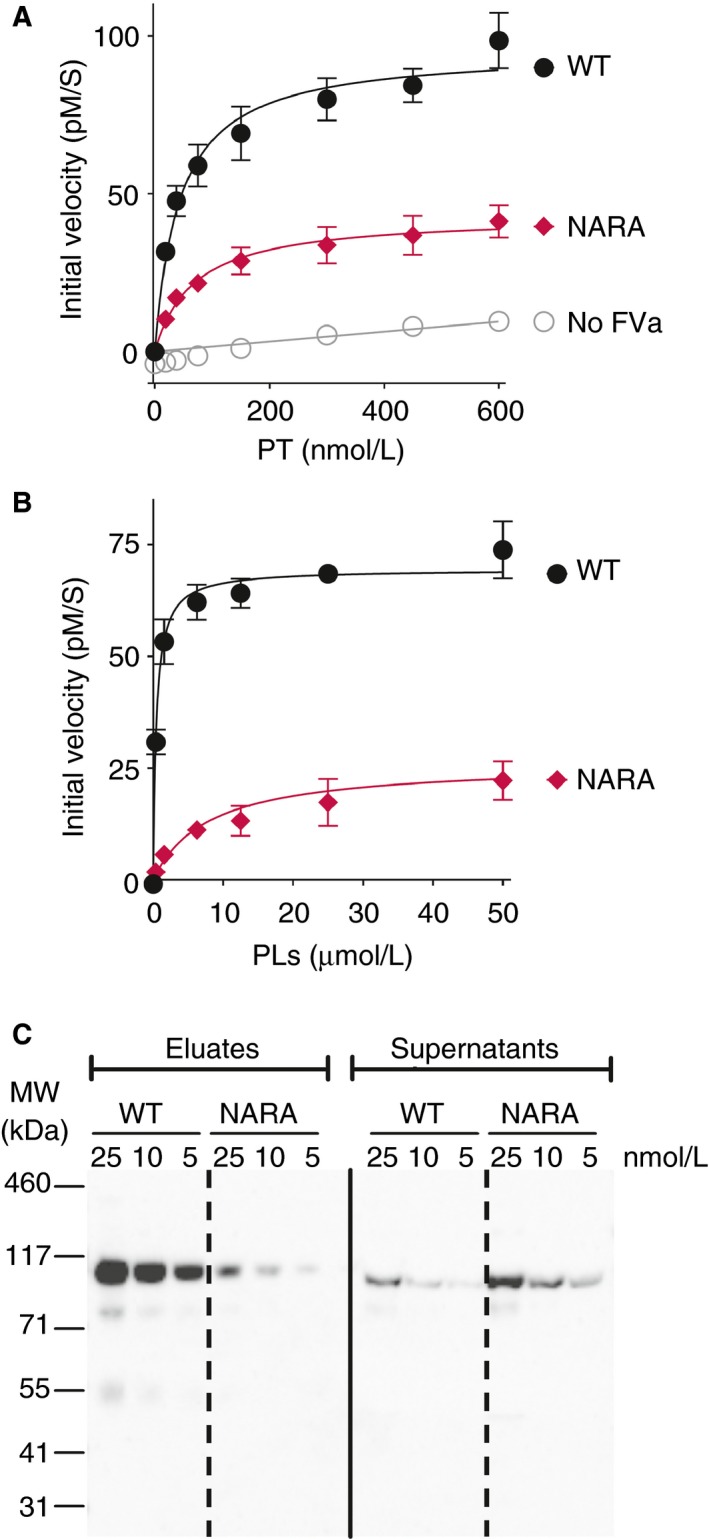
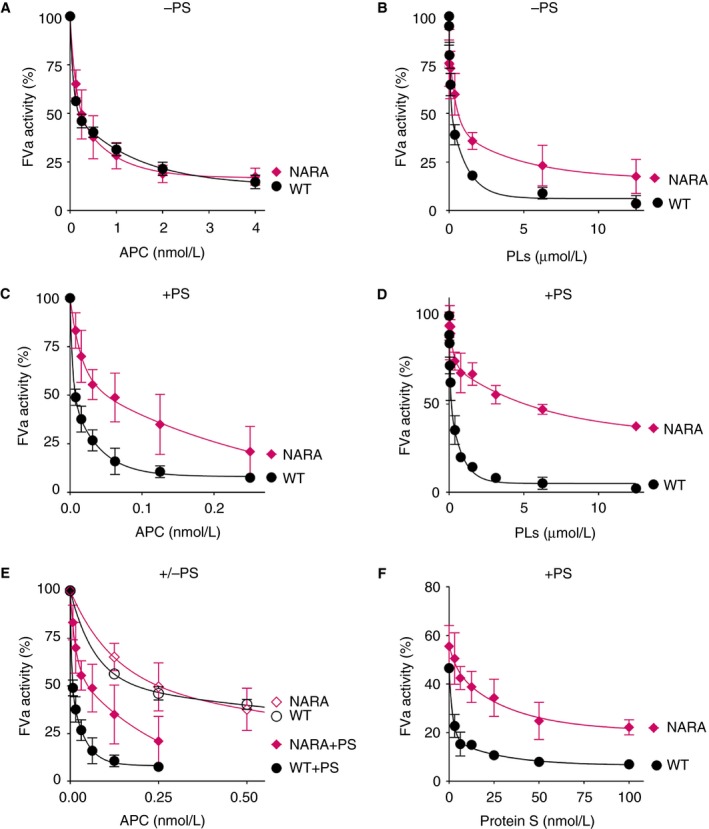
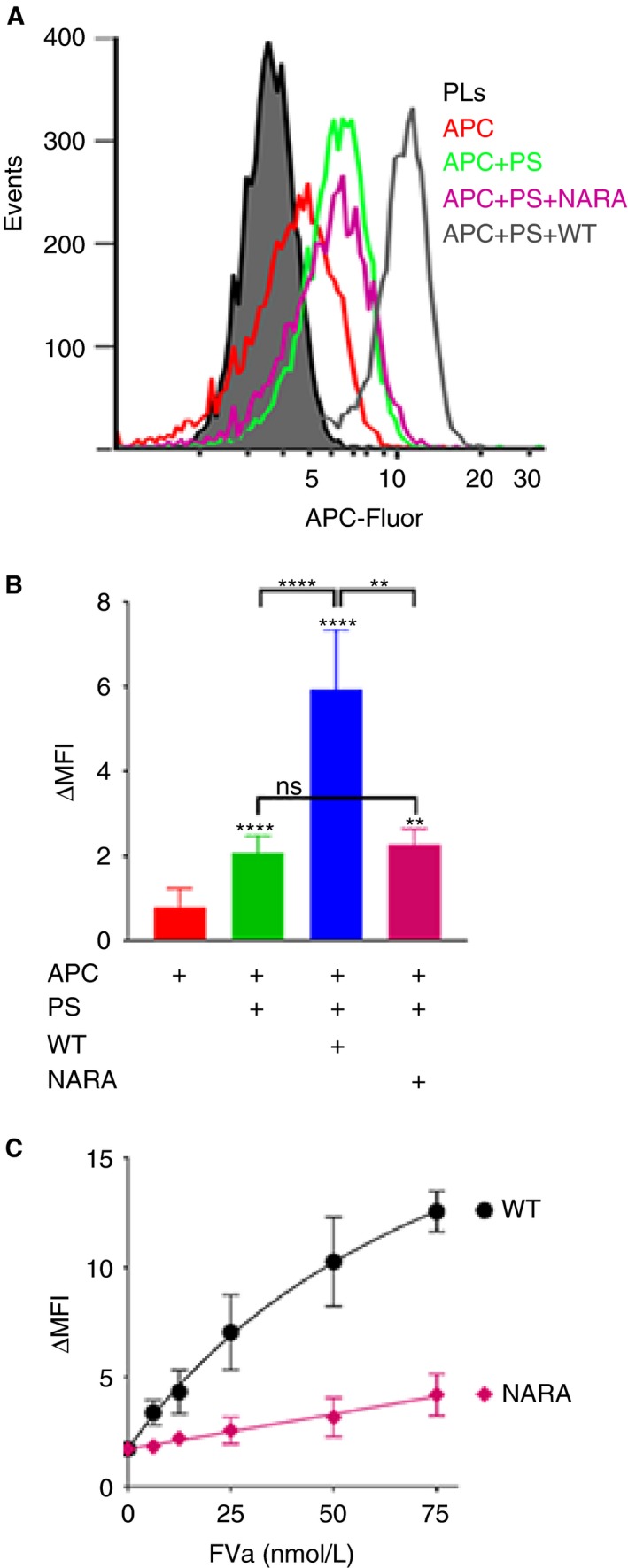
Activated protein C alone bound weakly to phospholipids. Protein S mildly enhanced APC binding to phospholipid surfaces, whereas FVa did not. However, FVa together with protein S enhanced APC binding (>14-fold), demonstrating formation of an APC/protein S/FVa complex. C4b binding protein-bound protein S failed to enhance APC binding, agreeing with its reduced APC cofactor function. Protein S variants (E36A and D95A) with reduced APC cofactor function exhibited essentially normal augmentation of APC binding to phospholipids, but diminished APC/protein S/FVa complex formation, suggesting involvement in interactions dependent upon FVa. Similarly, FVa (W1920R), an APC-resistant FV variant, also did not efficiently incorporate into the trimolecular complex as efficiently as wild-type FVa. FVa inactivation assays suggested that the mutation impairs its affinity for phospholipid membranes and with protein S within the complex.
FVa plays a central role in the formation of its inactivation complex. Furthermore, membrane proximal interactions among FVa, APC, and protein S are essential for its cofactor function.
蛋白 S 极大地增强了激活蛋白 C(APC)对因子(F)Va 的失活作用。为了发生失活作用,FVa、APC 和蛋白 S 之间的三聚体复合物必须在磷脂膜上形成。然而,复合物形成的直接证明一直难以实现。
阐明 APC、蛋白 S 和 FVa 之间依赖于磷脂的相互作用的性质。
我们评估了活性位点被阻断的 APC 在存在和不存在蛋白 S 和/或 FVa 的情况下与磷脂包被的磁性珠的结合。通过功能评估来评估蛋白 S 和 FV 残基的重要性。
单独的激活蛋白 C 与磷脂的结合较弱。蛋白 S 轻度增强 APC 与磷脂表面的结合,而 FVa 则没有。然而,FVa 与蛋白 S 一起增强 APC 结合(>14 倍),表明形成 APC/蛋白 S/FVa 复合物。C4b 结合蛋白结合的蛋白 S 未能增强 APC 结合,这与其 APC 辅助因子功能降低一致。具有降低 APC 辅助因子功能的蛋白 S 变体(E36A 和 D95A)表现出基本正常的 APC 结合到磷脂上的增强,但 APC/蛋白 S/FVa 复合物的形成减少,表明其参与了依赖 FVa 的相互作用。同样,APC 抗性 FV 变体(W1920R)也不能像野生型 FVa 那样有效地将 APC 结合到三聚体复合物中。FVa 失活测定表明,该突变损害了其与磷脂膜和复合物内蛋白 S 的亲和力。
FVa 在其失活复合物的形成中起着核心作用。此外,FVa、APC 和蛋白 S 之间的膜近端相互作用对于其辅助因子功能至关重要。