Department of Clinical Oncology, Institute of Development, Aging and Cancer, Tohoku University, Sendai, Japan.
Department of Medical Oncology, Tohoku University Hospital, Sendai, Japan.
Cancer Med. 2019 Sep;8(12):5662-5672. doi: 10.1002/cam4.2409. Epub 2019 Jul 31.
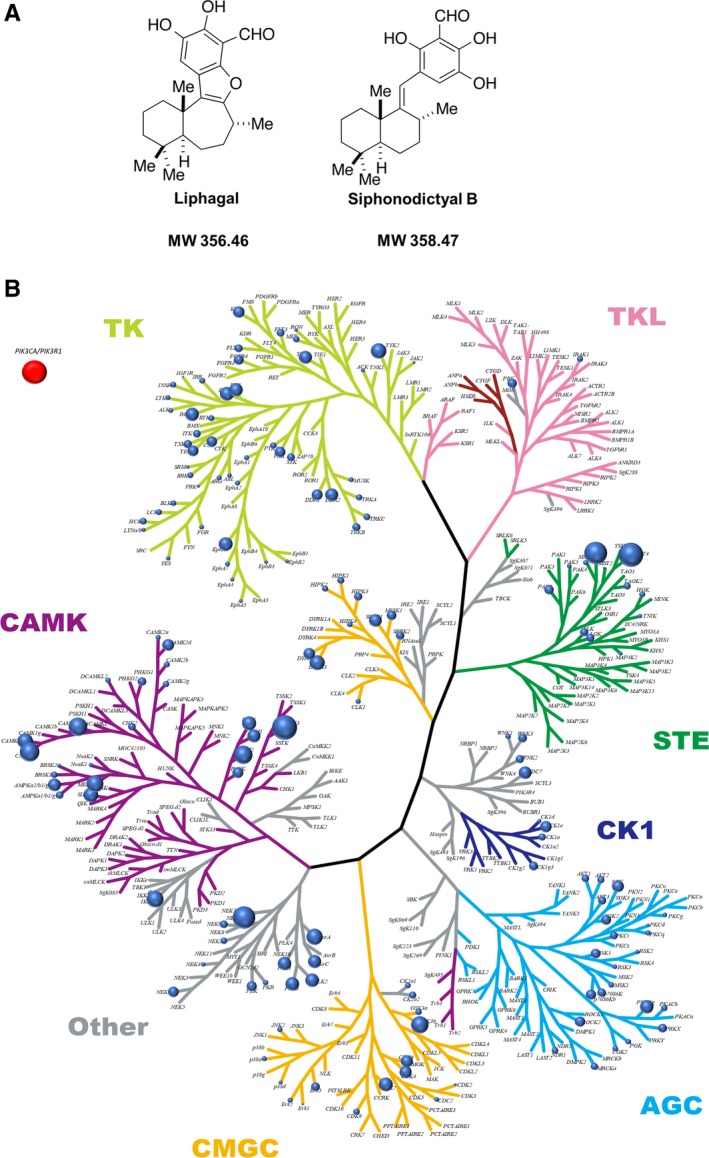
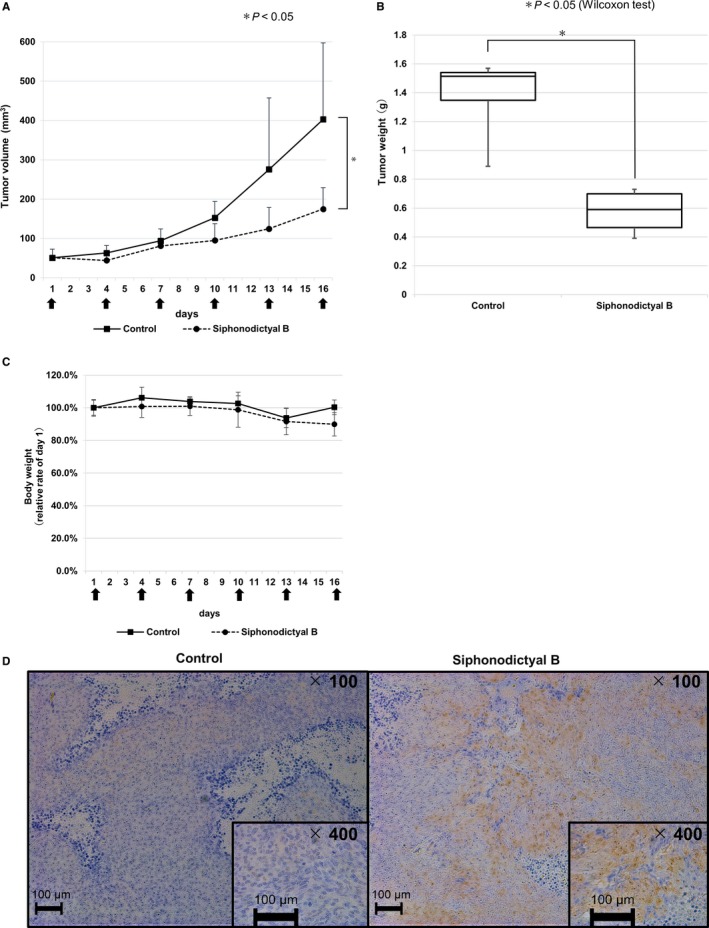
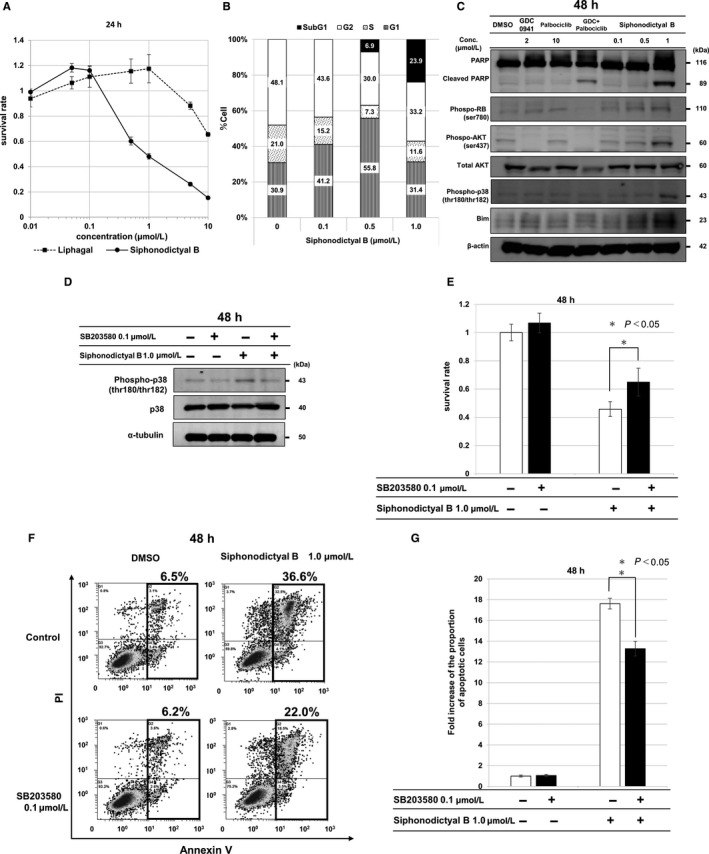
Liphagal, isolated from the marine sponge Aka coralliphaga, exhibits phosphatidylinositol 3-kinase alpha (PI3Kα) inhibitory activity and cytotoxic effects in human cancer cells. Siphonodictyal B, the biogenetic precursor of liphagal, also has PI3K inhibitory activity. However, its cytotoxic or antitumor activities have not been evaluated. In this study, we demonstrated that siphonodictyal B inhibits several kinases such as CDK4/6, CDK7, and PIM2 in addition to PI3K in vitro and that siphonodictyal B exhibits more potent cytotoxic effects than liphagal against human colon cancer cell lines. Furthermore, treatment with siphonodictyal B resulted in increased PARP cleavage, a larger sub-G1 fraction, and a larger annexin V-positive cell population, all of which are indicative of apoptosis induction. As a mechanism of apoptosis induction, we found that siphonodictyal B activates the p38 MAPK pathway, leading the upregulation of proapoptotic factors. Moreover, siphonodictyal B increased ROS levels, thus promoting p38 MAPK pathway activation. NAC, an ROS scavenger, almost completely reversed both the cytotoxic and p38 MAPK pathway-activating effects of siphonodictyal B. These results indicate that the p38 MAPK pathway might be involved downstream of ROS signaling as part of the mechanism of siphonodictyal B-induced apoptosis. Finally, siphonodictyal B displayed antitumor effects in a human colon cancer xenograft mouse model and increased p38 phosphorylation in tumor tissue. These results suggest that siphonodictyal B could serve as the basis of a novel anticancer drug.
从海洋海绵 Aka coralliphaga 中分离得到的 Liphagal 具有磷酸肌醇 3-激酶 α(PI3Kα)抑制活性,并对人类癌细胞具有细胞毒性作用。Liphagal 的生物合成前体 Siphonodictyal B 也具有 PI3K 抑制活性。然而,其细胞毒性或抗肿瘤活性尚未得到评估。在这项研究中,我们证明了 Siphonodictyal B 在体外除了抑制 PI3K 之外,还能抑制多种激酶,如 CDK4/6、CDK7 和 PIM2,并且 Siphonodictyal B 对人结肠癌细胞系的细胞毒性作用比 Liphagal 更强。此外,用 Siphonodictyal B 处理会导致 PARP 切割增加、更大的 sub-G1 分数和更大的 Annexin V 阳性细胞群体,所有这些都表明诱导了细胞凋亡。作为诱导细胞凋亡的机制,我们发现 Siphonodictyal B 激活了 p38 MAPK 途径,导致促凋亡因子的上调。此外,Siphonodictyal B 增加了 ROS 水平,从而促进了 p38 MAPK 途径的激活。ROS 清除剂 NAC 几乎完全逆转了 Siphonodictyal B 的细胞毒性和 p38 MAPK 途径激活作用。这些结果表明,p38 MAPK 途径可能作为 Siphonodictyal B 诱导细胞凋亡机制的一部分,下游涉及 ROS 信号。最后,Siphonodictyal B 在人结肠癌异种移植小鼠模型中显示出抗肿瘤作用,并增加了肿瘤组织中 p38 的磷酸化。这些结果表明 Siphonodictyal B 可以作为一种新型抗癌药物的基础。