Department of Biotechnology, National Institute of Technology Warangal, Warangal, 506004, Telangana, India.
Sci Rep. 2019 Jul 31;9(1):11083. doi: 10.1038/s41598-019-47558-x.
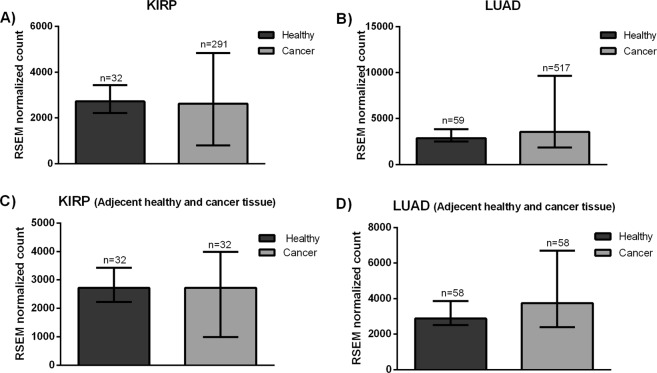
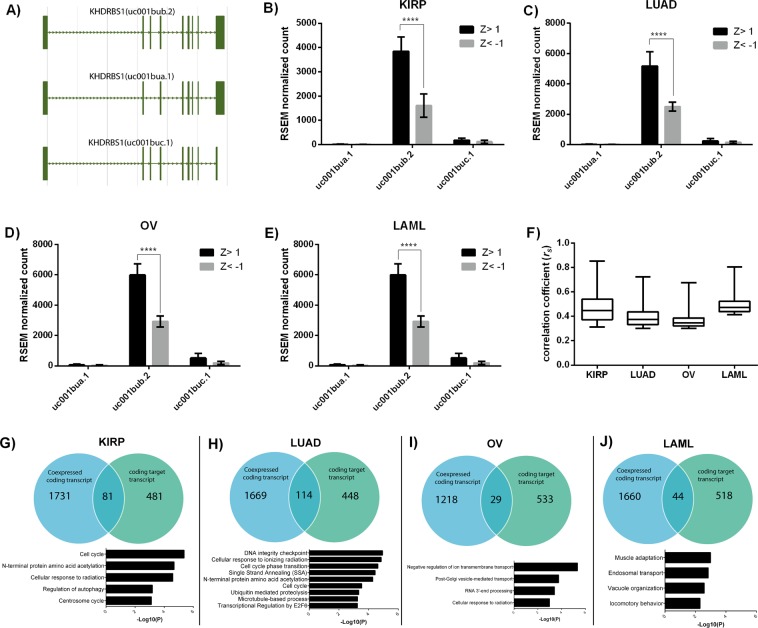
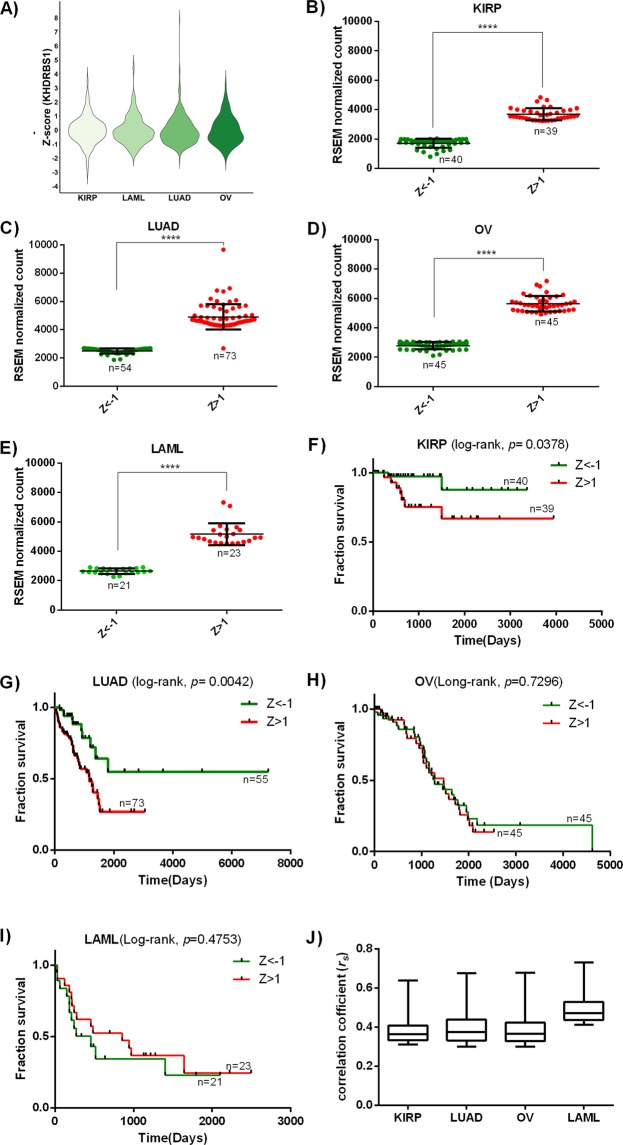
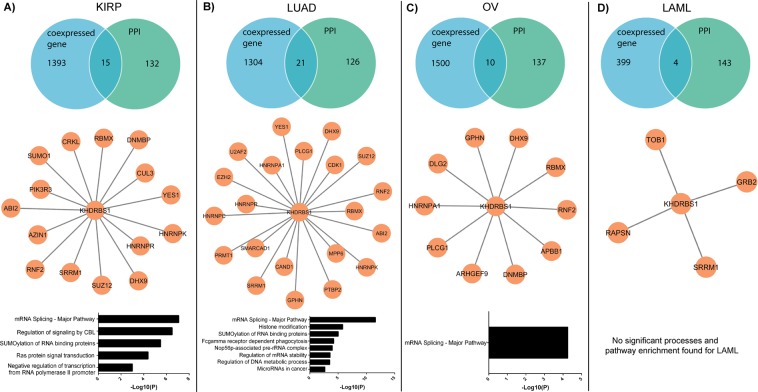
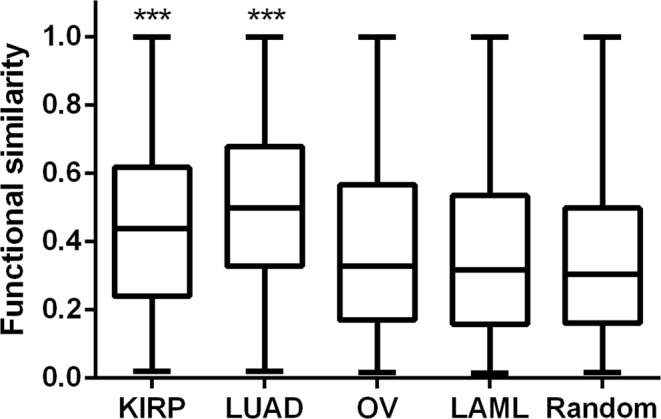
Human KHDRBS1/Sam68 is an oncogenic splicing factor involved in signal transduction and pre-mRNA splicing. We explored the molecular mechanism of KHDRBS1 to be a prognostic marker in four different cancers. Within specific cancer, including kidney renal papillary cell carcinoma (KIRP), lung adenocarcinoma (LUAD), acute myeloid leukemia (LAML), and ovarian cancer (OV), KHDRBS1 expression is heterogeneous and patient specific. In KIRP and LUAD, higher expression of KHDRBS1 affects the patient survival, but not in LAML and OV. Genome-wide coexpression analysis reveals genes and transcripts which are coexpressed with KHDRBS1 in KIRP and LUAD, form the functional modules which are majorly involved in cancer-specific events. However, in case of LAML and OV, such modules are absent. Irrespective of the higher expression of KHDRBS1, the significant divergence of its biological roles and prognostic value is due to its cancer-specific interaction partners and correlation networks. We conclude that rewiring of KHDRBS1 interactions in cancer is directly associated with patient prognosis.
人类 KHDRBS1/Sam68 是一种致癌剪接因子,参与信号转导和前体 mRNA 剪接。我们探索了 KHDRBS1 作为四种不同癌症预后标志物的分子机制。在特定的癌症中,包括肾嫌色细胞癌(KIRP)、肺腺癌(LUAD)、急性髓性白血病(LAML)和卵巢癌(OV),KHDRBS1 的表达是异质的且具有患者特异性。在 KIRP 和 LUAD 中,较高的 KHDRBS1 表达会影响患者的生存,但在 LAML 和 OV 中则不会。全基因组共表达分析揭示了在 KIRP 和 LUAD 中与 KHDRBS1 共表达的基因和转录本,形成了主要涉及癌症特异性事件的功能模块。然而,在 LAML 和 OV 的情况下,则不存在这样的模块。无论 KHDRBS1 的表达水平较高与否,其生物学作用和预后价值的显著差异是由于其癌症特异性的相互作用伙伴和相关网络所致。我们的结论是,癌症中 KHDRBS1 相互作用的重排与患者的预后直接相关。