Mazzarella Nadia, Giangrieco Ivana, Visone Serena, Santonicola Pamela, Achenbach Jannis, Zampi Giuseppina, Tamburrini Maurizio, Di Schiavi Elia, Ciardiello Maria Antonietta
Institute of Biosciences and BioResources CNR Naples Italy.
Food Sci Nutr. 2019 Jun 17;7(7):2327-2335. doi: 10.1002/fsn3.1078. eCollection 2019 Jul.
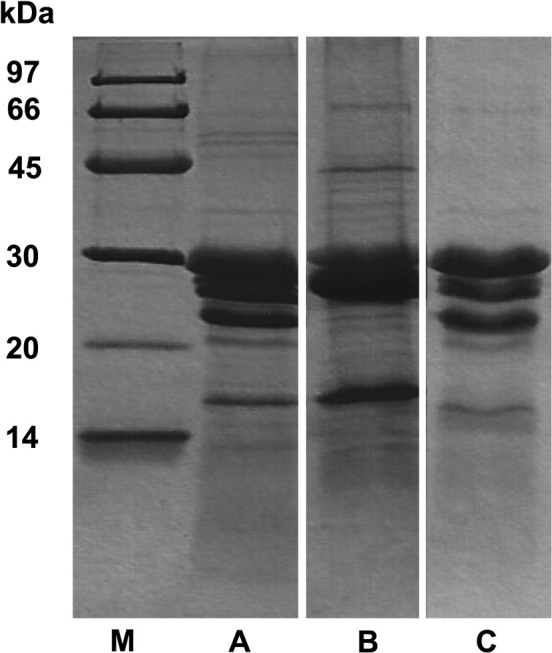
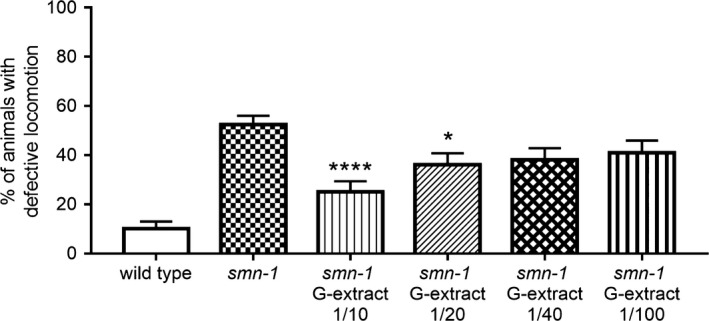
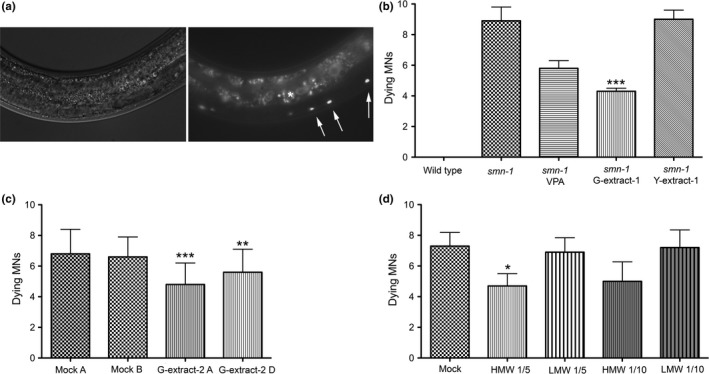
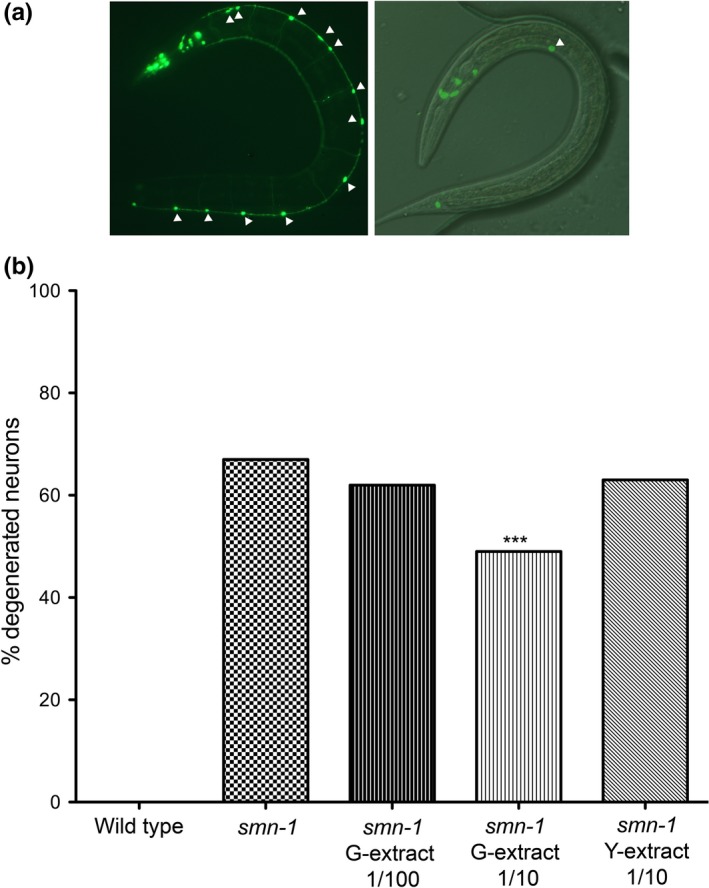
Kiwifruit is considered a functional food and a good source of nutraceuticals. Among the possible beneficial effects of kiwifruit species, a neuroprotective activity exerted in rats with learning and memory impairment induced by exposure to different chemicals was reported. We sought to investigate the neuroprotective activities of kiwifruit toward spinal muscular atrophy (SMA). To this purpose, we have used a recently developed SMA model, displaying an age-dependent degeneration of motor neurons detected as locomotory defects, disappearance of fluorescent markers, and apoptotic death of targeted neurons. Although an anti-nematode activity is reported for kiwifruit, it has been verified that neither green (, cultivar Hayward) nor gold (, cultivar Hort 16A) kiwifruit extracts cause detectable effects on wild-type growth and life cycle. Conversely, green kiwifruit extracts have a clear effect on the SMA model by partially rescuing the degeneration and death of motor neurons and the locomotion impairment. The gold species does not show the same effect. The components responsible for the neuroprotection are macromolecules with a molecular weight higher than 3 kDa, present in the green and not in the yellow kiwifruit. In conclusion, this is the first study reporting a protective activity of green kiwifruit toward motor neurons. In addition, we demonstrate that is an animal model suitable to study the biological activities contained in kiwifruit. Therefore, this model can be exploited for future investigations aimed at identifying kiwifruit molecules with potential applications in the field of human health.
猕猴桃被认为是一种功能性食品,也是营养保健品的良好来源。在猕猴桃品种可能产生的有益作用中,有报道称其对因接触不同化学物质而导致学习和记忆受损的大鼠具有神经保护活性。我们试图研究猕猴桃对脊髓性肌萎缩症(SMA)的神经保护活性。为此,我们使用了一种最近开发的SMA模型,该模型显示运动神经元随年龄退化,表现为运动缺陷、荧光标记消失以及靶向神经元的凋亡死亡。尽管有报道称猕猴桃具有抗线虫活性,但已证实绿色(品种海沃德)和金色(品种Hort 16A)猕猴桃提取物对野生型线虫的生长和生命周期均无明显影响。相反,绿色猕猴桃提取物对SMA模型有明显作用,可部分挽救运动神经元的退化和死亡以及运动障碍。金色品种则没有同样的效果。负责神经保护的成分是分子量高于3 kDa的大分子,存在于绿色而非黄色猕猴桃中。总之,这是第一项报道绿色猕猴桃对运动神经元具有保护活性的研究。此外,我们证明线虫是一种适合研究猕猴桃所含生物活性的动物模型。因此,该模型可用于未来旨在鉴定在人类健康领域具有潜在应用价值的猕猴桃分子的研究。