Håkansson Eklund Jakob, Holmström Inger K, Ollén Lindqvist Anna, Sundler Annelie J, Hochwälder Jacek, Marmstål Hammar Lena
School of Health, Care and Social Welfare Mälardalen University Västerås Sweden.
Department of Public Health and Caring Sciences Uppsala University Uppsala Sweden.
Nurs Open. 2019 May 1;6(3):983-989. doi: 10.1002/nop2.280. eCollection 2019 Jul.
Empathy is a crucial component of the nurse-patient relationship, but knowledge is lacking as to when empathy develops during nursing education. The aim of the present study was to compare empathy levels at different stages of undergraduate nursing education and different master's nursing programmes.
The design was a comparative cross-sectional study.
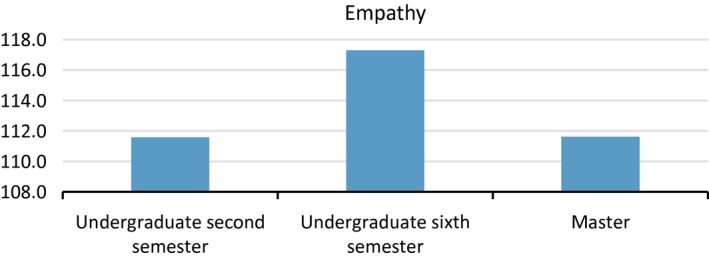
A total of 329 participants in Sweden, comprised of nursing students in their second and sixth semesters in an undergraduate nursing programme as well as master's nursing students, rated their own empathy using the Jefferson Scale of Physician Empathy.
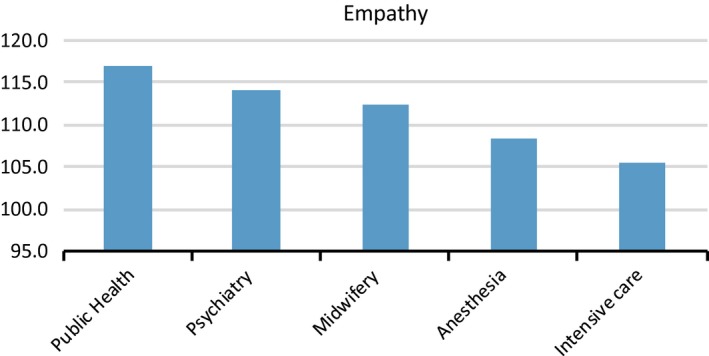
Students in their sixth semester in an undergraduate nursing programme expressed more empathy than did students in their second semester and master's nursing students. Among the five master's programmes, public-health nursing students expressed the most empathy and intensive-care nursing students the least.
同理心是护患关系的关键组成部分,但对于护理教育过程中同理心何时发展尚缺乏了解。本研究的目的是比较本科护理教育不同阶段以及不同硕士护理项目中的同理心水平。
本研究为比较性横断面研究。
瑞典共有329名参与者,包括本科护理项目第二学期和第六学期的护理专业学生以及硕士护理专业学生,他们使用杰斐逊医生同理心量表对自己的同理心进行评分。
本科护理项目第六学期的学生比第二学期的学生以及硕士护理专业学生表现出更多的同理心。在五个硕士项目中,公共卫生护理专业学生表现出的同理心最强,重症监护护理专业学生表现出的同理心最弱。