Nag Deb Sanjay, Sahu Seelora, Swain Amlan, Kant Shashi
Department of Anaesthesiology and Critical Care, Tata Main Hospital, Jamshedpur 831001, India.
World J Clin Cases. 2019 Jul 6;7(13):1535-1553. doi: 10.12998/wjcc.v7.i13.1535.
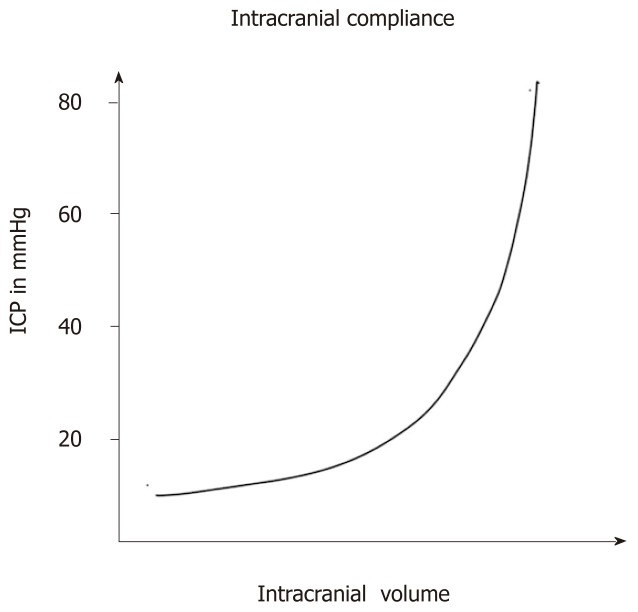
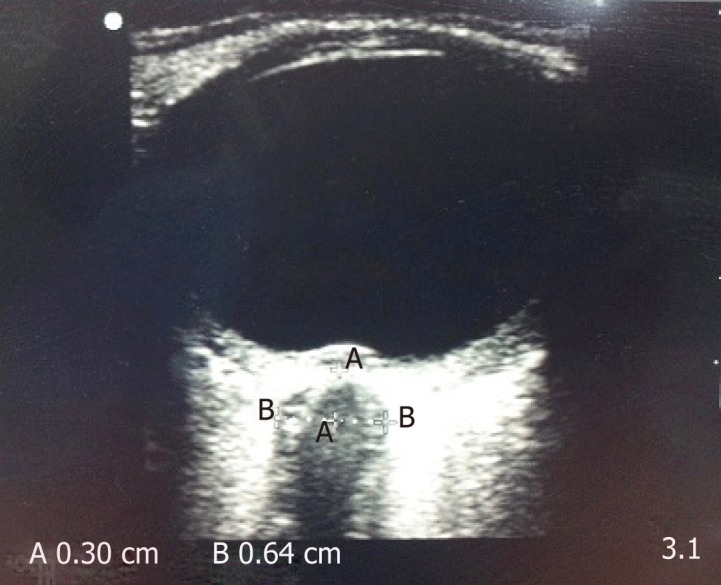
Intracranial pressure monitoring (ICP) is based on the doctrine proposed by Monroe and Kellie centuries ago. With the advancement of technology and science, various invasive and non-invasive modalities of monitoring ICP continue to be developed. An ideal monitor to track ICP should be easy to use, accurate, reliable, reproducible, inexpensive and should not be associated with infection or haemorrhagic complications. Although the transducers connected to the extra ventricular drainage continue to be Gold Standard, its association with the likelihood of infection and haemorrhage have led to the search for alternate non-invasive methods of monitoring ICP. While Camino transducers, Strain gauge micro transducer based ICP monitoring devices and the Spiegelberg ICP monitor are the emerging technology in invasive ICP monitoring, optic nerve sheath diameter measurement, venous opthalmodynamometry, tympanic membrane displacement, tissue resonance analysis, tonometry, acoustoelasticity, distortion-product oto-acoustic emissions, trans cranial doppler, electro encephalogram, near infra-red spectroscopy, pupillometry, anterior fontanelle pressure monitoring, skull elasticity, jugular bulb monitoring, visual evoked response and radiological based assessment of ICP are the non-invasive methods which are assessed against the gold standard.
颅内压监测(ICP)基于几个世纪前门罗和凯利提出的学说。随着科技的进步,各种有创和无创的颅内压监测方式不断被开发出来。一种理想的颅内压监测仪应该易于使用、准确、可靠、可重复、价格低廉,并且不应与感染或出血并发症相关。尽管连接到脑室外引流的传感器仍然是金标准,但它与感染和出血可能性的关联促使人们寻找替代的无创颅内压监测方法。虽然卡米诺传感器、基于应变片微传感器的颅内压监测设备和施皮格尔贝格颅内压监测仪是有创颅内压监测中的新兴技术,但视神经鞘直径测量、静脉眼压描记法、鼓膜移位、组织共振分析、眼压测量、声弹性、畸变产物耳声发射、经颅多普勒、脑电图、近红外光谱、瞳孔测量、前囟压力监测、颅骨弹性、颈静脉球监测、视觉诱发电位以及基于放射学的颅内压评估等都是与金标准相对照进行评估的无创方法。