Ann Am Thorac Soc. 2019 Aug;16(8):e1-e16. doi: 10.1513/AnnalsATS.201904-344WS.
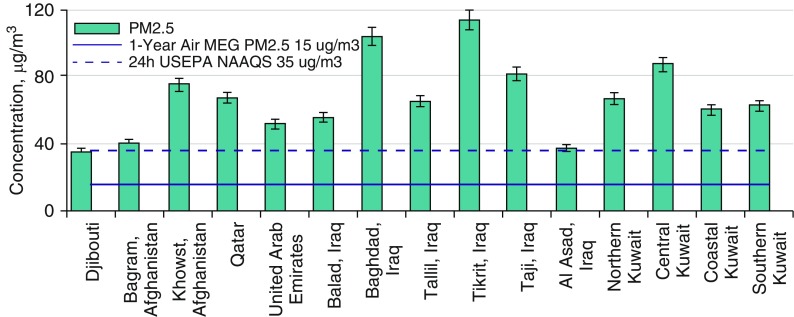
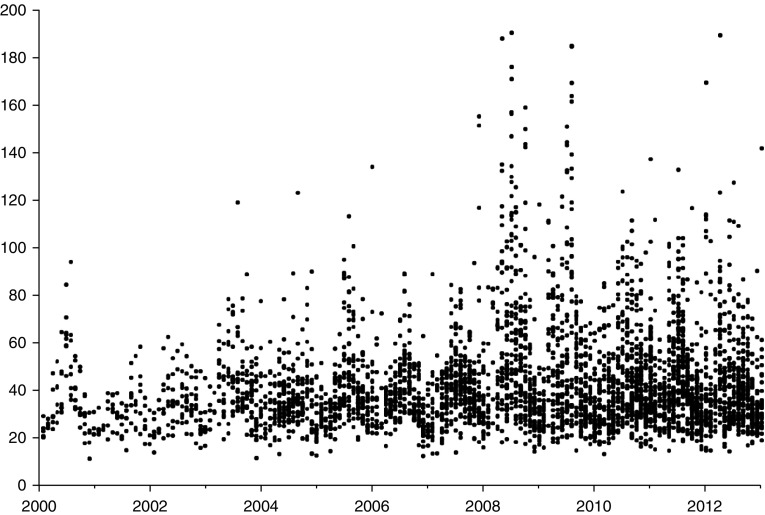
Since 2001, more than 2.7 million U.S. military personnel have been deployed in support of operations in Southwest Asia and Afghanistan. Land-based personnel experienced elevated exposures to particulate matter and other inhalational exposures from multiple sources, including desert dust, burn pit combustion, and other industrial, mobile, or military sources. A workshop conducted at the 2018 American Thoracic Society International Conference had the goals of: ) identifying key studies assessing postdeployment respiratory health, ) describing emerging research, and ) highlighting knowledge gaps. The workshop reviewed epidemiologic studies that demonstrated more frequent encounters for respiratory symptoms postdeployment compared with nondeployers and for airway disease, predominantly asthma, as well as case series describing postdeployment dyspnea, asthma, and a range of other respiratory tract findings. On the basis of particulate matter effects in other populations, it also is possible that deployers experienced reductions in pulmonary function as a result of such exposure. The workshop also gave particular attention to constrictive bronchiolitis, which has been reported in lung biopsies of selected deployers. Workshop participants had heterogeneous views regarding the definition and frequency of constrictive bronchiolitis and other small airway pathologic findings in deployed populations. The workshop concluded that the relationship of airway disease, including constrictive bronchiolitis, to exposures experienced during deployment remains to be better defined. Future clinical and epidemiologic research efforts should address better characterization of deployment exposures; carry out longitudinal assessment of potentially related adverse health conditions, including lung function and other physiologic changes; and use rigorous histologic, exposure, and clinical characterization of patients with respiratory tract abnormalities.
自 2001 年以来,超过 270 万美国军事人员被部署到支持在西南亚和阿富汗的行动中。地面人员接触到了来自多个来源的颗粒物和其他吸入性暴露物,包括沙漠尘埃、燃烧坑燃烧以及其他工业、移动或军事来源。2018 年美国胸科学会国际会议上举办了一个研讨会,旨在:)确定评估部署后呼吸健康的关键研究,)描述新兴研究,和)突出知识差距。该研讨会审查了表明与非部署人员相比部署后呼吸道症状更频繁出现的流行病学研究,以及描述部署后呼吸困难、哮喘和一系列其他呼吸道发现的病例系列。根据其他人群中颗粒物的影响,部署人员也有可能因这种暴露而导致肺功能下降。该研讨会还特别关注了限制性细支气管炎,这种疾病在一些部署人员的肺活检中已有报道。研讨会参与者对部署人群中限制性细支气管炎和其他小气道病理发现的定义和频率存在不同看法。研讨会得出的结论是,气道疾病(包括限制性细支气管炎)与部署期间所经历的暴露之间的关系仍有待更好地定义。未来的临床和流行病学研究工作应更好地描述部署暴露情况;对潜在相关不良健康状况(包括肺功能和其他生理变化)进行纵向评估;并对呼吸道异常患者进行严格的组织学、暴露和临床特征描述。