University of Pennsylvania, Philadelphia, United States.
Elife. 2019 Aug 1;8:e42950. doi: 10.7554/eLife.42950.
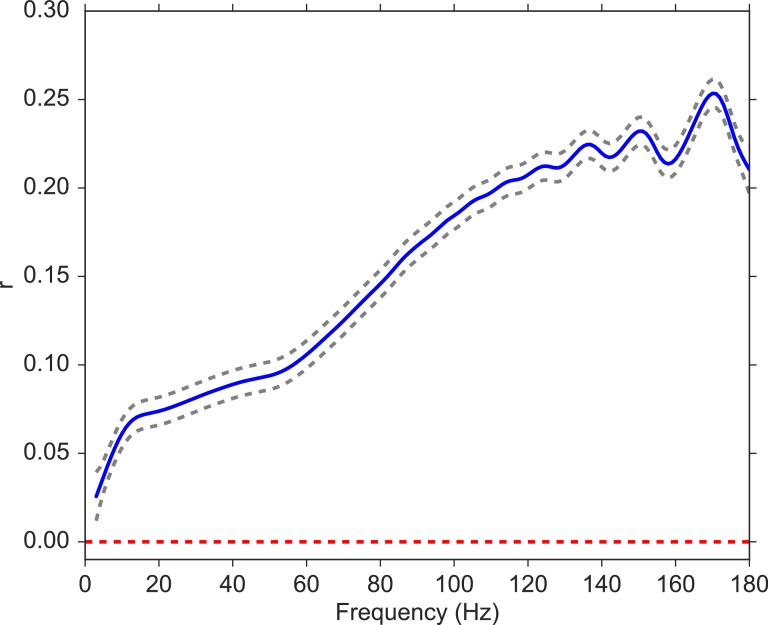
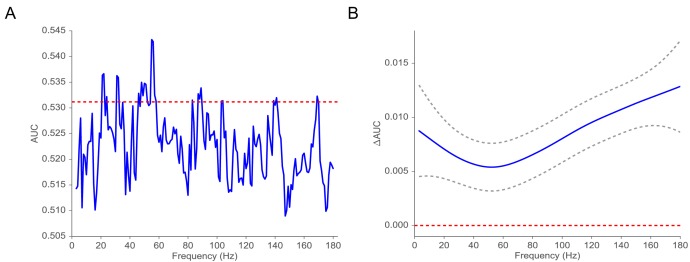
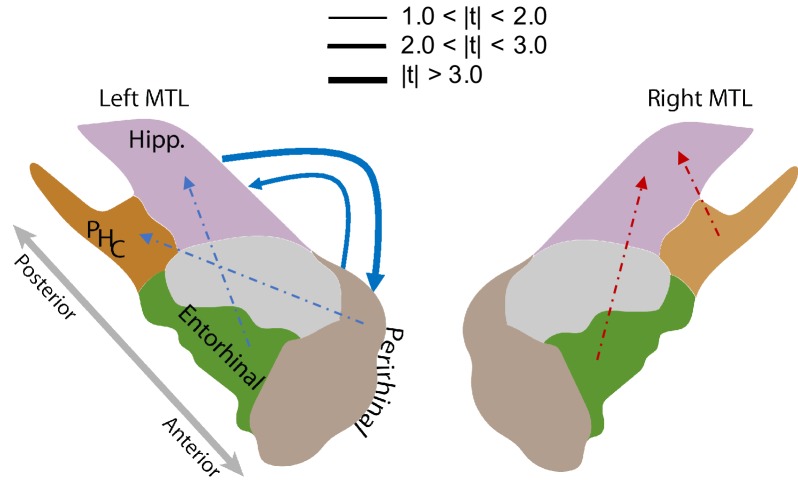
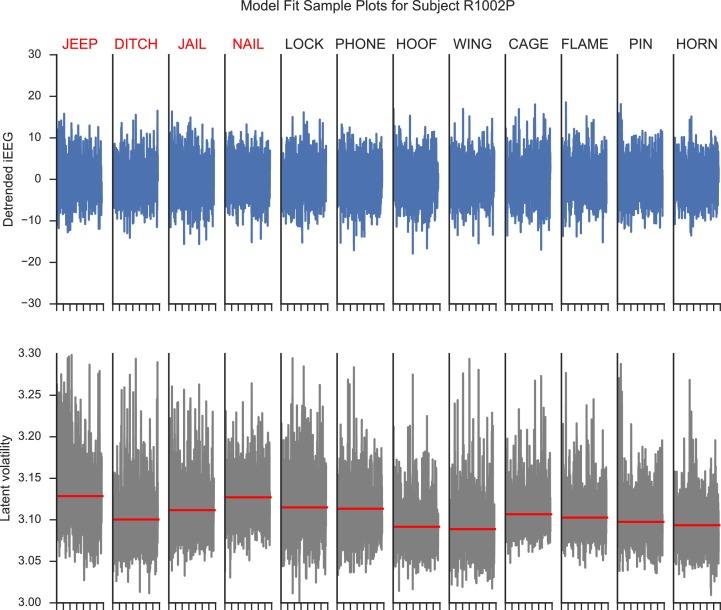
Because multivariate autoregressive models have failed to adequately account for the complexity of neural signals, researchers have predominantly relied on non-parametric methods when studying the relations between brain and behavior. Using medial temporal lobe (MTL) recordings from 96 neurosurgical patients, we show that time series models with volatility described by a multivariate stochastic latent-variable process and lagged interactions between signals in different brain regions provide new insights into the dynamics of brain function. The implied volatility inferred from our process positively correlates with high-frequency spectral activity, a signal that correlates with neuronal activity. We show that volatility features derived from our model can reliably decode memory states, and that this classifier performs as well as those using spectral features. Using the directional connections between brain regions during complex cognitive process provided by the model, we uncovered perirhinal-hippocampal desynchronization in the MTL regions that is associated with successful memory encoding.
由于多元自回归模型未能充分解释神经信号的复杂性,研究人员在研究大脑与行为之间的关系时主要依赖于非参数方法。我们使用来自 96 名神经外科患者的内侧颞叶 (MTL) 记录,表明由多元随机潜变量过程描述的时序列模型和不同脑区之间信号的滞后相互作用为大脑功能动力学提供了新的见解。从我们的过程推断出的隐含波动率与高频谱活动呈正相关,而该信号与神经元活动相关。我们表明,从我们的模型中得出的波动率特征可以可靠地解码记忆状态,并且该分类器的性能与使用频谱特征的分类器一样好。使用模型提供的复杂认知过程中大脑区域之间的定向连接,我们发现与成功的记忆编码相关的 MTL 区域中的内嗅-海马去同步化。