Department of Psychological Medicine, Yong Loo Lin School of Medicine, National University of Singapore, Singapore 119007, Singapore.
Institute of Cognitive Neuroscience, Huaibei Normal University, Huaibei 235000, China.
Int J Environ Res Public Health. 2019 Jul 31;16(15):2735. doi: 10.3390/ijerph16152735.
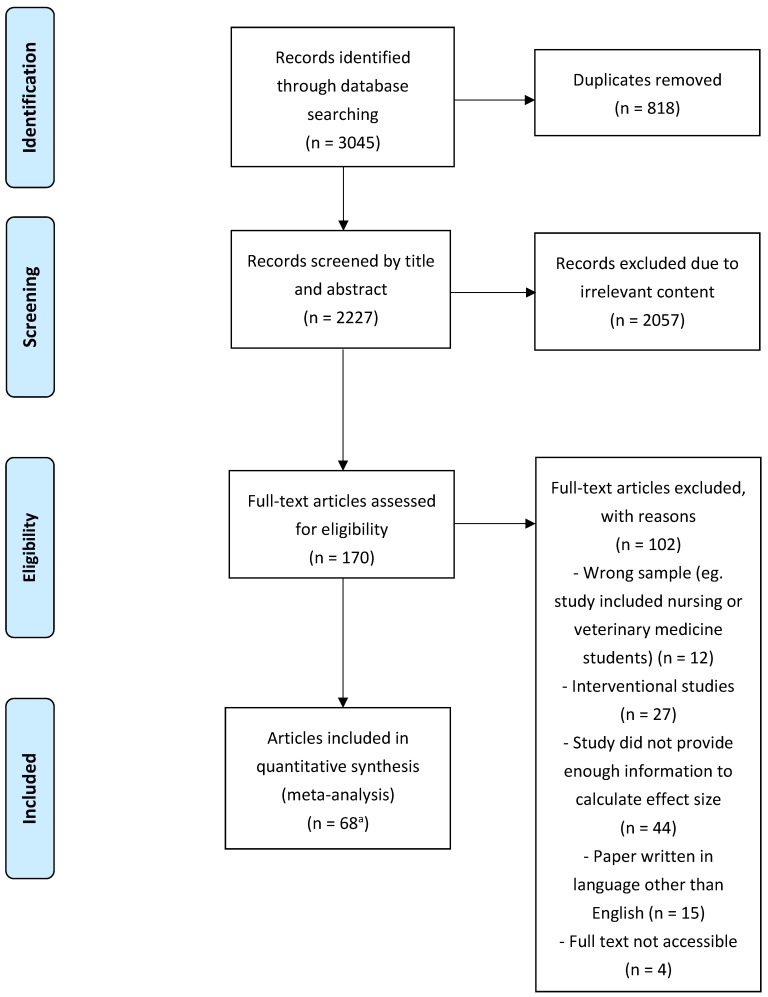
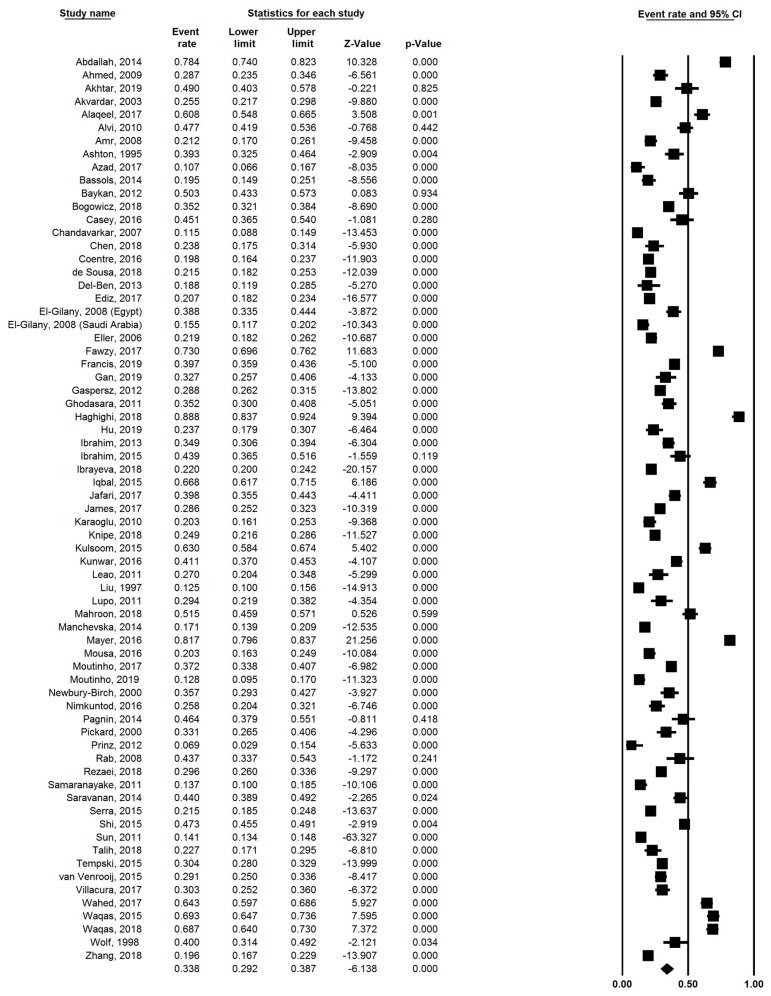
Anxiety, although as common and arguably as debilitating as depression, has garnered less attention, and is often undetected and undertreated in the general population. Similarly, anxiety among medical students warrants greater attention due to its significant implications. We aimed to study the global prevalence of anxiety among medical students and the associated factors predisposing medical students to anxiety. In February 2019, we carried out a systematic search for cross-sectional studies that examined the prevalence of anxiety among medical students. We computed the aggregate prevalence and pooled odds ratio (OR) using the random-effects model and used meta-regression analyses to explore the sources of heterogeneity. We pooled and analyzed data from sixty-nine studies comprising 40,348 medical students. The global prevalence rate of anxiety among medical students was 33.8% (95% Confidence Interval: 29.2-38.7%). Anxiety was most prevalent among medical students from the Middle East and Asia. Subgroup analyses by gender and year of study found no statistically significant differences in the prevalence of anxiety. About one in three medical students globally have anxiety-a prevalence rate which is substantially higher than the general population. Administrators and leaders of medical schools should take the lead in destigmatizing mental illnesses and promoting help-seeking behaviors when students are stressed and anxious. Further research is needed to identify risk factors of anxiety unique to medical students.
焦虑症虽然和抑郁症一样普遍,甚至可能同样具有危害性,但它得到的关注较少,在普通人群中常常未被发现和治疗。同样,医学生的焦虑也需要更多关注,因为它会产生重大影响。我们旨在研究全球医学生焦虑症的患病率,以及导致医学生易患焦虑症的相关因素。2019 年 2 月,我们进行了系统搜索,以寻找评估医学生焦虑症患病率的横断面研究。我们使用随机效应模型计算了总体患病率和合并优势比(OR),并使用元回归分析来探讨异质性的来源。我们汇总并分析了来自 69 项研究的数据,这些研究共纳入了 40348 名医学生。全球医学生焦虑症的总体患病率为 33.8%(95%置信区间:29.2-38.7%)。焦虑症在来自中东和亚洲的医学生中最为普遍。按性别和学习年限进行的亚组分析发现,焦虑症的患病率没有统计学差异。全球约有三分之一的医学生患有焦虑症——这一患病率明显高于普通人群。医学院的管理人员和领导应该带头消除对精神疾病的污名化,并在学生感到压力和焦虑时促进寻求帮助的行为。需要进一步研究以确定医学生特有的焦虑症的风险因素。