Department of Biochemical Science and Technology, National Chiayi University, Chiayi City, 60004, Taiwan.
Department of Medical Research, Chang Gung Memorial Hospital, Chiayi, 61363, Taiwan.
BMC Cancer. 2019 Aug 1;19(1):756. doi: 10.1186/s12885-019-5843-6.
Glioblastoma multiforme (GBM) is the most severe type of primary brain tumor with a high mortality rate. Although extensive treatments for GBM, including resection, irradiation, chemotherapy and immunotherapy, have been tried, the prognosis is still poor. Temozolomide (TMZ), an alkylating agent, is a front-line chemotherapeutic drug for the clinical treatment of GBM; however, its effects are very limited because of the chemoresistance. Valproic acid (VPA), an antiepileptic agent with histone deacetylase inhibitor activity, has been shown to have synergistic effects with TMZ against GBM. The mechanism of action of VPA on TMZ combination therapy is still unclear. Accumulating evidence has shown that secreted proteins are responsible for the cross talking among cells in the tumor microenvironment, which may play a critical role in the regulation of drug responses.
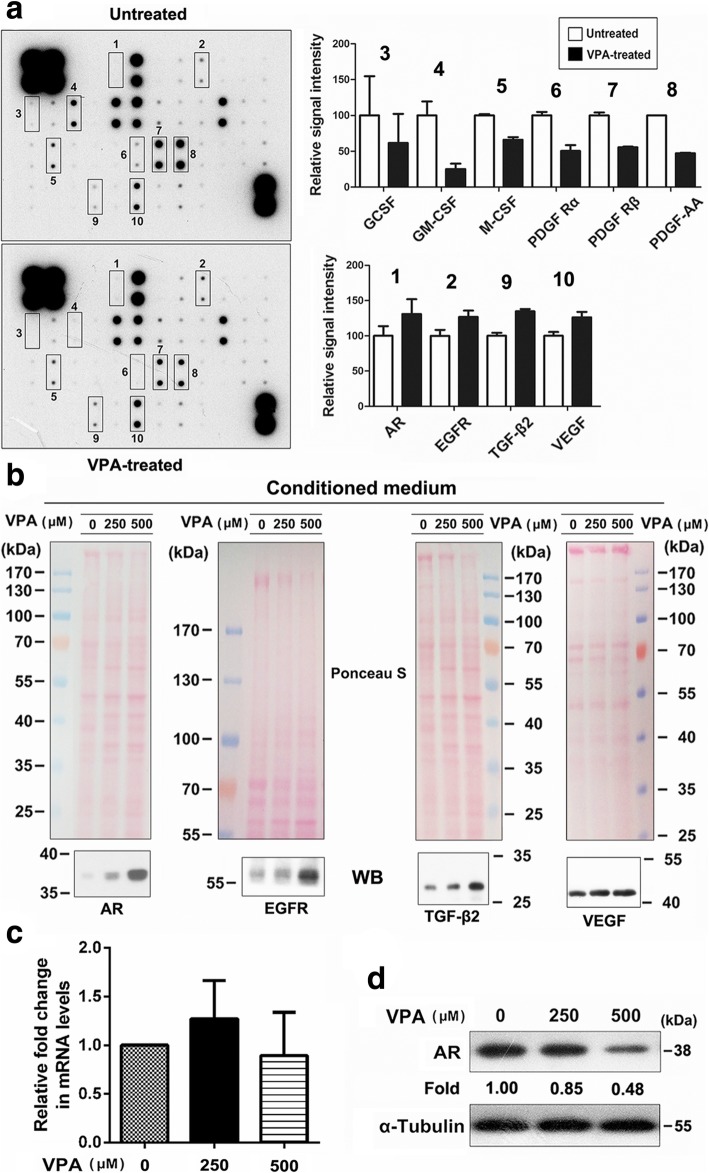
To understand the effect of VPA on secreted proteins in GBM cells, we first used the antibody array to analyze the cell culture supernatant from VPA-treated and untreated GBM cells. The results were further confirmed by lentivirus-mediated knockdown and exogenous recombinant administration.
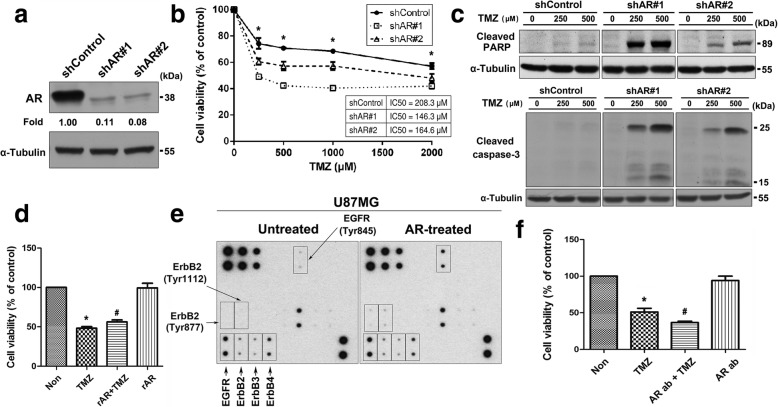
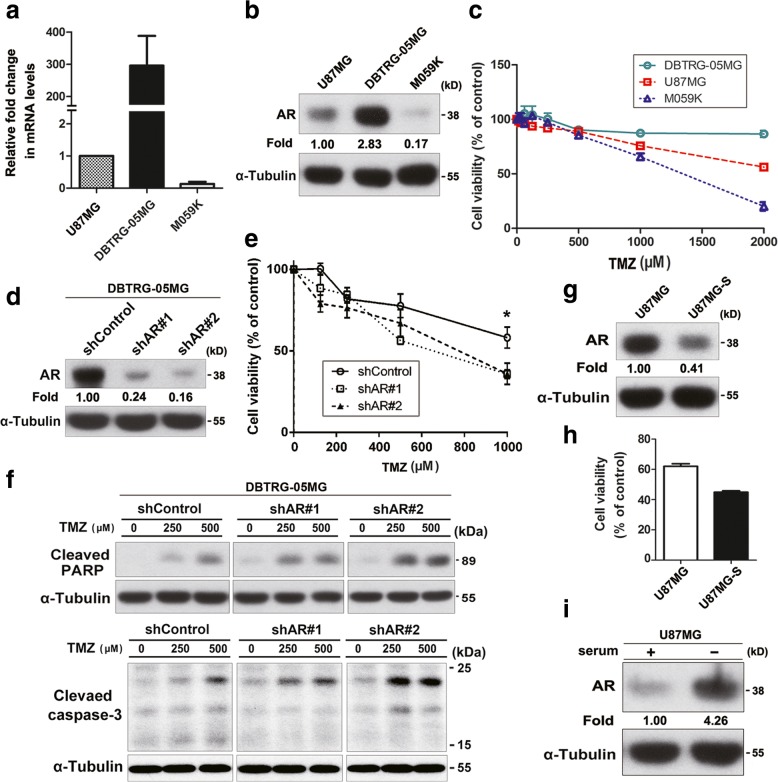
Our results showed that amphiregulin (AR) was highly secreted in VPA-treated cells. Knockdown of AR can sensitize GBM cells to TMZ. Furthermore, pretreatment of exogenous recombinant AR significantly increased EGFR activation and conferred resistance to TMZ. To further verify the effect of AR on TMZ resistance, cells pre-treated with AR neutralizing antibody markedly increased sensitivity to TMZ. In addition, we also observed that the expression of AR was positively correlated with the resistance of TMZ in different GBM cell lines.
The present study aimed to identify the secreted proteins that contribute to the modulation of drug response. Understanding the full set of secreted proteins present in glial cells might help reveal potential therapeutic opportunities. The results indicated that AR may potentially serve as biomarker and therapeutic approach for chemotherapy regimens in GBM.
多形性胶质母细胞瘤(GBM)是最严重的原发性脑肿瘤,死亡率很高。尽管对 GBM 进行了广泛的治疗,包括切除、放疗、化疗和免疫治疗,但预后仍然很差。替莫唑胺(TMZ)是一种烷化剂,是 GBM 临床治疗的一线化疗药物;然而,由于化疗耐药性,其效果非常有限。丙戊酸(VPA)是一种具有组蛋白去乙酰化酶抑制剂活性的抗癫痫药物,已显示出与 TMZ 联合治疗 GBM 具有协同作用。VPA 对 TMZ 联合治疗的作用机制尚不清楚。越来越多的证据表明,分泌蛋白负责肿瘤微环境中细胞之间的串扰,这可能在调节药物反应中起关键作用。
为了了解 VPA 对 GBM 细胞分泌蛋白的影响,我们首先使用抗体阵列分析 VPA 处理和未处理的 GBM 细胞的细胞培养上清液。结果通过慢病毒介导的敲低和外源性重组给药进一步证实。
我们的结果表明,VPA 处理的细胞中高度分泌 Amphiregulin(AR)。AR 的敲低可以使 GBM 细胞对 TMZ 敏感。此外,外源性重组 AR 的预处理显著增加了 EGFR 激活,并赋予了 TMZ 耐药性。为了进一步验证 AR 对 TMZ 耐药性的影响,用 AR 中和抗体预处理的细胞显著增加了对 TMZ 的敏感性。此外,我们还观察到 AR 的表达与不同 GBM 细胞系中 TMZ 的耐药性呈正相关。
本研究旨在鉴定参与药物反应调节的分泌蛋白。了解神经胶质细胞中存在的全套分泌蛋白可能有助于揭示潜在的治疗机会。结果表明,AR 可能作为 GBM 化疗方案的生物标志物和治疗方法。