Ullah Tomalika Rahmat
Hudson Institute of Medical Research, 27-31 wright street, Clayton VIC 3168, Australia.
J Bone Oncol. 2019 Jul 16;17:100253. doi: 10.1016/j.jbo.2019.100253. eCollection 2019 Aug.
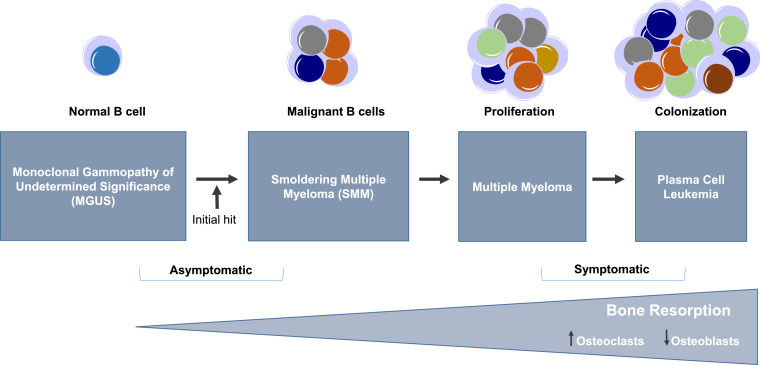
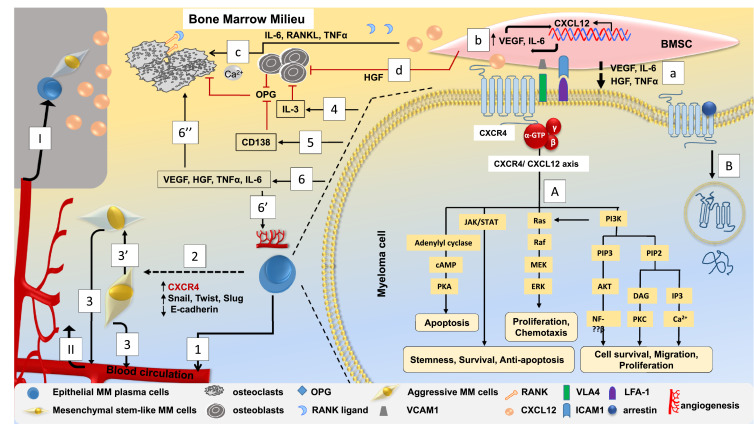
CXCR4 is a pleiotropic chemokine receptor which acts through its ligand CXCL12 to regulate diverse physiological processes. CXCR4/CXCL12 axis plays a pivotal role in proliferation, invasion, dissemination and drug resistance in multiple myeloma (MM). Apart from its role in homing, CXCR4 also affects MM cell mobilization and egression out of the bone marrow (BM) which is correlated with distant organ metastasis. Aberrant CXCR4 expression pattern is associated with osteoclastogenesis and tumor growth in MM through its cross talk with various important cell signalling pathways. A deeper insight into understanding of CXCR4 mediated signalling pathways and its role in MM is essential to identify potential therapeutic interventions. The current therapeutic focus is on disrupting the interaction of MM cells with its protective tumor microenvironment where CXCR4 axis plays an essential role. There are still multiple challenges that need to be overcome to target CXCR4 axis more efficiently and to identify novel combination therapies with existing strategies. This review highlights the role of CXCR4 along with its significant interacting partners as a mediator of MM pathogenesis and summarizes the targeted therapies carried out so far.
CXCR4是一种多效性趋化因子受体,它通过其配体CXCL12发挥作用,以调节多种生理过程。CXCR4/CXCL12轴在多发性骨髓瘤(MM)的增殖、侵袭、播散和耐药性中起关键作用。除了其在归巢中的作用外,CXCR4还影响MM细胞的动员和从骨髓(BM)中逸出,这与远处器官转移相关。异常的CXCR4表达模式通过与各种重要细胞信号通路的相互作用,与MM中的破骨细胞生成和肿瘤生长相关。深入了解CXCR4介导的信号通路及其在MM中的作用对于确定潜在的治疗干预措施至关重要。当前的治疗重点是破坏MM细胞与其保护性肿瘤微环境之间的相互作用,其中CXCR4轴起着至关重要的作用。要更有效地靶向CXCR4轴并确定与现有策略的新型联合疗法,仍有多个挑战需要克服。本综述强调了CXCR4及其重要相互作用伙伴作为MM发病机制介质的作用,并总结了迄今为止开展的靶向治疗。