van de Ven Maria C J, van den Heuvel Marion I, Bhogal Amanpreet, Lewis Toni, Thomason Moriah E
Cognitive Neuropsychology, Behavioral and Movement Sciences, Vrije Universiteit, Amsterdam, The Netherlands.
Department of Cognitive Neuropsychology, Tilburg University, Tilburg, The Netherlands.
Dev Psychobiol. 2020 Mar;62(2):154-169. doi: 10.1002/dev.21900. Epub 2019 Aug 1.
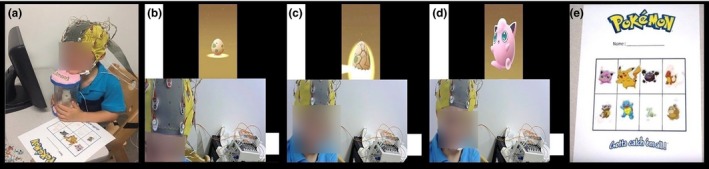
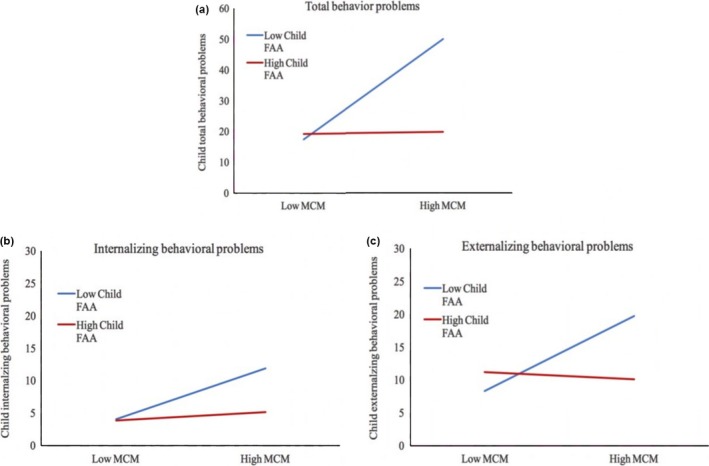
Childhood trauma is associated with many long-term negative outcomes, and is not limited to the individual experiencing the trauma, but extends to subsequent generations. However, mechanisms underlying the association between maternal childhood trauma and child psychopathology are not well understood. Here, we targeted frontal alpha asymmetry (FAA) as a potential underlying factor of the relationship between maternal childhood trauma and child behavioral problems. Electroencephalography (EEG) was recorded from (N = 45) children (Mean age = 57.9 months, SD = 3.13) during an eyes-closed paradigm in order to evaluate FAA. Mothers reported on their childhood trauma experiences using the Childhood Trauma Questionnaire (CTQ), and on their child's behavior using the child behavior checklist (CBCL). We found that maternal childhood trauma significantly predicted child total, internalizing, and externalizing behavior at age 5 years. We also observed a role for FAA such that it acted as a moderator, but not mediator, for behavioral problems. We found that children with relative more right/less left frontal activity were more at risk to develop behavioral problems when their mother had been exposed to trauma in her childhood. These results indicate that child frontal asymmetry may serve as a susceptibility marker for child behavioral problems.
童年创伤与许多长期负面后果相关,且不仅限于经历创伤的个体,还会延续至后代。然而,母亲童年创伤与儿童精神病理学之间关联的潜在机制尚未得到充分理解。在此,我们将额叶α波不对称性(FAA)作为母亲童年创伤与儿童行为问题之间关系的一个潜在因素进行研究。在闭眼范式期间,对45名儿童(平均年龄 = 57.9个月,标准差 = 3.13)进行脑电图(EEG)记录,以评估FAA。母亲们使用儿童创伤问卷(CTQ)报告其童年创伤经历,并使用儿童行为清单(CBCL)报告其孩子的行为。我们发现,母亲童年创伤能显著预测孩子5岁时的总体、内化和外化行为。我们还观察到FAA起到了调节作用,但不是行为问题的中介因素。我们发现,当母亲童年遭受过创伤时,额叶相对右侧活动较多/左侧活动较少的儿童出现行为问题的风险更高。这些结果表明,儿童额叶不对称性可能是儿童行为问题的一个易感性标志物。