Key Laboratory of Plant Development and Environmental Adaptation Biology, Ministry of Education, School of Life Sciences, Shandong University, Qingdao, China.
Center for Genomics and Biotechnology, Haixia Institute of Science and Technology, Fujian Provincial Key Laboratory of Haixia Applied Plant Systems Biology, Fujian Agriculture and Forestry University, Fuzhou, China.
PLoS Genet. 2019 Aug 2;15(8):e1008305. doi: 10.1371/journal.pgen.1008305. eCollection 2019 Aug.
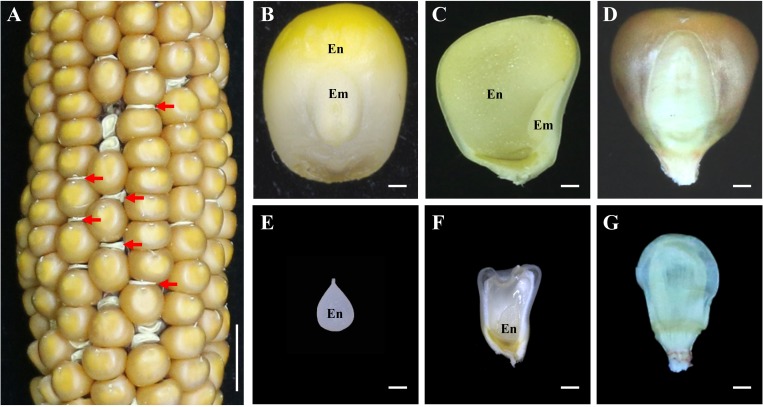
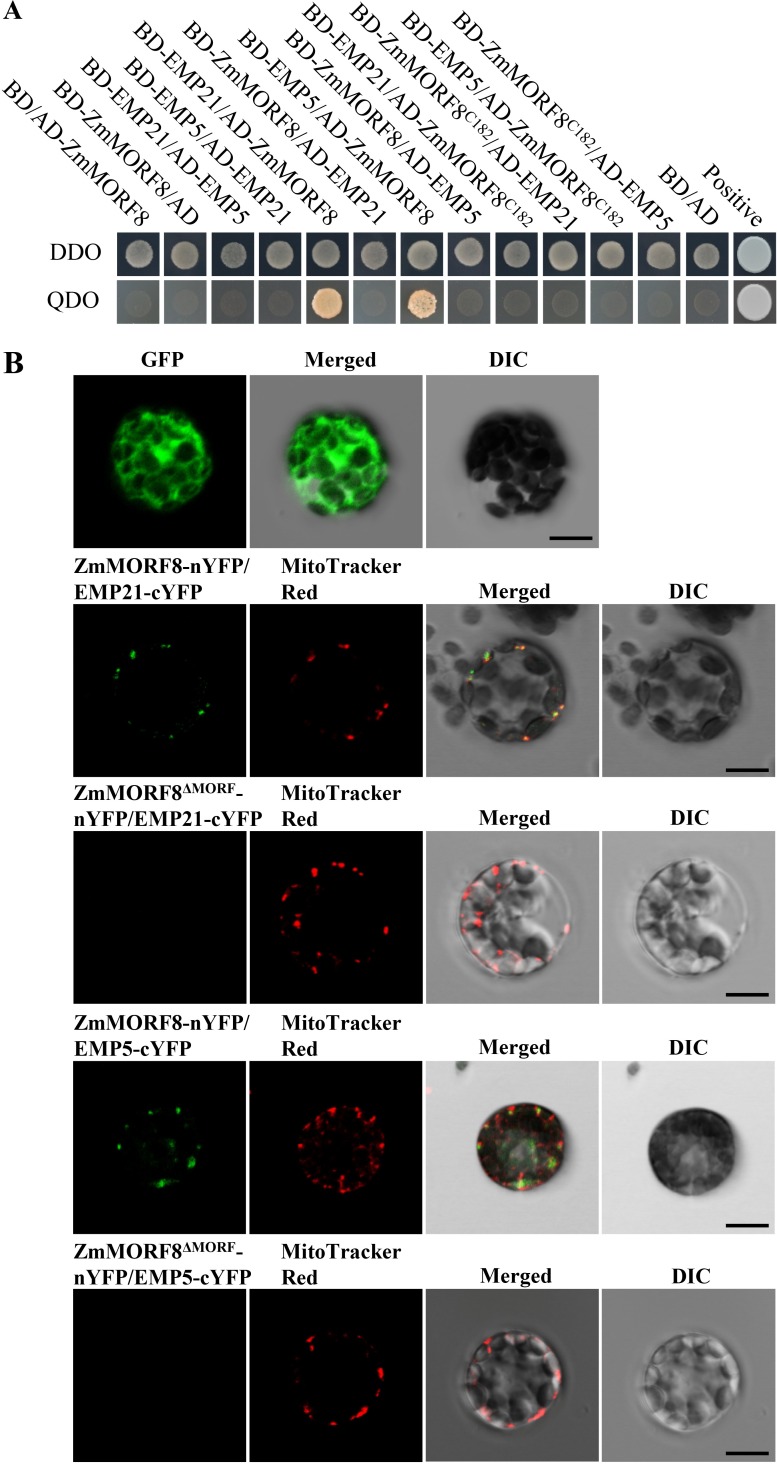
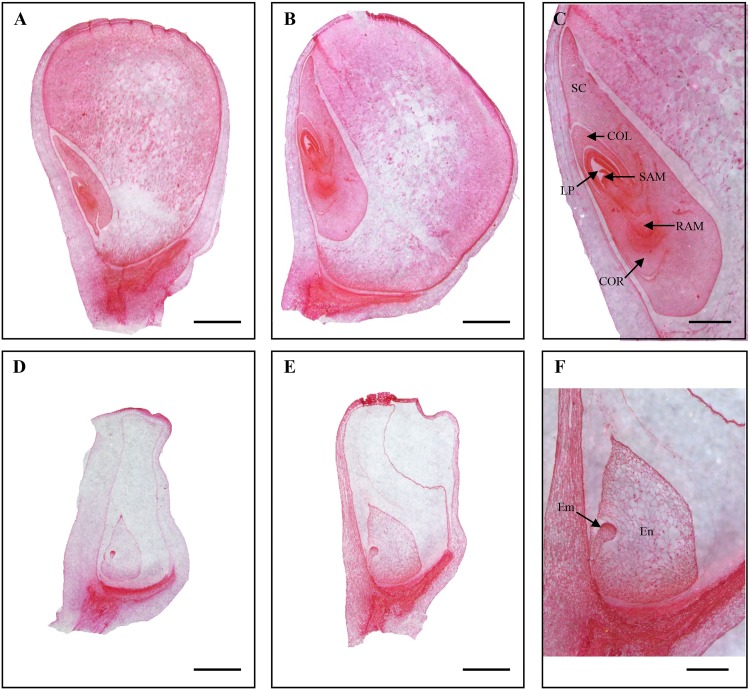
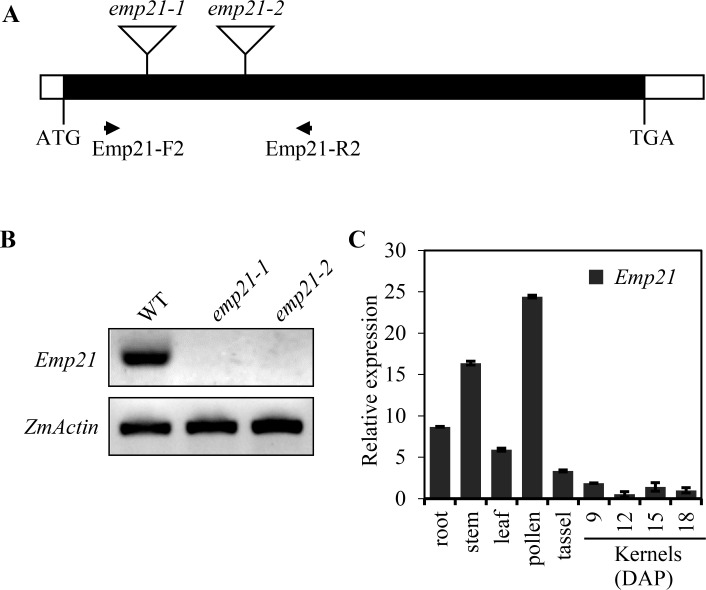
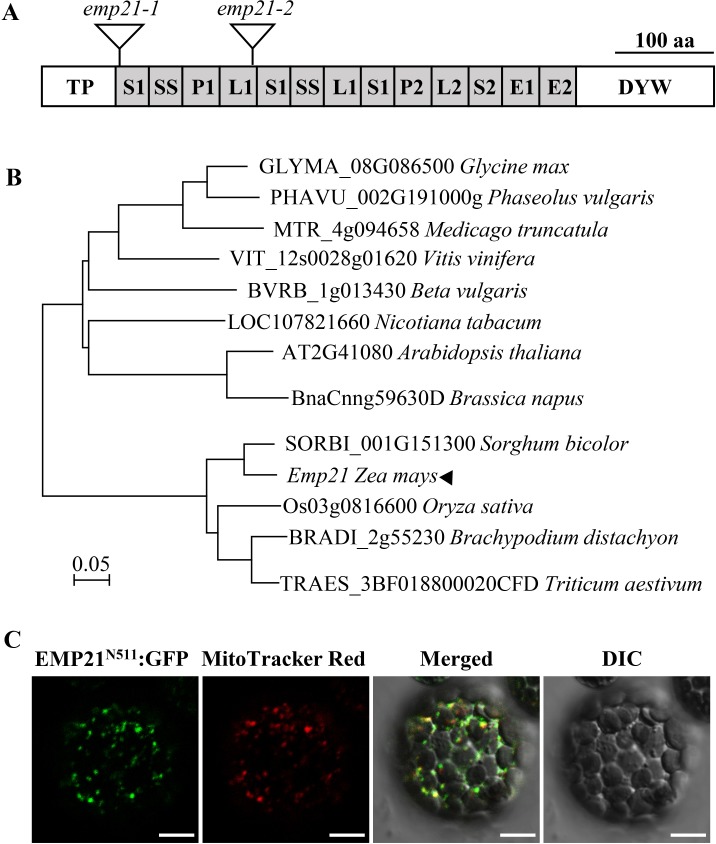
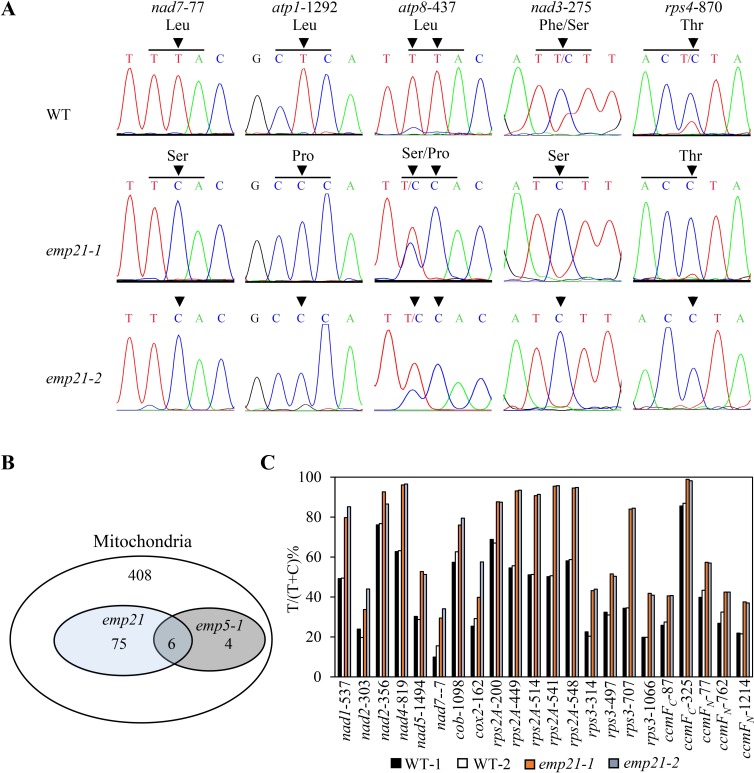
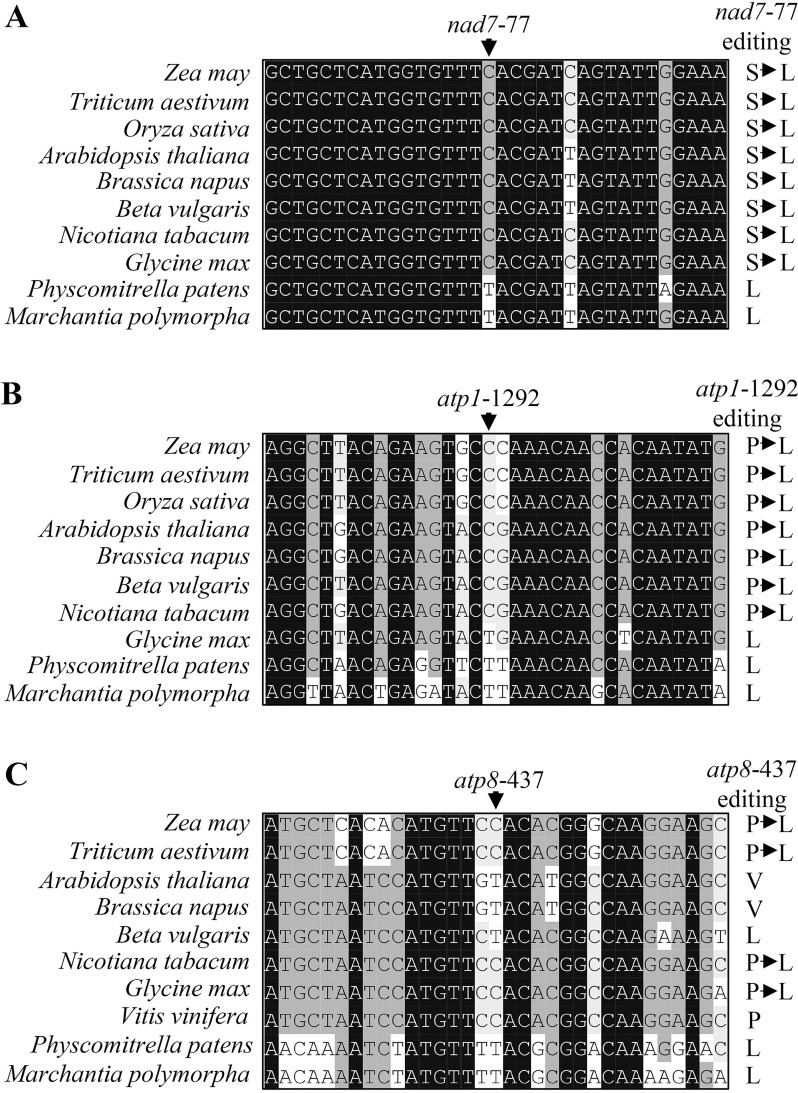
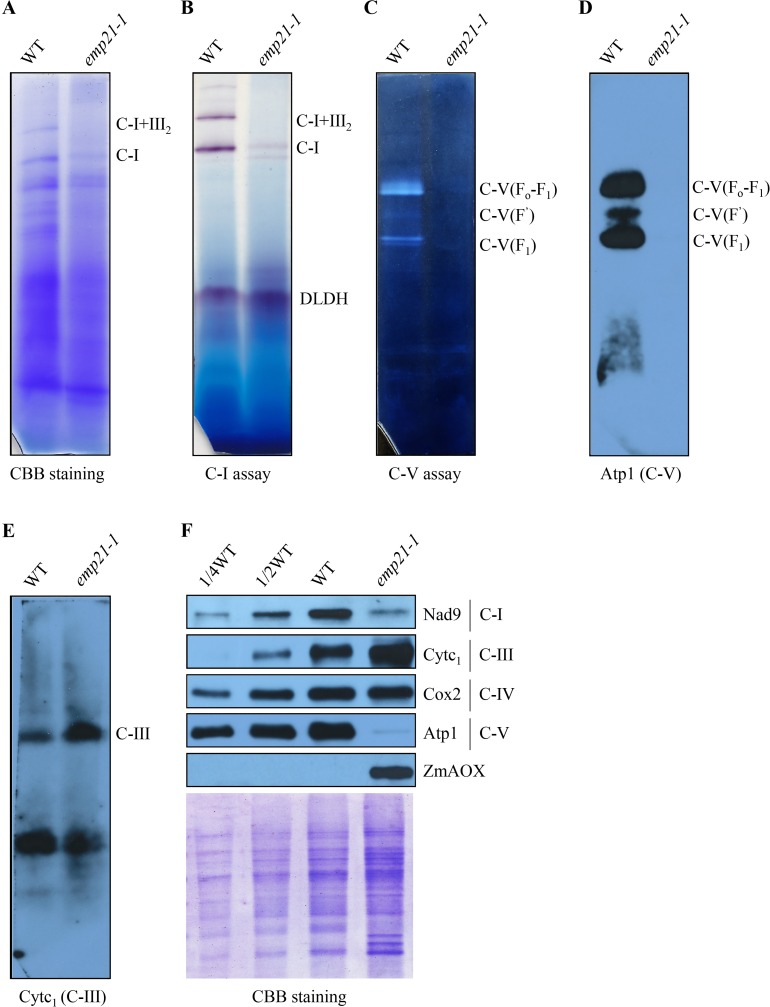
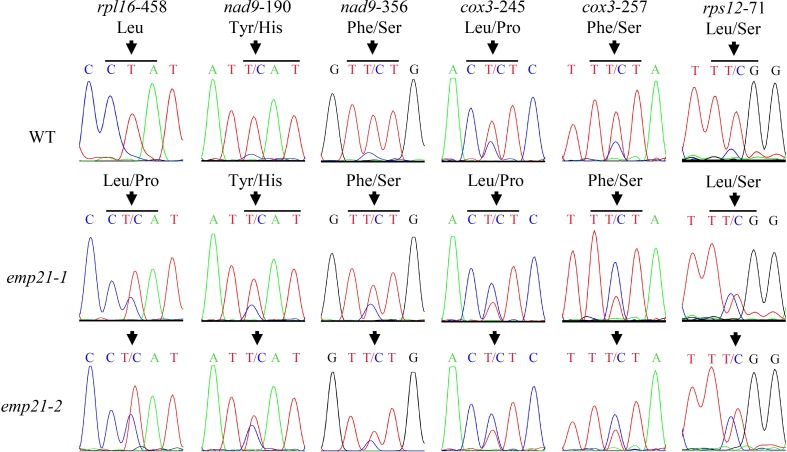
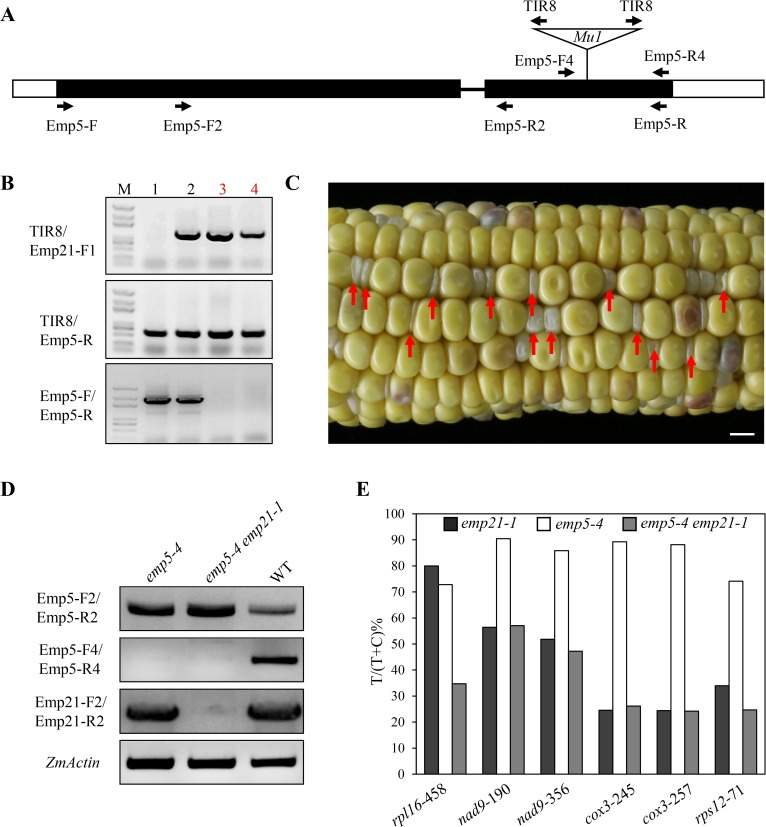
C-to-U editing is an important event in post-transcriptional RNA processing, which converts a specific cytidine (C)-to-uridine (U) in transcripts of mitochondria and plastids. Typically, the pentatricopeptide repeat (PPR) protein, which specifies the target C residue by binding to its upstream sequence, is involved in the editing of one or a few sites. Here we report a novel PPR-DYW protein EMP21 that is associated with editing of 81 sites in maize. EMP21 is localized in mitochondria and loss of the EMP21 function severely inhibits the embryogenesis and endosperm development in maize. From a scan of 35 mitochondrial transcripts produced by the Emp21 loss-of-function mutant, the C-to-U editing was found to be abolished at five sites (nad7-77, atp1-1292, atp8-437, nad3-275 and rps4-870), while reduced at 76 sites in 21 transcripts. In most cases, the failure to editing resulted in the translation of an incorrect residue. In consequence, the mutant became deficient with respect to the assembly and activity of mitochondrial complexes I and V. As six of the decreased editing sites in emp21 overlap with the affected editing sites in emp5-1, and the editing efficiency at rpl16-458 showed a substantial reduction in the emp21-1 emp5-4 double mutant compared with the emp21-1 and emp5-4 single mutants, we explored their interaction. A yeast two hybrid assay suggested that EMP21 does not interact with EMP5, but both EMP21 and EMP5 interact with ZmMORF8. Together, these results indicate that EMP21 is a novel PPR-DYW protein required for the editing of ~17% of mitochondrial target Cs, and the editing process may involve an interaction between EMP21 and ZmMORF8 (and probably other proteins).
C-U 编辑是转录后 RNA 加工中的一个重要事件,它将线粒体和质体转录物中的特定胞嘧啶 (C)-到尿嘧啶 (U) 转化。通常,五肽重复 (PPR) 蛋白通过与上游序列结合来指定靶 C 残基,参与一个或几个位点的编辑。在这里,我们报告了一种新型的 PPR-DYW 蛋白 EMP21,它与玉米中 81 个位点的编辑有关。EMP21 定位于线粒体中,EMP21 功能的丧失严重抑制了玉米的胚胎发生和胚乳发育。从 Emp21 功能丧失突变体产生的 35 个线粒体转录物的扫描中,发现五个位点 (nad7-77、atp1-1292、atp8-437、nad3-275 和 rps4-870) 的 C-U 编辑被完全废除,而在 21 个转录物中有 76 个位点的编辑减少。在大多数情况下,编辑失败导致翻译出不正确的残基。因此,突变体在线粒体复合物 I 和 V 的组装和活性方面变得缺乏。由于 emp21 中的六个降低的编辑位点与 emp5-1 中的受影响的编辑位点重叠,并且 rpl16-458 的编辑效率在 emp21-1 emp5-4 双突变体中与 emp21-1 和 emp5-4 单突变体相比显著降低,我们探索了它们的相互作用。酵母双杂交测定表明 EMP21 不与 EMP5 相互作用,但 EMP21 和 EMP5 都与 ZmMORF8 相互作用。总之,这些结果表明 EMP21 是一种新型的 PPR-DYW 蛋白,需要编辑约 17%的线粒体靶 C,并且编辑过程可能涉及 EMP21 和 ZmMORF8(可能还有其他蛋白质)之间的相互作用。