Aix Marseille University, CNRS, INSERM, CIML, Marseille, France
Department of Biomedicine, Aarhus University, Aarhus, Denmark.
J Exp Med. 2019 Oct 7;216(10):2394-2411. doi: 10.1084/jem.20182124. Epub 2019 Aug 2.
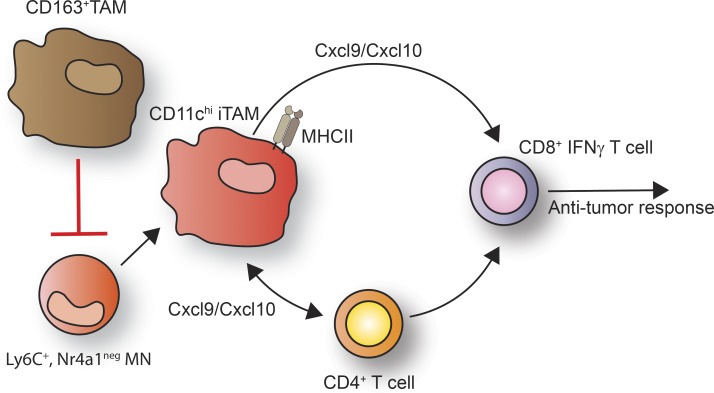
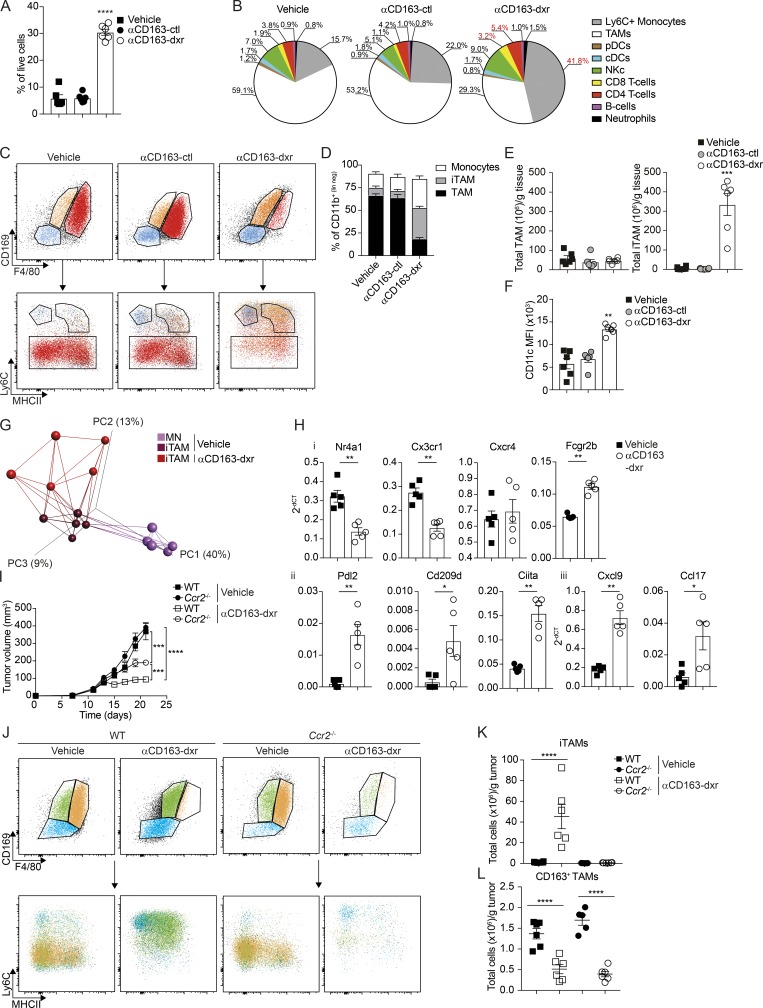
Tumor-associated macrophages (TAMs) play critical roles in tumor progression but are also capable of contributing to antitumor immunity. Recent studies have revealed an unprecedented heterogeneity among TAMs in both human cancer and experimental models. Nevertheless, we still understand little about the contribution of different TAM subsets to tumor progression. Here, we demonstrate that CD163-expressing TAMs specifically maintain immune suppression in an experimental model of melanoma that is resistant to anti-PD-1 checkpoint therapy. Specific depletion of the CD163 macrophages results in a massive infiltration of activated T cells and tumor regression. Importantly, the infiltration of cytotoxic T cells was accompanied by the mobilization of inflammatory monocytes that significantly contributed to tumor regression. Thus, the specific targeting of CD163 TAMs reeducates the tumor immune microenvironment and promotes both myeloid and T cell-mediated antitumor immunity, illustrating the importance of selective targeting of tumor-associated myeloid cells in a therapeutic context.
肿瘤相关巨噬细胞(TAMs)在肿瘤进展中发挥着关键作用,但也能够促进抗肿瘤免疫。最近的研究揭示了人类癌症和实验模型中 TAMs 前所未有的异质性。然而,我们仍然不太了解不同 TAM 亚群对肿瘤进展的贡献。在这里,我们证明了表达 CD163 的 TAMs 特异性地维持了对抗 PD-1 检查点治疗有抗性的黑色素瘤实验模型中的免疫抑制。CD163 巨噬细胞的特异性耗竭导致激活的 T 细胞大量浸润和肿瘤消退。重要的是,细胞毒性 T 细胞的浸润伴随着炎症性单核细胞的动员,这对肿瘤消退有重要贡献。因此,CD163 TAMs 的特异性靶向重新教育了肿瘤免疫微环境,并促进了髓系和 T 细胞介导的抗肿瘤免疫,说明了在治疗背景下选择性靶向肿瘤相关髓系细胞的重要性。