National Amyloidosis Centre, University College London, Royal Free Campus, Rowland Hill Street, NW3 2PF, London, UK.
Tuscan Regional Amyloid Center, Careggi University Hospital, Florence, Italy.
Curr Cardiol Rep. 2019 Aug 2;21(9):108. doi: 10.1007/s11886-019-1180-2.
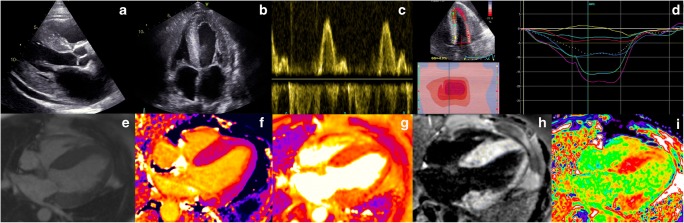
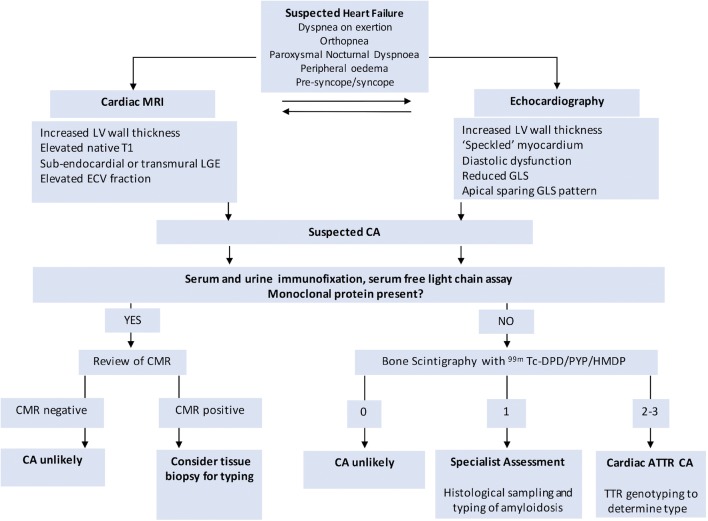
We summarize key features pertaining to the two most commonly encountered types of cardiac amyloidosis (CA), monoclonal immunoglobulin light chain (AL) and transthyretin type (ATTR), expanding upon the clinical application and utility of various imaging techniques in diagnosing CA.
Advances in imaging have led to earlier identification, improved diagnosis of CA and higher discriminatory power to differentiate CA from other hypertrophic phenocopies. The application of cardiac magnetic resonance imaging (CMR) has led to a deeper understanding of underlying pathophysiological processes in CA, owing largely to its intrinsic tissue characterization properties. The widespread adoption of bone scintigraphy algorithms has reduced the need for cardiac biopsy and improved diagnostic confidence in ATTR CA. As new treatments for CA are rapidly developing, there will be even greater reliance on imaging, as the requirement to diagnose disease earlier, monitor response and amend treatment strategies accordingly intensifies.
我们总结了两种最常见类型的心脏淀粉样变(CA),即单克隆免疫球蛋白轻链(AL)和转甲状腺素蛋白型(ATTR)的主要特征,扩展了各种成像技术在诊断 CA 中的临床应用和价值。
成像技术的进步导致了更早的识别,提高了 CA 的诊断率,并提高了区分 CA 与其他肥厚表型的能力。心脏磁共振成像(CMR)的应用使人们对 CA 中潜在的病理生理过程有了更深入的了解,这在很大程度上要归功于其固有的组织特征。广泛采用骨骼闪烁显像算法减少了对心脏活检的需求,并提高了对ATTR CA 的诊断信心。随着 CA 的新治疗方法的迅速发展,对成像的依赖将更大,因为需要更早地诊断疾病,监测反应并相应地调整治疗策略。