Innovation and Development, ISDIN, Barcelona, Spain.
Department of Dermatology, Henry Ford Hospital, Detroit, MI, USA.
Photodermatol Photoimmunol Photomed. 2020 Sep;36(5):351-356. doi: 10.1111/phpp.12500. Epub 2019 Sep 5.
In vivo testing of sun protection factor (SPF) values can show considerable interlaboratory variability. We studied the underlying reasons and clinical implications.
Following the ISO 24444:2010 SPF testing method, seven contract research organizations (CROs) tested eight sunscreens marketed as SPF50 or SPF50+ and the reference SPF15 sunscreens P2 and P3 and SPF43 P6. We analysed differences in the products and CRO testing methods with regard to SPF variability. We tested the erythema prevention capacity of five of the products in subjects exposed to high doses of natural sunlight in Mauritius.
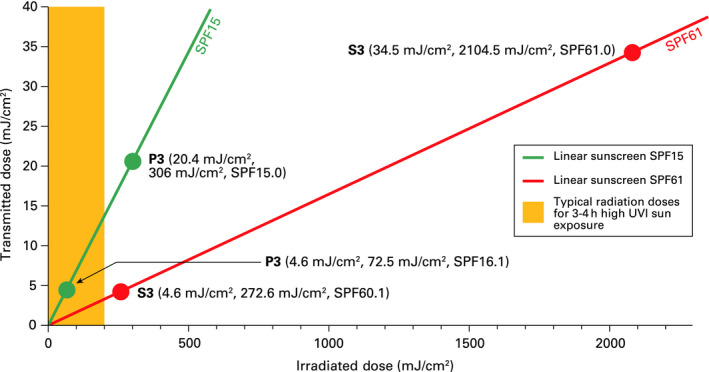
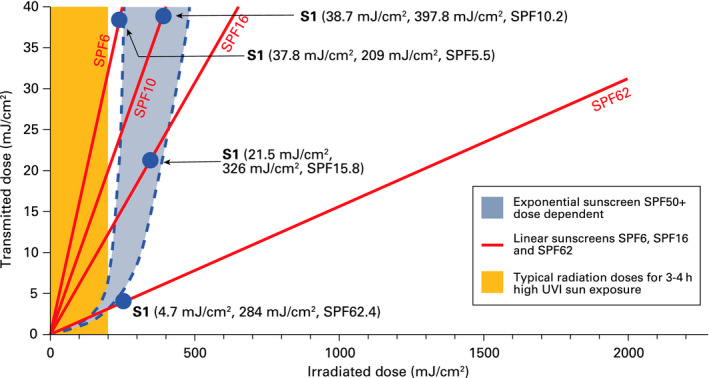
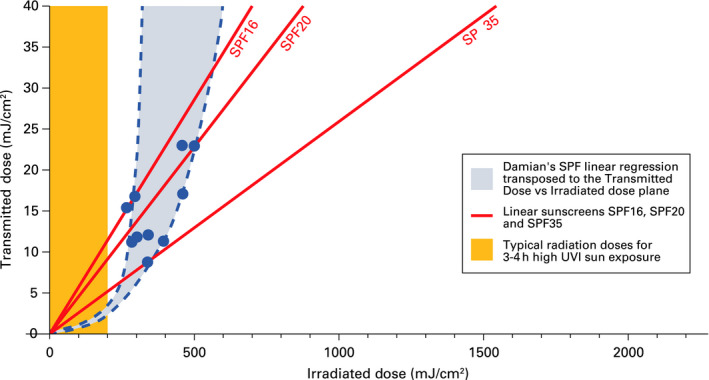
Sun protection factor values varied dramatically between different CROs for some, but not all of the sunscreens. Those with the largest variability had an SPF50+, and their SPF values differed from a maximum of 62.4 to a minimum of 5.5. These products did not share a common sun-filter composition, and some CROs used low and others high irradiation dose regimens. When comparing these two regimens, test products fell into two categories: (i) they either behaved similarly ("linear") or (ii) they behaved differently ("exponential"). In the outdoor clinical study, exponential and linear sunscreens did not differ in their photoprotection capacities.
Differences in reported SPF values depend on the linear vs exponential behaviour of such products if subjected to low- vs high-dose test regimens. Under real-time exposure to natural sunlight, exponential and linear sunscreens did not differ in their erythema prevention capacity. Laboratory SPF testing of exponential sunscreens bears the risk of underestimating their in-use SPF.
体内测试防晒因子 (SPF) 值可能会显示出相当大的实验室间变异性。我们研究了其潜在原因和临床意义。
根据 ISO 24444:2010 SPF 测试方法,7 家合同研究组织 (CRO) 测试了 8 种市售的 SPF50 或 SPF50+防晒霜和参考 SPF15 防晒霜 P2 和 P3 以及 SPF43 的 P6。我们分析了产品和 CRO 测试方法在 SPF 变异性方面的差异。我们在毛里求斯的受试者中暴露于高剂量自然阳光下,测试了其中 5 种产品的红斑预防能力。
对于某些防晒霜,但不是所有防晒霜,不同 CRO 之间的防晒因子值差异很大。那些变异性最大的防晒霜的 SPF50+值差异最大为 62.4,最小为 5.5。这些产品的防晒成分并不相同,一些 CRO 使用低剂量,而另一些则使用高剂量。当比较这两种方案时,测试产品分为两类:(i) 它们的行为相似(“线性”)或 (ii) 它们的行为不同(“指数”)。在户外临床研究中,指数和线性防晒霜在其光保护能力方面没有差异。
如果产品受到低剂量与高剂量测试方案的影响,报告的 SPF 值的差异取决于其线性与指数行为。在实时暴露于自然阳光下时,指数和线性防晒霜在预防红斑方面没有差异。指数防晒霜的实验室 SPF 测试存在低估其实际使用 SPF 值的风险。