National Center for Global Health, Istituto Superiore di Sanità, Rome, Italy.
Cancer Immunoregulation Unit, Istituto Nazionale Tumori- IRCCS-"Fond G. Pascale", Naples, Italy.
Cell Mol Life Sci. 2019 Dec;76(24):4869-4886. doi: 10.1007/s00018-019-03255-6. Epub 2019 Aug 3.
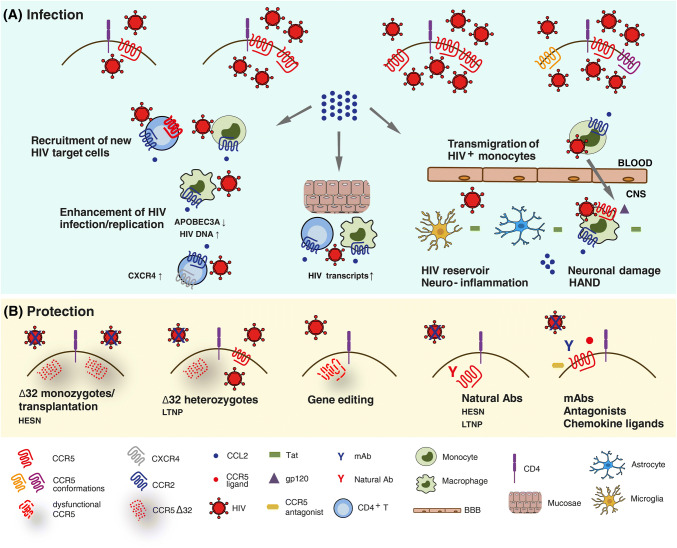
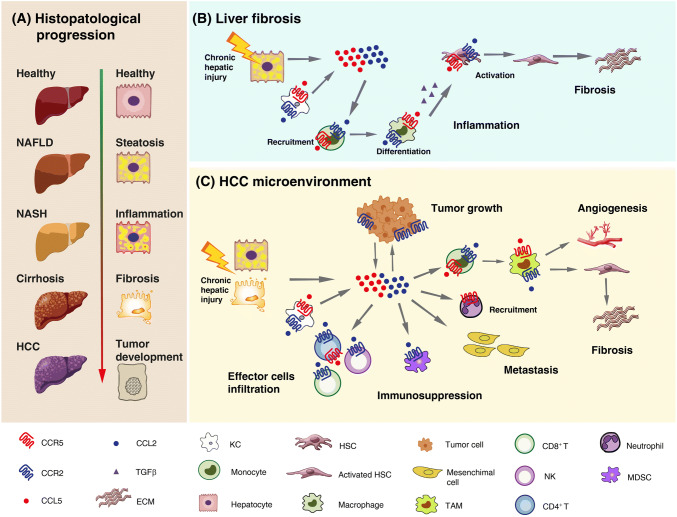
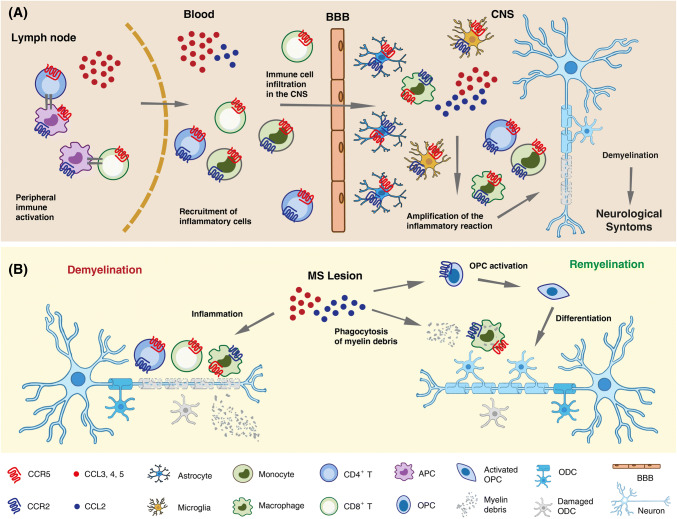
The chemokine system mediates acute inflammation by driving leukocyte migration to damaged or infected tissues. However, elevated expression of chemokines and their receptors can contribute to chronic inflammation and malignancy. Thus, great effort has been taken to target these molecules. The first hint of the druggability of the chemokine system was derived from the role of chemokine receptors in HIV infection. CCR5 and CXCR4 function as essential co-receptors for HIV entry, with the former accounting for most new HIV infections worldwide. Not by chance, an anti-CCR5 compound, maraviroc, was the first FDA-approved chemokine receptor-targeting drug. CCR5, by directing leukocytes to sites of inflammation and regulating their activation, also represents an important player in the inflammatory response. This function is shared with CCR2 and its selective ligand CCL2, which constitute the primary chemokine axis driving the recruitment of monocytes/macrophages to inflammatory sites. Both receptors are indeed involved in the pathogenesis of several immune-mediated diseases, and dual CCR5/CCR2 targeting is emerging as a more efficacious strategy than targeting either receptor alone in the treatment of complex human disorders. In this review, we focus on the distinctive and complementary contributions of CCR5 and CCR2/CCL2 in HIV infection, multiple sclerosis, liver fibrosis and associated hepatocellular carcinoma. The emerging therapeutic approaches based on the inhibition of these chemokine axes are highlighted.
趋化因子系统通过驱动白细胞迁移到受损或感染的组织来介导急性炎症。然而,趋化因子及其受体的高表达可能导致慢性炎症和恶性肿瘤。因此,人们已经付出了巨大的努力来靶向这些分子。趋化因子系统的药物可开发性的第一个线索来自趋化因子受体在 HIV 感染中的作用。CCR5 和 CXCR4 作为 HIV 进入的必需共受体发挥作用,前者占全球大多数新的 HIV 感染。并非偶然的是,一种抗 CCR5 化合物,马拉维若,是第一个获得 FDA 批准的趋化因子受体靶向药物。CCR5 通过将白细胞导向炎症部位并调节其激活,也在炎症反应中发挥重要作用。这种功能与 CCR2 及其选择性配体 CCL2 共享,CCR2/CCL2 构成了驱动单核细胞/巨噬细胞募集到炎症部位的主要趋化因子轴。这两种受体确实都参与了几种免疫介导的疾病的发病机制,并且在治疗复杂的人类疾病时,双重 CCR5/CCR2 靶向比单独靶向任一受体更有效。在这篇综述中,我们重点关注 CCR5 和 CCR2/CCL2 在 HIV 感染、多发性硬化症、肝纤维化和相关肝细胞癌中的独特和互补作用。强调了基于抑制这些趋化因子轴的新兴治疗方法。