Lee Dasom, Kwak Seyul, Chey Jeanyung
Department of Psychology, Seoul National University, Seoul, South Korea.
Front Hum Neurosci. 2019 Jul 16;13:246. doi: 10.3389/fnhum.2019.00246. eCollection 2019.
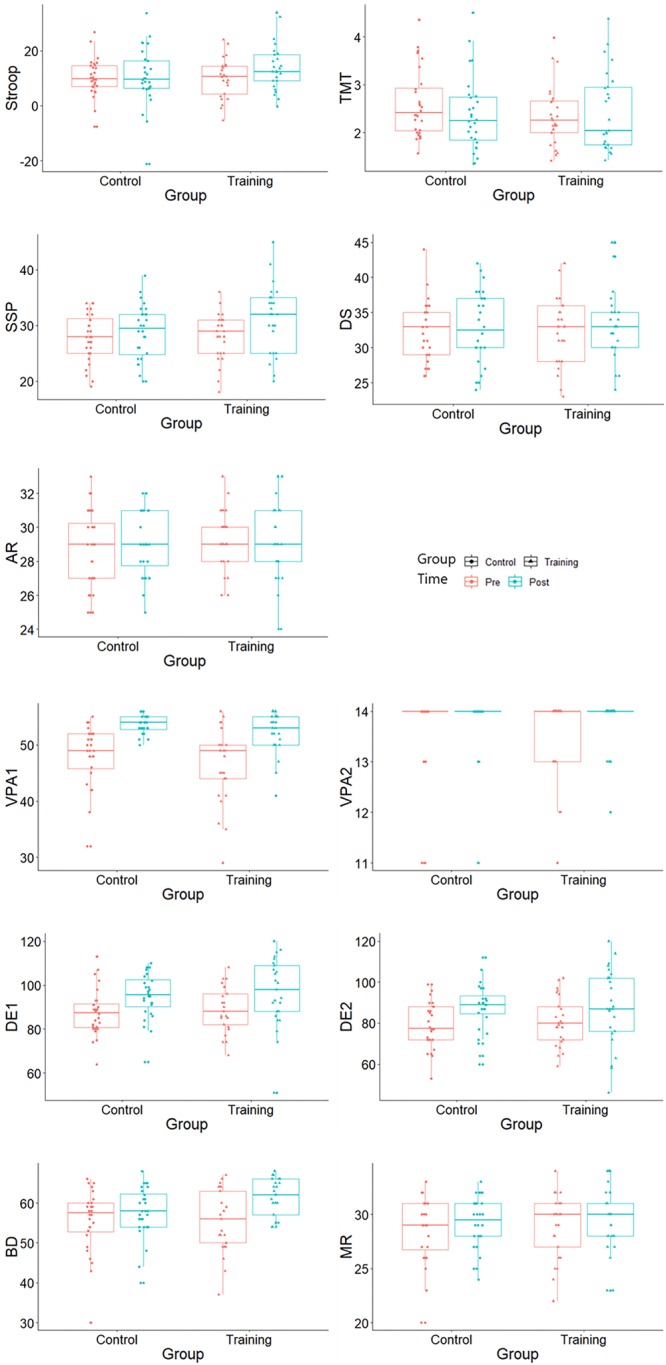
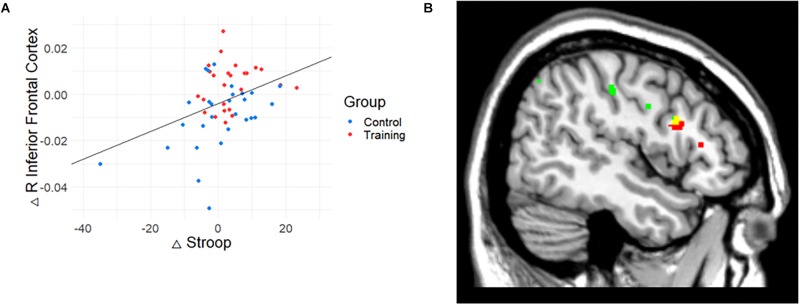
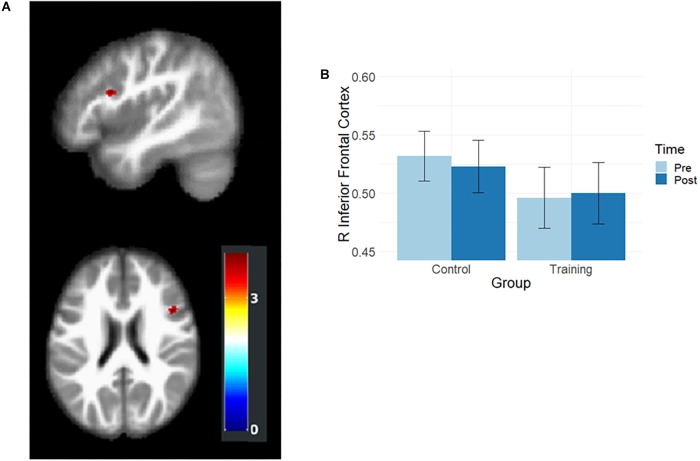
Adolescence is a unique period in which higher cognition develops to adult-level, while plasticity of neuron and behavior is at one of its peak. Notably, cognitive training studies for adolescents has been sparse and neural correlates of the training effects yet to be established. This study investigated the effects of multi-component training of cognitive control (MTCC) in order to examine whether the training enhanced adolescents' cognitive control ability and if the effects were generalizable to other cognitive domains. Cognitive control refers to the ability to adjust a series of thoughts and behaviors in correspondence to an internal goal, and involves inhibition, working memory, shifting, and dual tasking as subcomponents. The participants were middle school students (aged 11-14) and randomly assigned to either a training group or an active control group. The training group performed 30 min of MTCC per day for 6 weeks. To identify the training effects, we examined the cognitive performance, regional gray matter, and their relationship. The training group showed modest improvement in a visuospatial fluid intelligence test (Block Design) after MTCC, which was not significant after correcting for multiple comparisons. In addition, the training effect on the gray matter volume (time × group interaction) was observed in the right inferior cortex (rIFC). While the control group showed a typical reduction in the rIFC volume, the training group showed a relative increase in the homologous region. The relative change in rIFC volume was associated with the change in Stroop performance. These results imply that MTCC may affect brain structure relevant to inhibitory control process.
青春期是一个独特的时期,在此期间,高级认知发展到成人水平,而神经元和行为的可塑性则处于高峰期。值得注意的是,针对青少年的认知训练研究一直很少,训练效果的神经相关性尚未确定。本研究调查了认知控制多成分训练(MTCC)的效果,以检验该训练是否能提高青少年的认知控制能力,以及这些效果是否能推广到其他认知领域。认知控制是指根据内部目标调整一系列思维和行为的能力,包括抑制、工作记忆、转换和双重任务等子成分。参与者为中学生(11 - 14岁),随机分为训练组或积极对照组。训练组每天进行30分钟的MTCC,持续6周。为了确定训练效果,我们检查了认知表现、区域灰质及其关系。训练组在MTCC后,在视觉空间流体智力测试(积木设计)中表现出适度改善,但在进行多重比较校正后不显著。此外,在右下皮质(rIFC)观察到了对灰质体积的训练效果(时间×组间交互作用)。对照组的rIFC体积出现典型减少,而训练组在同源区域相对增加。rIFC体积的相对变化与Stroop任务表现的变化相关。这些结果表明,MTCC可能会影响与抑制控制过程相关的脑结构。