Sedgewick Felicity, Kerr-Gaffney Jess, Leppanen Jenni, Tchanturia Kate
Eating Disorders Unit, King's College London, London, United Kingdom.
Front Psychiatry. 2019 Jul 18;10:507. doi: 10.3389/fpsyt.2019.00507. eCollection 2019.
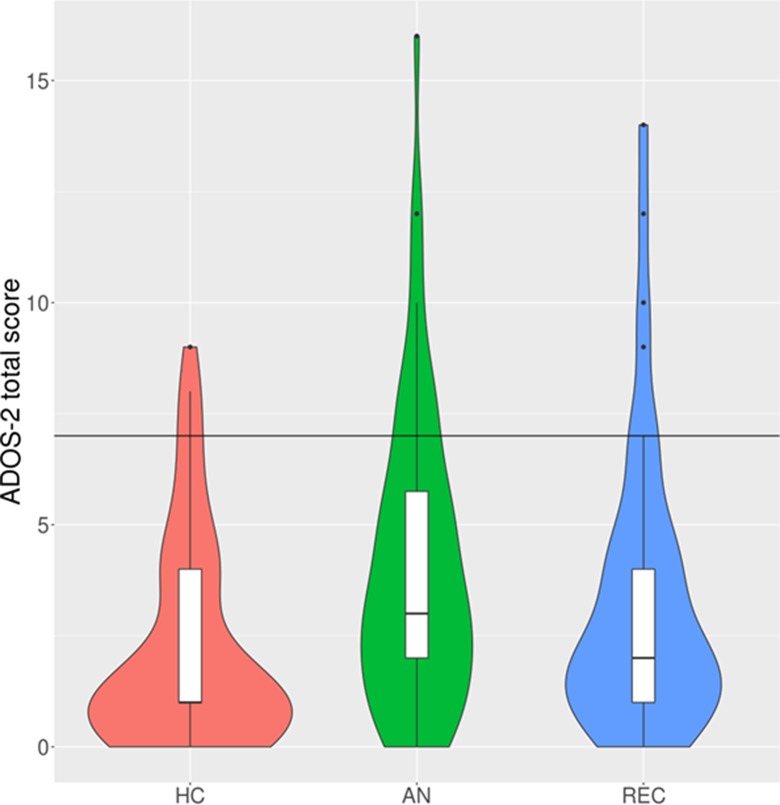
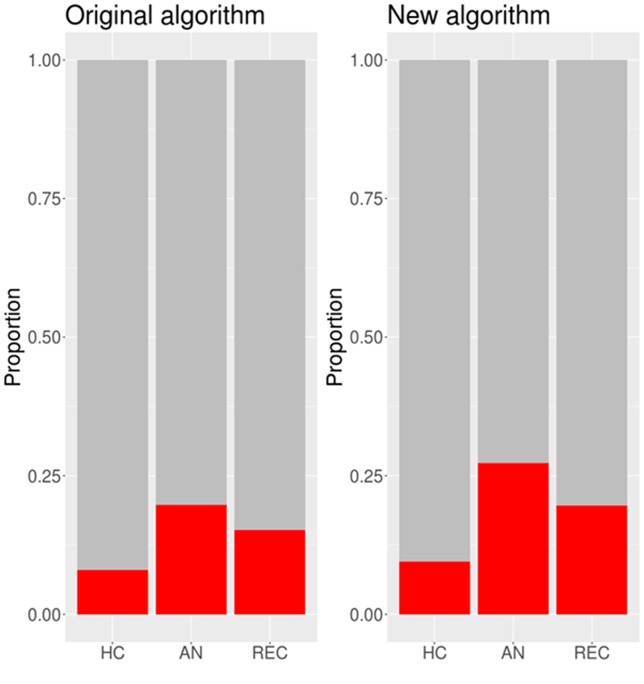
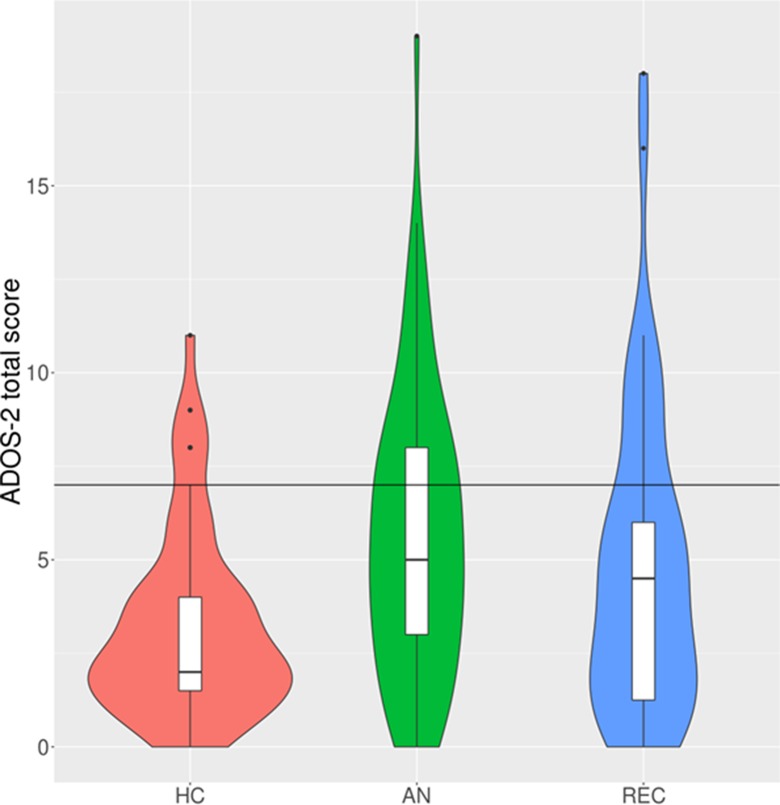
Thirty years of scholarship has suggested that anorexia nervosa (AN) may be a "female presentation" of autism, supported by work which has found elevated rates of autism traits and diagnoses among women with clinical levels of AN. These traits are often assessed using the Autism Diagnostic Observation Schedule 2nd Edition (ADOS-2), considered the "gold-standard" tool. Recently, the authors of the ADOS-2 revised the diagnostic algorithm for the adult version of the assessment-the one most often used with AN patients. We therefore examined differences in the scores, rates of diagnosis, and correlations with other mental health issues between the two diagnostic algorithms among women with and without AN. One hundred seventy-five women with current AN, who had recovered from AN, and with no history of AN, between the ages of 12 and 53, took part in an ADOS-2 assessment. Their scores were then calculated according to both the original and the new algorithms. The new ADOS-2 algorithm identifies more women as potentially being on the autism spectrum than the old algorithm. Under both algorithms, more currently ill AN patients were identified as potentially being autistic than those with no history of AN. Recovered individuals represented a midpoint between the scores of those with and without AN on both algorithms. There were no correlations with mental health scores in any group, meaning that the new ADOS-2 algorithm is not falsely identifying anxious behaviors or depressive presentations as signs of autism in this group. Overall, we found that more AN patients and recovered individuals scored above cut-off on the new ADOS-2 algorithm, suggesting that women who experience AN may have more autistic traits, which in part persist following weight restoration and recovery. However, the ADOS-2 should not be used alone but in combination with broader clinical assessments to determine whether an autism diagnosis is appropriate for these women.
三十年的学术研究表明,神经性厌食症(AN)可能是自闭症的“女性表现形式”,这一观点得到了相关研究的支持,这些研究发现,临床诊断为AN的女性中,自闭症特征和诊断的发生率有所升高。这些特征通常使用《自闭症诊断观察量表第二版》(ADOS-2)进行评估,该量表被视为“金标准”工具。最近,ADOS-2的作者修订了成人版评估的诊断算法,这是与AN患者最常使用的版本。因此,我们研究了有无AN的女性在两种诊断算法之间的得分、诊断率以及与其他心理健康问题的相关性差异。175名年龄在12岁至53岁之间、患有现症AN、已从AN康复以及无AN病史的女性参与了ADOS-2评估。然后根据原始算法和新算法计算她们的得分。新的ADOS-2算法比旧算法识别出更多可能处于自闭症谱系的女性。在两种算法下,目前患病的AN患者比无AN病史的患者被识别为可能患有自闭症的更多。康复个体在两种算法下的得分处于有AN和无AN个体得分的中间点。任何组与心理健康得分均无相关性,这意味着新的ADOS-2算法在该组中不会将焦虑行为或抑郁表现错误地识别为自闭症迹象。总体而言,我们发现更多的AN患者和康复个体在新的ADOS-2算法上得分高于临界值,这表明经历过AN的女性可能具有更多自闭症特征,这些特征在体重恢复和康复后仍部分存在。然而,ADOS-2不应单独使用,而应与更广泛的临床评估相结合,以确定自闭症诊断是否适用于这些女性。