Colpo Gabriela D, Venna Venugopal R, McCullough Louise D, Teixeira Antonio L
Neuropsychiatry Program, Department of Psychiatry and Behavioral Sciences, University of Texas Health Science Center at Houston, Houston, TX, United States.
BRAINS Lab, Department of Neurology, University of Texas Health Science Center at Houston, Houston, TX, United States.
Front Neurol. 2019 Jul 19;10:778. doi: 10.3389/fneur.2019.00778. eCollection 2019.
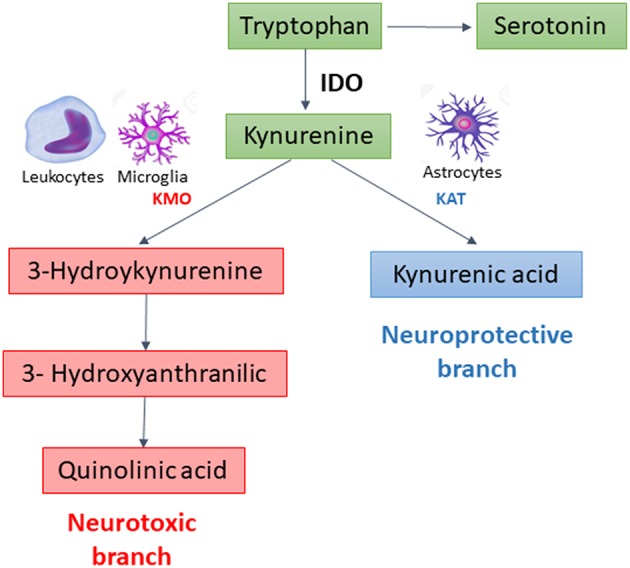
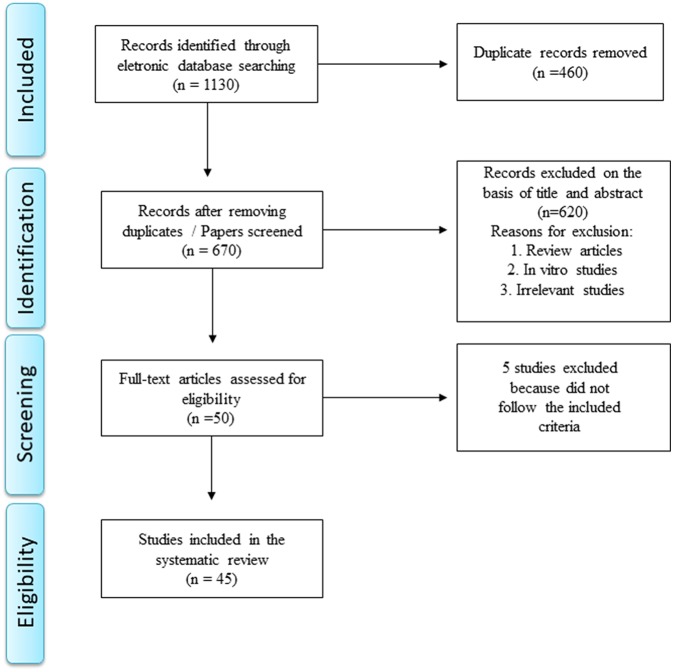
Stroke is the second leading cause of death after ischemic heart disease and the third leading cause of disability-adjusted life-years lost worldwide. There is a great need for developing more effective strategies to treat stroke and its resulting impairments. Among several neuroprotective strategies tested so far, the kynurenine pathway (KP) seems to be promising, but the evidence is still sparse. Here, we performed a systematic review of preclinical and clinical studies evaluating the involvement of KP in stroke. We searched for the keywords: ("kynurenine" or "kynurenic acid" or "quinolinic acid") AND ("ischemia" or "stroke" or "occlusion) in the electronic databases PubMed, Scopus, and Embase. A total of 1,130 papers was initially retrieved. After careful screening, forty-five studies were included in this systematic review, being 39 pre-clinical and six clinical studies. Despite different experimental models of cerebral ischemia, the results are concordant in implicating the KP in the pathophysiology of stroke. Preclinical evidence also suggests that treatment with kynurenine and KMO inhibitors decrease infarct size and improve behavioral and cognitive outcomes. Few studies have investigated the KP in human stroke, and results are consistent with the experimental findings that the KP is activated after stroke. Well-designed preclinical studies addressing the expression of KP enzymes and metabolites in specific cell types and their potential effects at cellular levels alongside more clinical studies are warranted to confirm the translational potential of this pathway as a pharmacological target for stroke and related complications.
中风是仅次于缺血性心脏病的第二大致死原因,也是全球伤残调整生命年损失的第三大原因。迫切需要制定更有效的策略来治疗中风及其导致的损伤。在迄今为止测试的几种神经保护策略中,犬尿氨酸途径(KP)似乎很有前景,但证据仍然稀少。在这里,我们对评估KP在中风中作用的临床前和临床研究进行了系统综述。我们在电子数据库PubMed、Scopus和Embase中搜索了关键词:(“犬尿氨酸”或“犬尿喹啉酸”或“喹啉酸”)以及(“缺血”或“中风”或“闭塞”)。最初检索到1130篇论文。经过仔细筛选,本系统综述纳入了45项研究,其中39项为临床前研究,6项为临床研究。尽管脑缺血的实验模型不同,但结果一致表明KP参与了中风的病理生理学。临床前证据还表明用犬尿氨酸和KMO抑制剂治疗可减小梗死面积并改善行为和认知结果。很少有研究调查人类中风中的KP,结果与实验结果一致,即中风后KP被激活。需要精心设计的临床前研究来研究特定细胞类型中KP酶和代谢物的表达及其在细胞水平的潜在影响,同时还需要更多的临床研究来证实该途径作为中风及相关并发症的药理学靶点的转化潜力。