Xie Xinci, Zhao Chen, He Qian, Qiu Tianyi, Yuan Songhua, Ding Longfei, Liu Lu, Jiang Lang, Wang Jing, Zhang Linxia, Zhang Chao, Wang Xiang, Zhou Dongming, Zhang Xiaoyan, Xu Jianqing
Shanghai Public Health Clinical Center and Institutes of Biomedical Science, Shanghai Medical College, Fudan University, Shanghai, China.
Vaccine Research Center, Key Laboratory of Molecular Virology and Immunology, Institut Pasteur of Shanghai, Chinese Academy of Sciences, Shanghai, China.
Front Microbiol. 2019 Jul 16;10:1630. doi: 10.3389/fmicb.2019.01630. eCollection 2019.
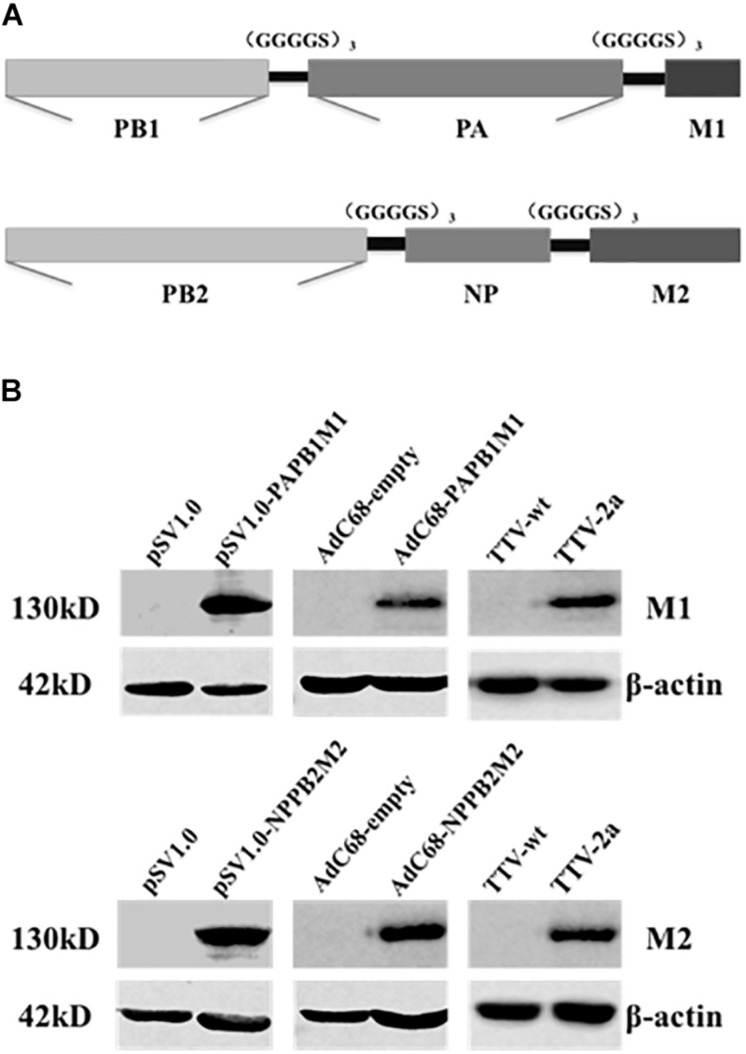
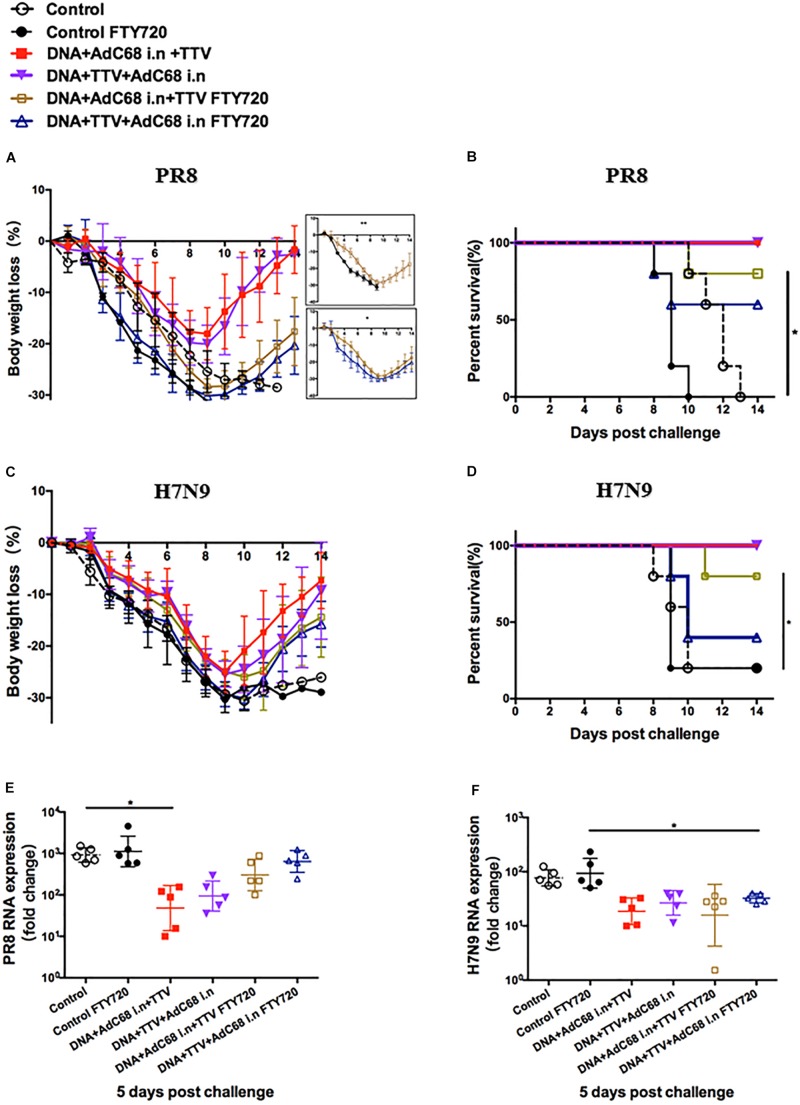
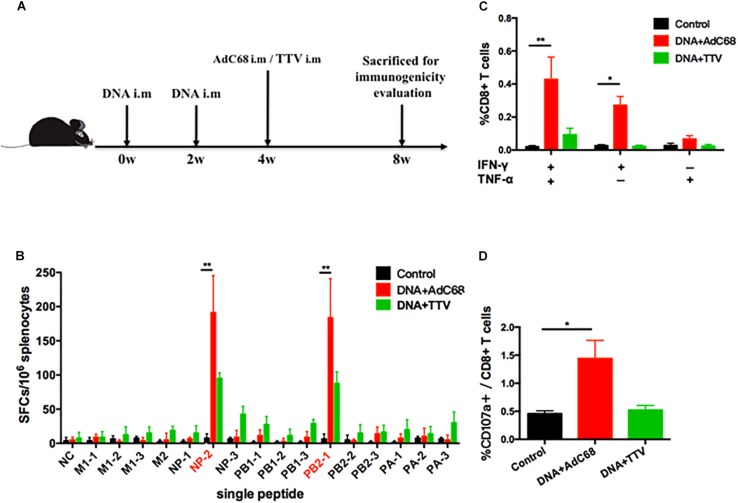
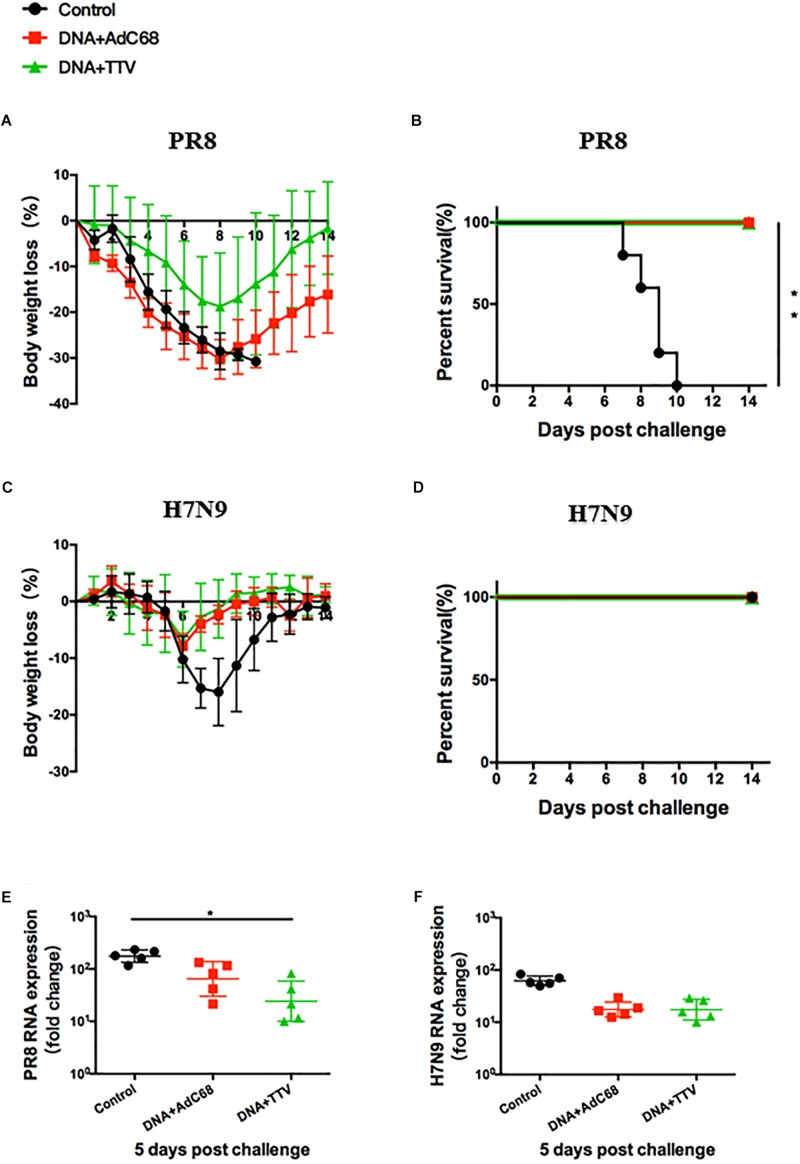
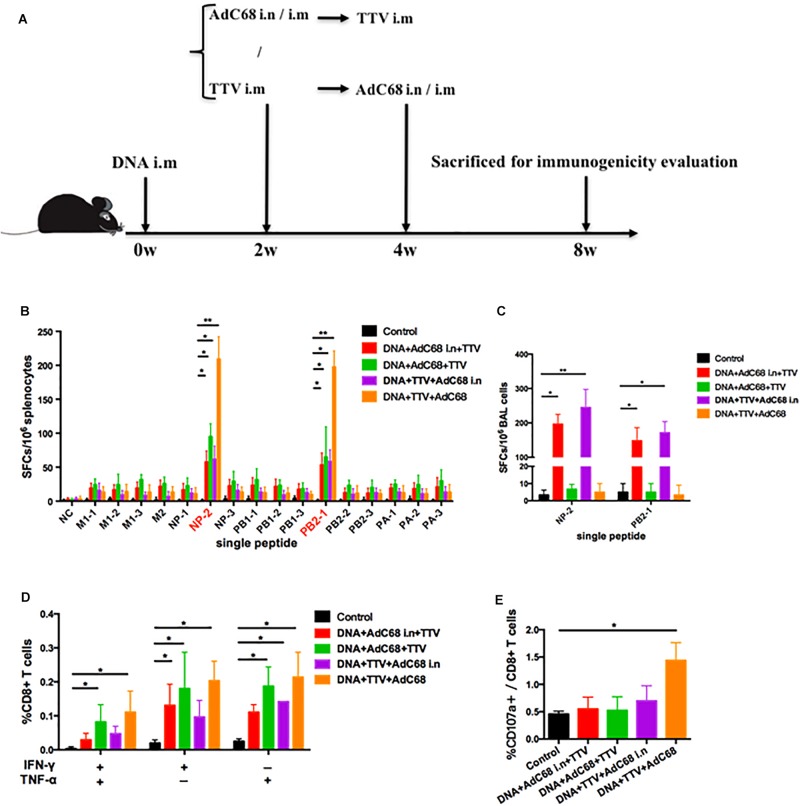
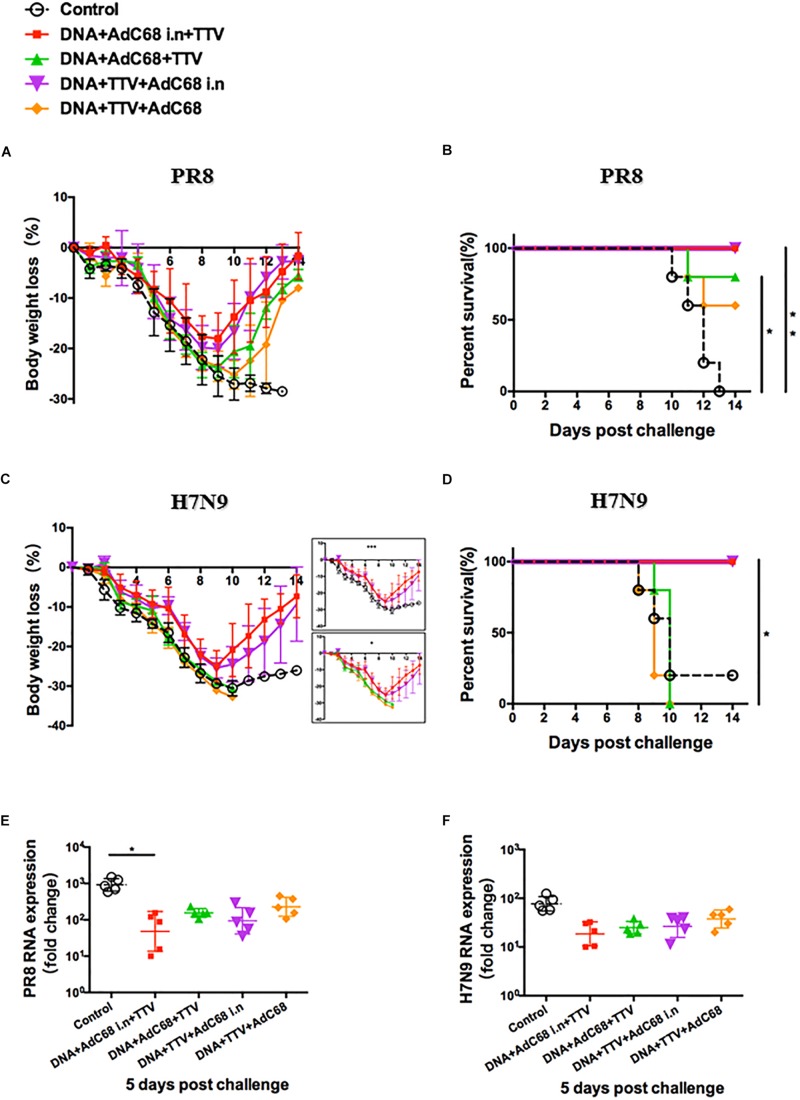
Given that continuing antigenic shift and drift of influenza A viruses result in the escape from previous vaccine-induced immune protection, a universal influenza vaccine has been actively sought. However, there were very few vaccines capable of eliciting cross-group ant-influenza immunity. Here, we designed two novel composite immunogens containing highly conserved T-cell epitopes of six influenza A virus internal antigens, and expressed them in DNA, recombinant adenovirus-based (AdC68) and recombinant vaccinia vectors, respectively, to formulate three vaccine forms. The introduction of the two immunogens via a DNA priming and viral vectored vaccine boosting modality afforded cross-group protection from both PR8 and H7N9 influenza virus challenges in mice. Both respiratory residential and systemic T cells contributed to the protective efficacy. Intranasal but not intramuscular administration of AdC68 based vaccine was capable of raising both T cell subpopulations to confer a full protection from lethal PR8 and H7N9 challenges, and blocking the lymphatic egress of T cells during challenges attenuated the protection. Thus, by targeting highly conserved internal viral epitopes to efficiently generate both respiratory and systemic memory T cells, the sequential vaccination strategy reported here represented a new promising candidate for the development of T-cell based universal influenza vaccines.
鉴于甲型流感病毒持续的抗原转变和漂移会导致逃脱先前疫苗诱导的免疫保护,人们一直在积极寻求通用流感疫苗。然而,能够引发跨组抗流感免疫的疫苗非常少。在此,我们设计了两种新型复合免疫原,它们包含六种甲型流感病毒内部抗原的高度保守T细胞表位,并分别在DNA、重组腺病毒(AdC68)和重组痘苗载体中表达,以制备三种疫苗形式。通过DNA初免和病毒载体疫苗加强免疫方式引入这两种免疫原,可使小鼠对PR8和H7N9流感病毒攻击产生跨组保护。呼吸道驻留T细胞和全身T细胞均对保护效果有贡献。基于AdC68的疫苗经鼻内而非肌肉内给药能够使两种T细胞亚群增加,从而对致死性PR8和H7N9攻击提供完全保护,并且在攻击期间阻断T细胞的淋巴流出会减弱这种保护作用。因此,通过靶向高度保守的病毒内部表位以有效产生呼吸道和全身记忆T细胞,本文报道的序贯疫苗接种策略是基于T细胞的通用流感疫苗开发的一个新的有前景的候选方案。