Research Institute of Internal Medicine, Oslo University Hospital, Rikshospitalet, Oslo, Norway.
Faculty of Medicine, Institute of Clinical Medicine, University of Oslo, Oslo, Norway.
Front Immunol. 2019 Jul 16;10:1621. doi: 10.3389/fimmu.2019.01621. eCollection 2019.
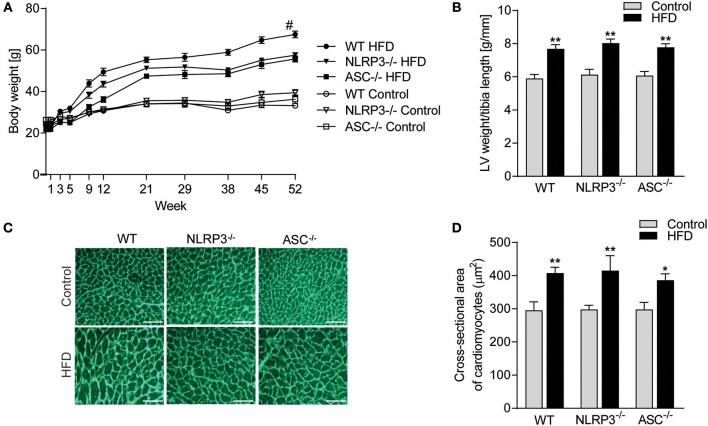
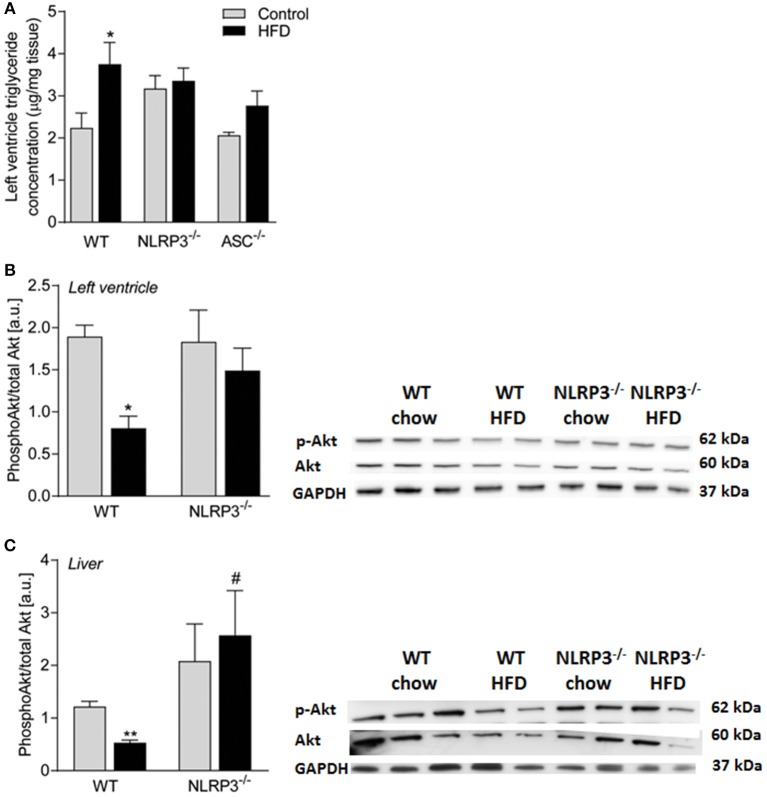
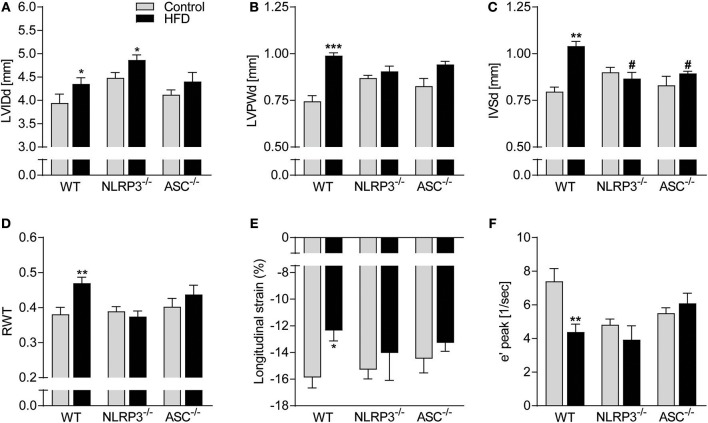
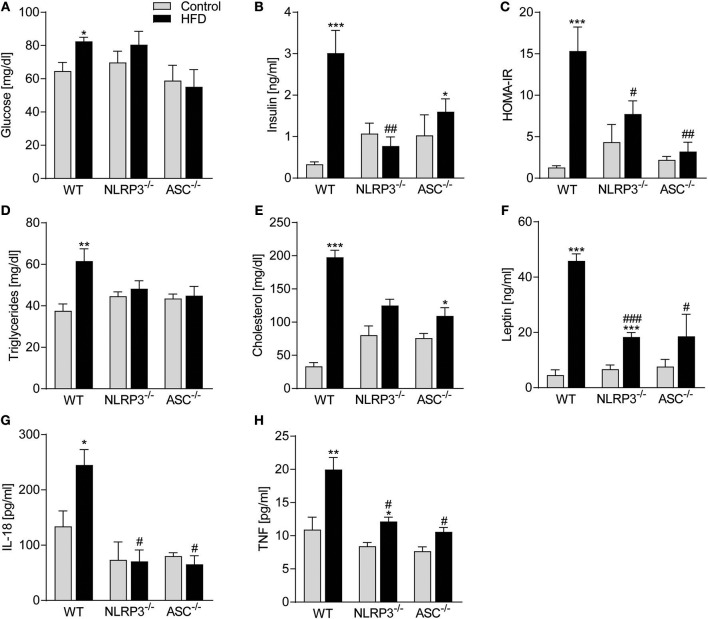
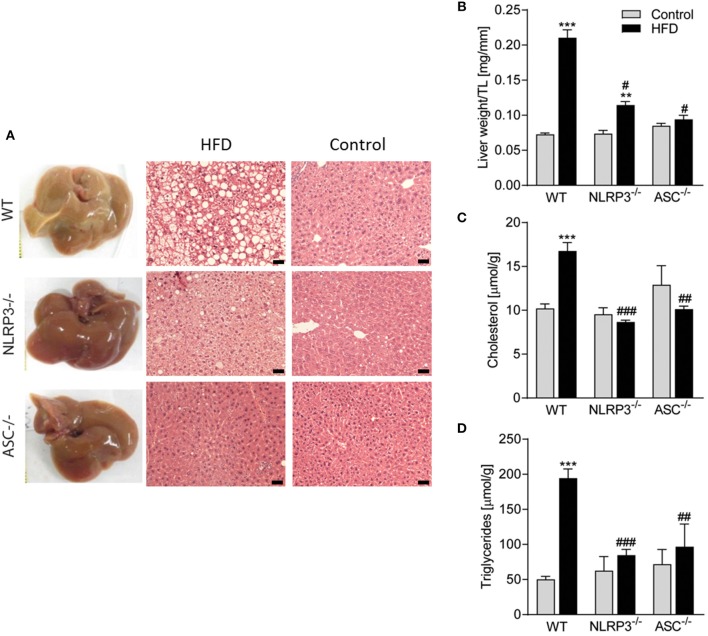
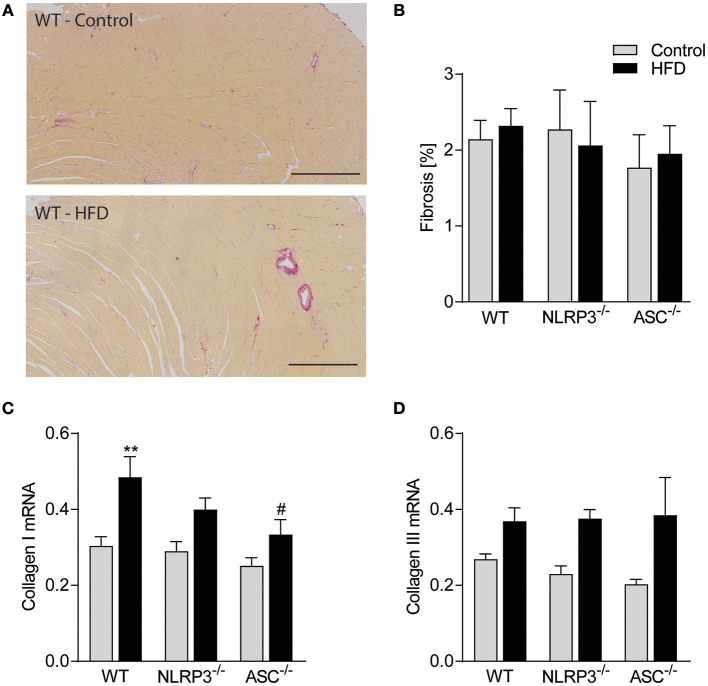
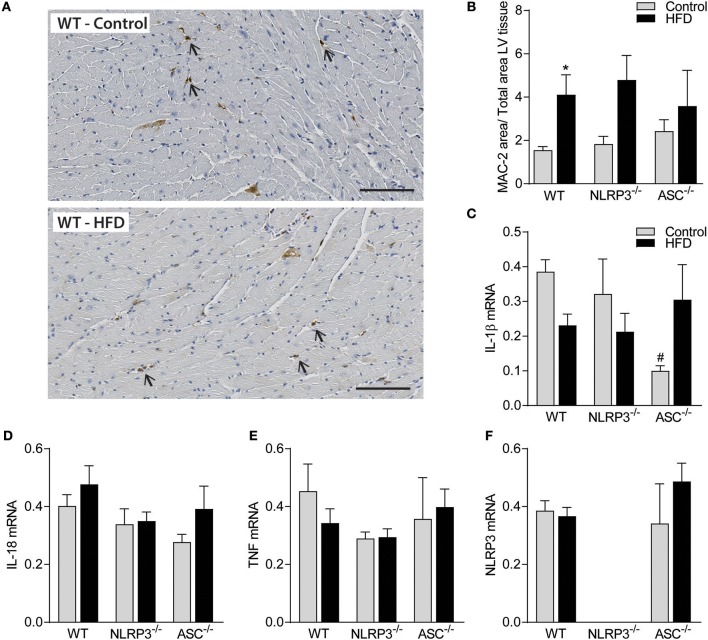
Obesity is an increasingly prevalent metabolic disorder in the modern world and is associated with structural and functional changes in the heart. The NLRP3 inflammasome is an innate immune sensor that can be activated in response to endogenous danger signals and triggers activation of interleukin (IL)-1β and IL-18. Increasing evidence points to the involvement of the NLRP3 inflammasome in obesity-induced inflammation and insulin resistance, and we hypothesized that it also could play a role in the development of obesity induced cardiac alterations. WT, , and () male mice were exposed to high fat diet (HFD; 60 cal% fat) or control diet for 52 weeks. Cardiac structure and function were evaluated by echocardiography and magnetic resonance imaging, respectively. Whereas, NLRP3 and ASC deficiency did not affect the cardiac hypertrophic response to obesity, it was preventive against left ventricle concentric remodeling and impairment of diastolic function. Furthermore, whereas NLRP3 and ASC deficiency attenuated systemic inflammation in HFD fed mice; long-term HFD did not induce significant cardiac fibrosis or inflammation, suggesting that the beneficial effects of NLRP3 inflammasome deficiency on myocardial remodeling at least partly reflect systemic mechanisms. and () deficient mice were also protected against obesity-induced systemic metabolic dysregulation, as well as lipid accumulation and impaired insulin signaling in hepatic and cardiac tissues. Our data indicate that the NLRP3 inflammasome modulates cardiac concentric remodeling in obesity through effects on systemic inflammation and metabolic disturbances, with effect on insulin signaling as a potential mediator within the myocardium.
肥胖症是现代社会日益普遍的代谢紊乱疾病,与心脏的结构和功能变化有关。NLRP3 炎性小体是一种先天免疫传感器,可对内源性危险信号作出反应而被激活,并触发白细胞介素 (IL)-1β 和 IL-18 的激活。越来越多的证据表明 NLRP3 炎性小体参与肥胖引起的炎症和胰岛素抵抗,我们假设它也可能在肥胖引起的心脏改变的发展中发挥作用。WT、 和 () 雄性小鼠分别暴露于高脂肪饮食 (HFD;60%卡路里脂肪) 或对照饮食 52 周。通过超声心动图和磁共振成像分别评估心脏结构和功能。然而,NLRP3 和 ASC 缺陷并不影响肥胖引起的心脏肥大反应,但可预防左心室向心性重构和舒张功能障碍。此外,尽管 NLRP3 和 ASC 缺陷减轻了 HFD 喂养小鼠的全身炎症,但长期 HFD 并未引起明显的心脏纤维化或炎症,这表明 NLRP3 炎性小体缺陷对心肌重构的有益作用至少部分反映了全身机制。 和 () 缺陷小鼠也受到保护,免受肥胖引起的全身代谢失调、肝脏和心脏组织中的脂质积累以及胰岛素信号转导受损的影响。我们的数据表明,NLRP3 炎性小体通过对全身炎症和代谢紊乱的影响来调节肥胖时的心脏向心性重构,而胰岛素信号转导作为心肌内的潜在介质。