Lavy Adi, McGrath David Geller, Matheus Carnevali Paula B, Wan Jiamin, Dong Wenming, Tokunaga Tetsu K, Thomas Brian C, Williams Kenneth H, Hubbard Susan S, Banfield Jillian F
Earth and Planetary Science University of California Berkeley California.
Earth and Environmental Sciences Lawrence Berkeley National Lab Berkeley California.
Ecol Evol. 2019 Jun 13;9(12):6869-6900. doi: 10.1002/ece3.5254. eCollection 2019 Jun.
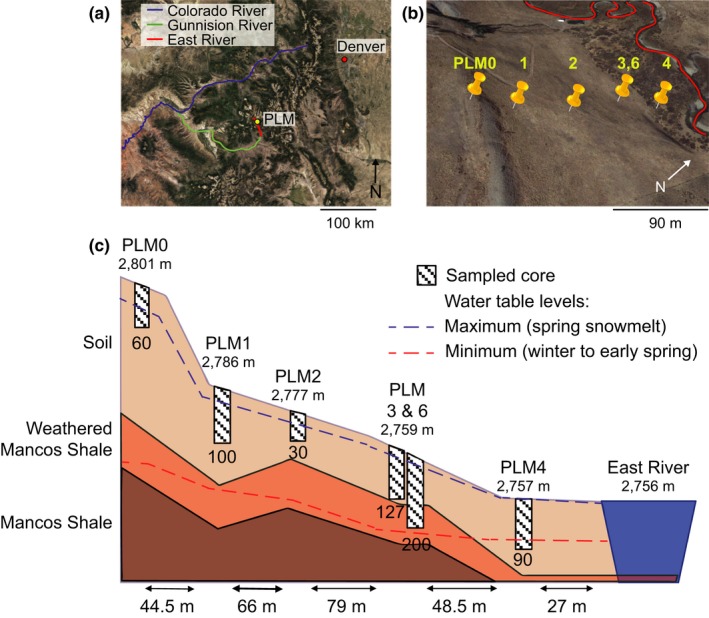
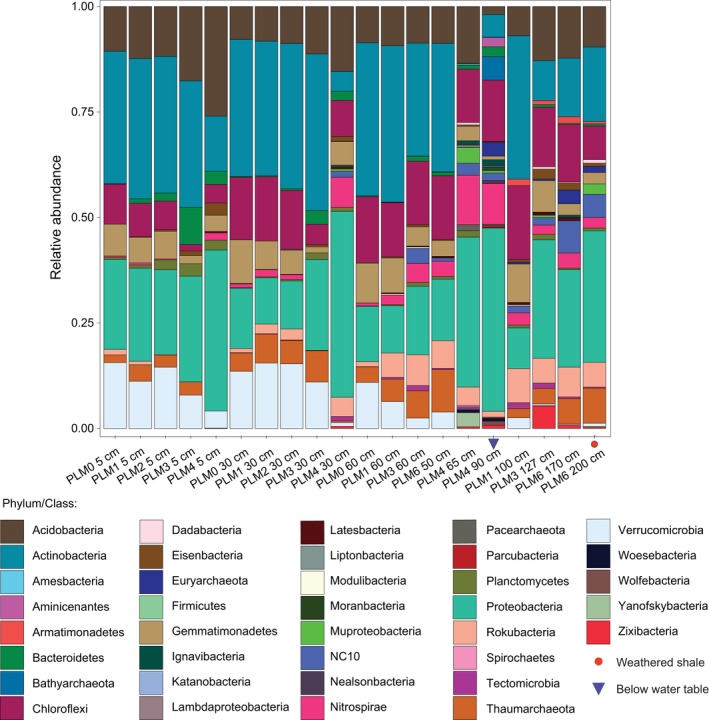
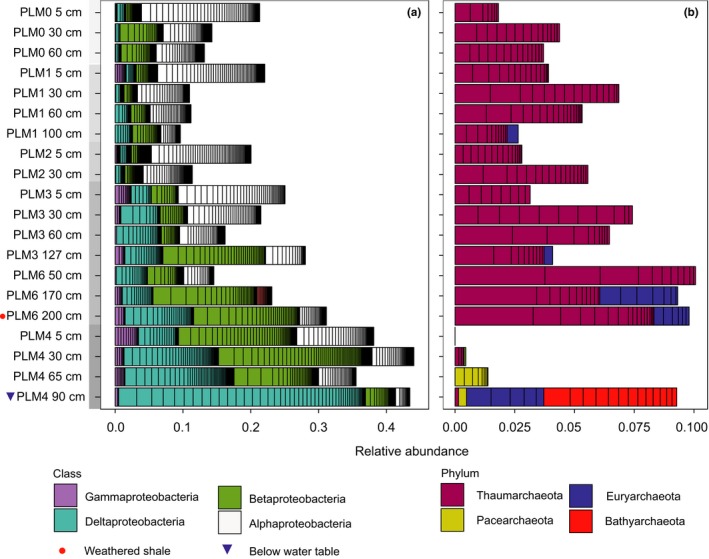
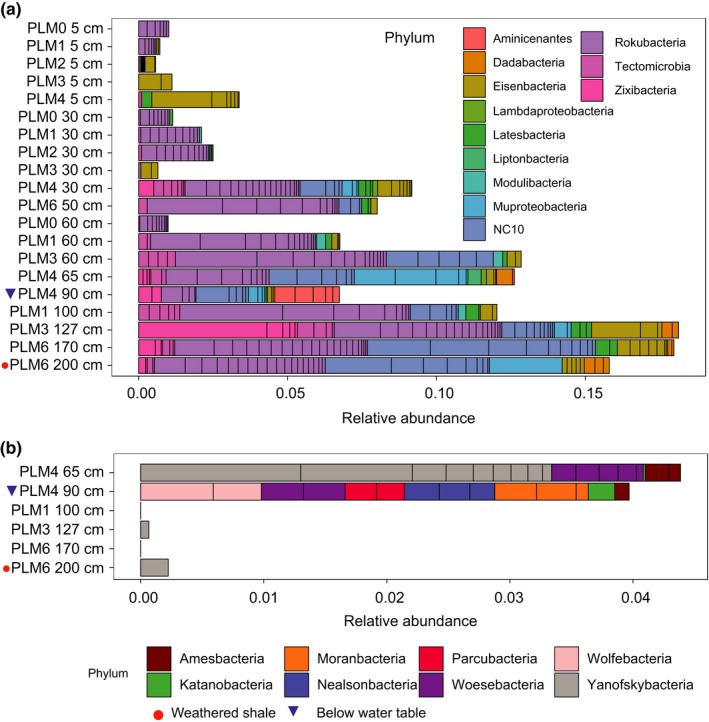
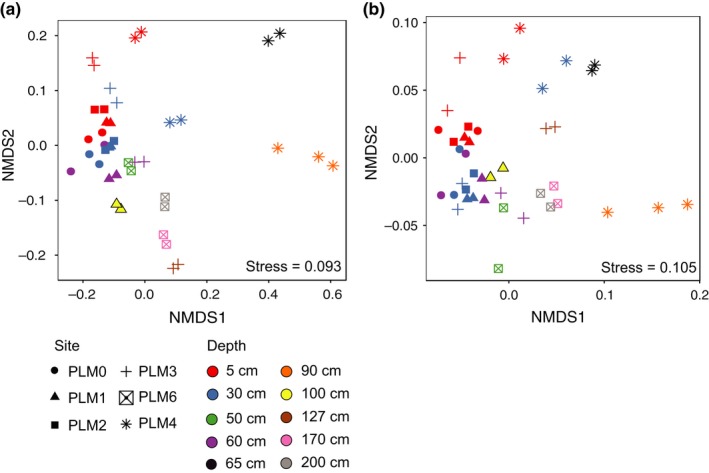
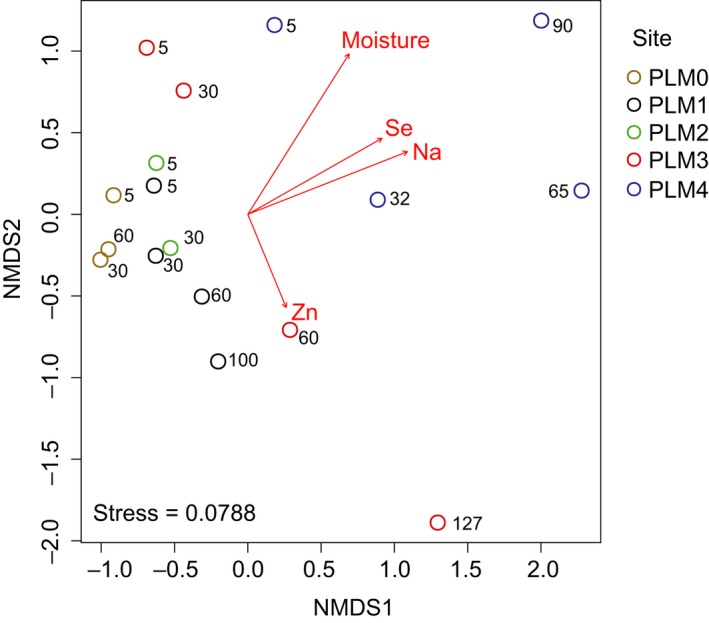
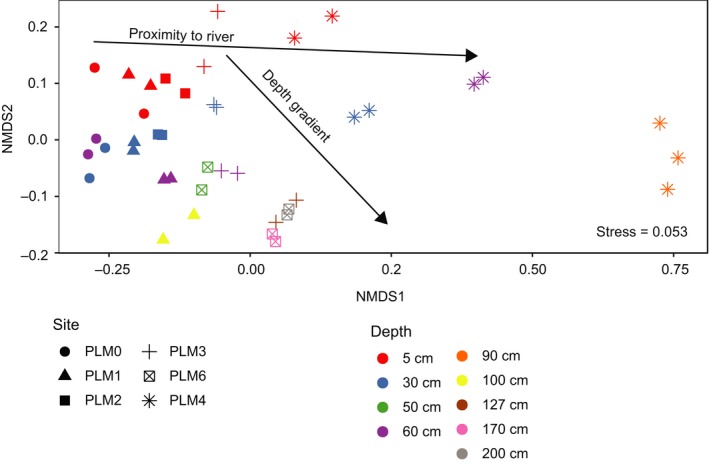
Watersheds are important suppliers of freshwater for human societies. Within mountainous watersheds, microbial communities impact water chemistry and element fluxes as water from precipitation events discharge through soils and underlying weathered rock, yet there is limited information regarding the structure and function of these communities. Within the East River, CO watershed, we conducted a depth-resolved, hillslope to riparian zone transect study to identify factors that control how microorganisms are distributed and their functions. Metagenomic and geochemical analyses indicate that distance from the East River and proximity to groundwater and underlying weathered shale strongly impact microbial community structure and metabolic potential. Riparian zone microbial communities are compositionally distinct, from the phylum down to the species level, from all hillslope communities. Bacteria from phyla lacking isolated representatives consistently increase in abundance with increasing depth, but only in the riparian zone saturated sediments we found Candidate Phyla Radiation bacteria. Riparian zone microbial communities are functionally differentiated from hillslope communities based on their capacities for carbon and nitrogen fixation and sulfate reduction. Selenium reduction is prominent at depth in weathered shale and saturated riparian zone sediments and could impact water quality. We anticipate that the drivers of community composition and metabolic potential identified throughout the studied transect will predict patterns across the larger watershed hillslope system.
流域是人类社会淡水的重要供应源。在山区流域内,微生物群落会影响水化学和元素通量,因为降水形成的水流会通过土壤和下方的风化岩石排出,但关于这些群落的结构和功能的信息有限。在科罗拉多州东河流域,我们开展了一项从山坡到河岸带的深度解析横断面研究,以确定控制微生物分布及其功能的因素。宏基因组学和地球化学分析表明,与东河的距离以及与地下水和下方风化页岩的接近程度强烈影响微生物群落结构和代谢潜力。河岸带微生物群落在组成上与所有山坡群落不同,从门到物种水平都是如此。缺乏分离代表的门的细菌丰度随着深度增加而持续增加,但只有在河岸带饱和沉积物中我们发现了候选门辐射细菌。河岸带微生物群落基于其碳固定、氮固定和硫酸盐还原能力,在功能上与山坡群落有所不同。在风化页岩和饱和河岸带沉积物的深处,硒还原很显著,可能会影响水质。我们预计,在整个研究横断面中确定的群落组成和代谢潜力驱动因素将预测更大流域山坡系统的模式。