Santonja Mathieu, Bousquet-Mélou Anne, Greff Stéphane, Ormeño Elena, Fernandez Catherine
Aix Marseille Univ, Avignon Université, CNRS, IRD, IMBE Marseille France.
Ecol Evol. 2019 Jul 2;9(14):8201-8213. doi: 10.1002/ece3.5390. eCollection 2019 Jul.
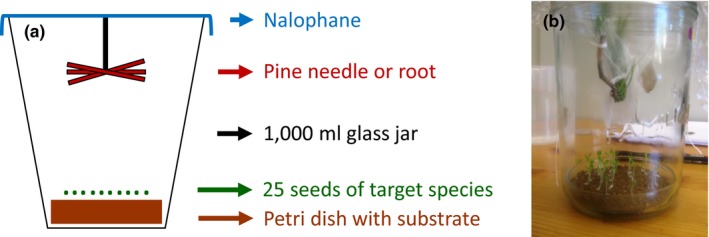
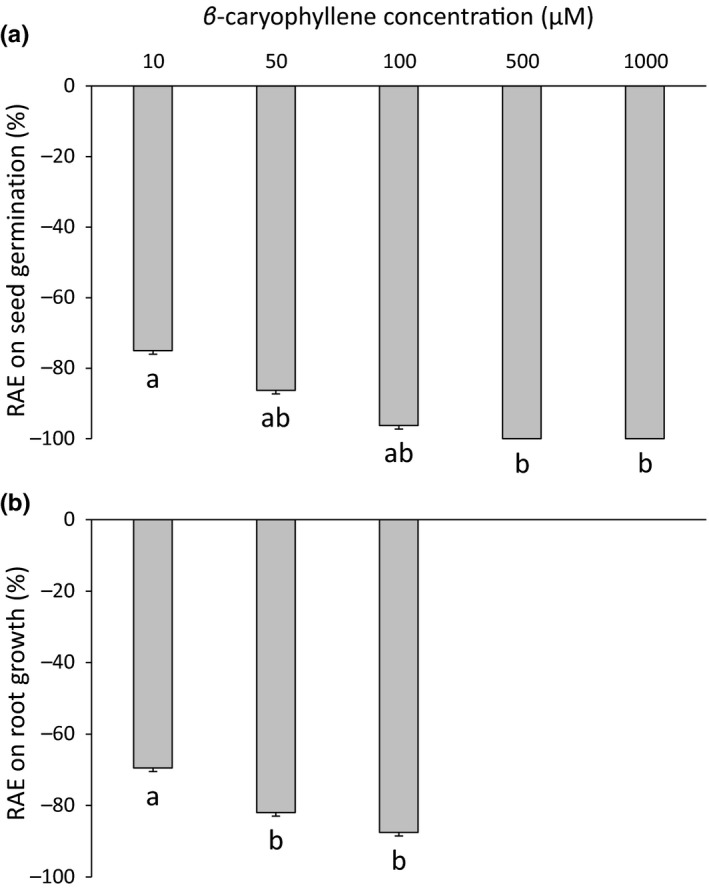
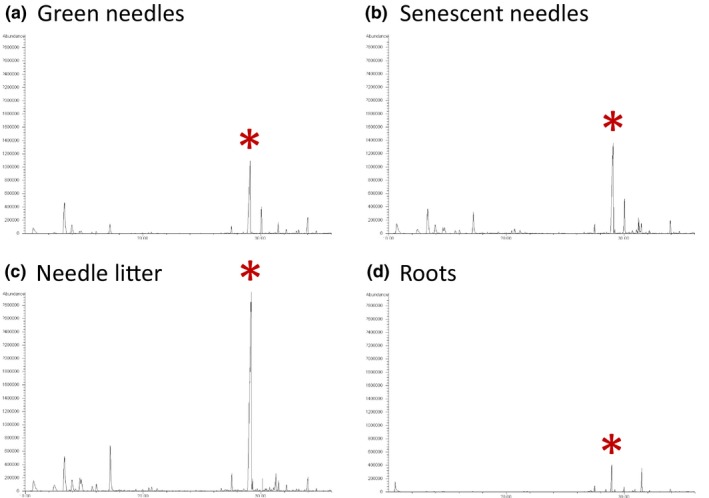
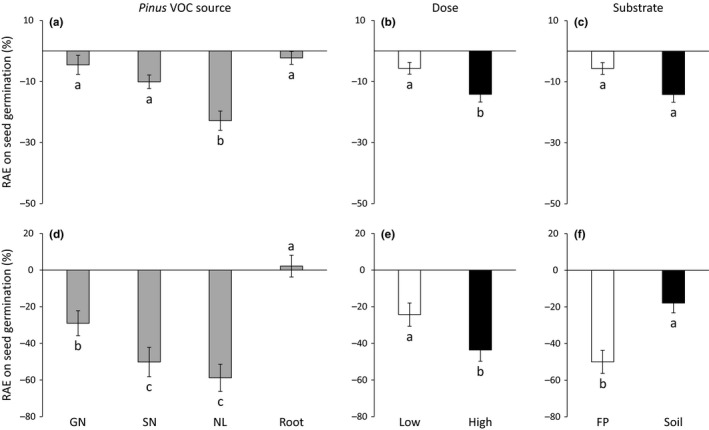
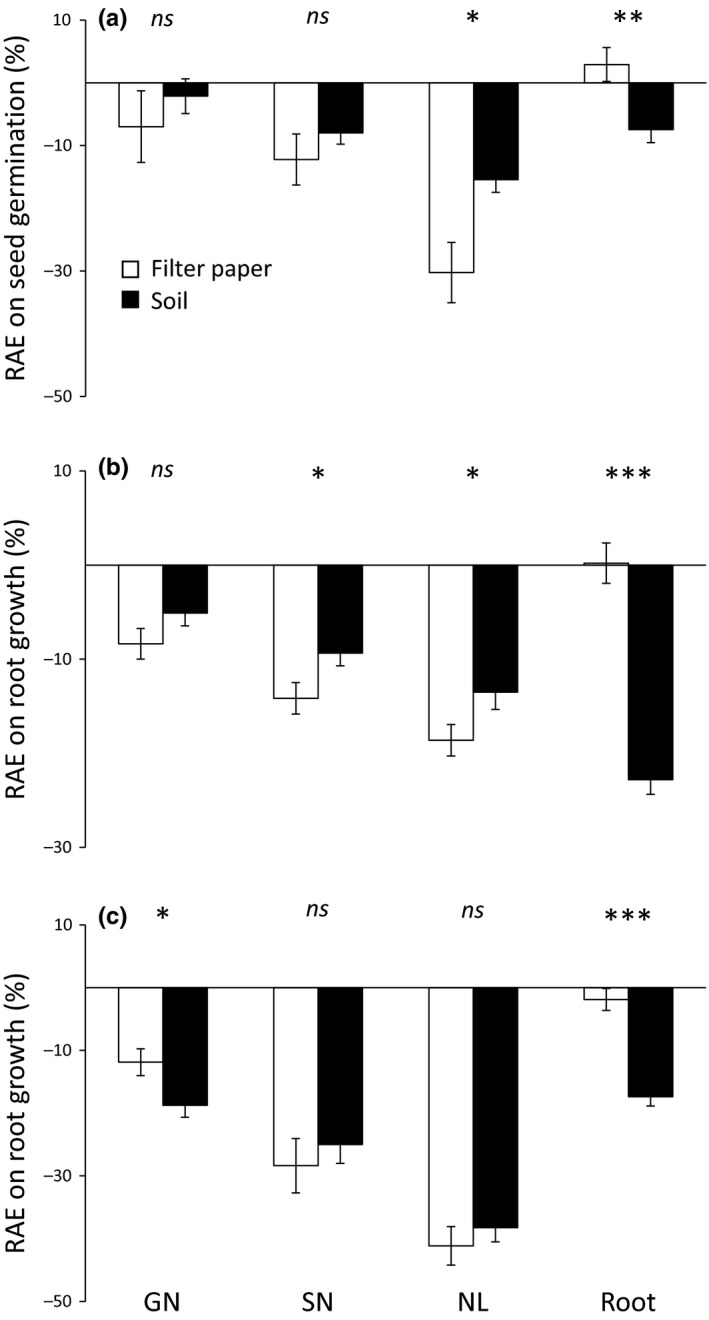
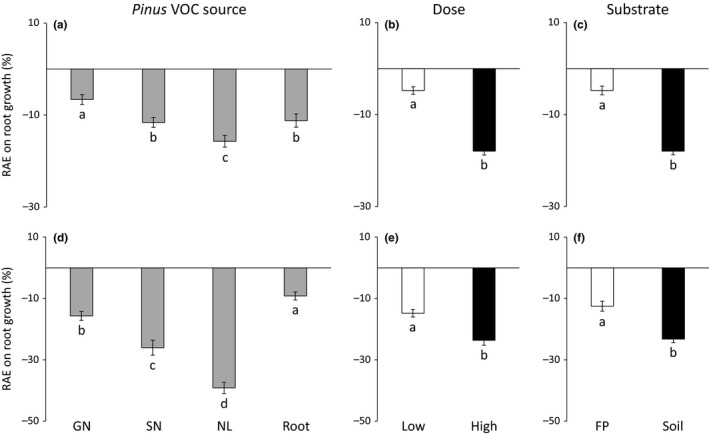
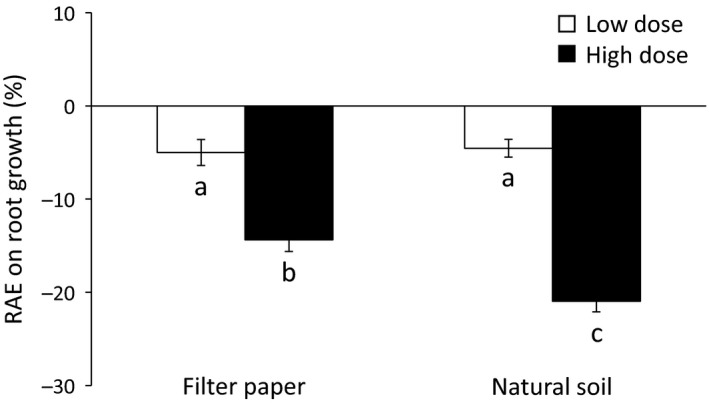
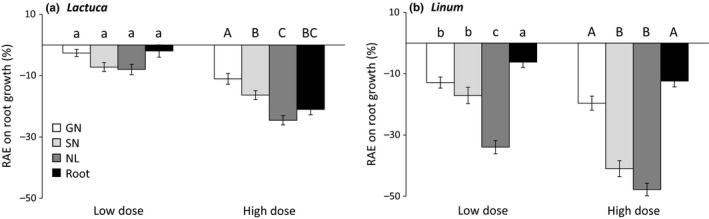
The Mediterranean region is recognized as a global biodiversity hotspot. However, over the last decades, the cessation of traditional farming in the north part of the Mediterranean basin has given way to strong afforestation leading to occurrence of abandoned agricultural lands colonized by pioneer expansionist species like . This pine species is known to synthesize a wide range of secondary metabolites, and previous studies have demonstrated strong allelopathic potentialities of its needle and root leachates. is also recognized to release significant amounts of volatile organic compounds (VOC) with potential allelopathic effects that have never been investigated. In this context, the objectives of the present study were to improve our knowledge about the VOC released from needles and roots, determine if these VOC affect the seed germination and root growth of two herbaceous target species ( and ), and evaluate if soil microorganisms modulate the potential allelopathic effects of these VOC. Thirty terpenes were detected from both, needle and root emissions with β-caryophyllene as the major volatile. Numerous terpenes, such as β-caryophyllene, δ-terpinene, or α-pinene, showed higher headspace concentrations according to the gradient green needles < senescent needles < needle litter. Seed germination and root growth of the two target species were mainly reduced in presence of VOC. In strong contrast with the trend reported with needle leachates in literature, we observed an increasing inhibitory effect of VOC with the progress of needle physiological stages (i.e., green needle < senescent needle < needle litter). Surprisingly, several inhibitory effects observed on filter paper were also found or even amplified when natural soil was used as a substrate, highlighting that soil microorganisms do not necessarily limit the negative effects of VOC released by on herbaceous target species.
地中海地区被公认为全球生物多样性热点地区。然而,在过去几十年里,地中海盆地北部传统农业的停止已被大规模造林所取代,导致出现了被先锋扩张物种(如该松树物种)殖民的废弃农田。已知这种松树物种能合成多种次生代谢产物,先前的研究已证明其针叶和根系浸出液具有很强的化感潜力。该松树物种还被认为会释放大量具有潜在化感作用的挥发性有机化合物(VOC),但从未对其进行过研究。在此背景下,本研究的目的是增进我们对该松树针叶和根系释放的VOC的了解,确定这些VOC是否会影响两种草本目标物种([物种名1]和[物种名2])的种子萌发和根系生长,并评估土壤微生物是否会调节这些VOC的潜在化感作用。从针叶和根系排放物中检测到了30种萜类化合物,其中β-石竹烯是主要挥发性成分。许多萜类化合物,如β-石竹烯、δ-萜品烯或α-蒎烯,根据绿针叶<衰老针叶<针叶凋落物的梯度,其顶空浓度更高。两种目标物种的种子萌发和根系生长在该松树VOC存在的情况下主要受到抑制。与文献中报道的针叶浸出液的趋势形成强烈对比的是,我们观察到该松树VOC的抑制作用随着针叶生理阶段的推进(即绿针叶<衰老针叶<针叶凋落物)而增强。令人惊讶的是,当使用天然土壤作为基质时,在滤纸上观察到的几种抑制作用也被发现甚至增强了,这突出表明土壤微生物不一定会限制该松树释放的VOC对草本目标物种的负面影响。