Strassheim Derek, Karoor Vijaya, Stenmark Kurt, Verin Alexander, Gerasimovskaya Evgenia
Departments of Medicine, University of Colorado Denver, Aurora, CO 80045, USA.
Cardiovascular and Pulmonary Research laboratories, University of Colorado Denver, Aurora, CO 80045, USA.
Vessel Plus. 2018;2. doi: 10.20517/2574-1209.2018.44. Epub 2018 Aug 30.
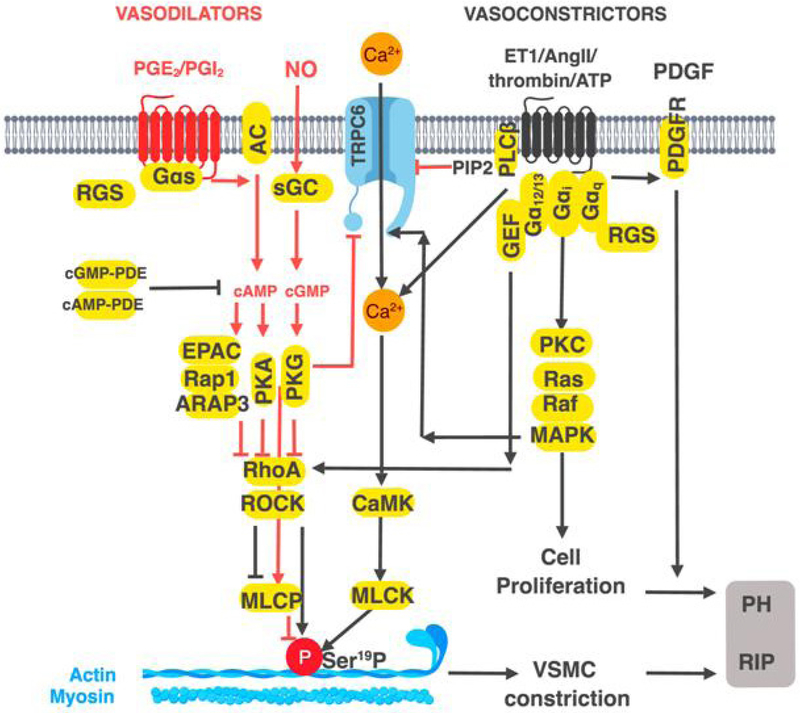
Pathological vascular remodeling is observed in various cardiovascular diseases including pulmonary hypertension (PH), a disease of unknown etiology that has been characterized by pulmonary artery vasoconstriction, right ventricular hypertrophy, vascular inflammation, and abnormal angiogenesis in pulmonary circulation. G protein-coupled receptors (GPCRs) are the largest family in the genome and widely expressed in cardiovascular system. They regulate all aspects of PH pathophysiology and represent therapeutic targets. We overview GPCRs function in vasoconstriction, vasodilation, vascular inflammation-driven remodeling and describe signaling cross talk between GPCR, inflammatory cytokines, and growth factors. Overall, the goal of this review is to emphasize the importance of GPCRs as critical signal transducers and targets for drug development in PH.
在包括肺动脉高压(PH)在内的各种心血管疾病中均观察到病理性血管重塑,PH是一种病因不明的疾病,其特征为肺动脉血管收缩、右心室肥大、血管炎症以及肺循环中异常的血管生成。G蛋白偶联受体(GPCRs)是基因组中最大的家族,在心血管系统中广泛表达。它们调节PH病理生理学的各个方面,是治疗靶点。我们概述了GPCRs在血管收缩、血管舒张、血管炎症驱动的重塑中的作用,并描述了GPCRs、炎性细胞因子和生长因子之间的信号转导相互作用。总体而言,本综述的目的是强调GPCRs作为PH中关键信号转导分子和药物开发靶点的重要性。