Wu Lingfeng, Liu Yufeng, Qin Yin, Wang Lu, Wu Zhenqiang
College of Food Science and Engineering, Hainan University, Haikou 570228, China.
School of Biology and Biological Engineering, South China University of Technology, Guangzhou 510006, China.
Antioxidants (Basel). 2019 Aug 3;8(8):274. doi: 10.3390/antiox8080274.
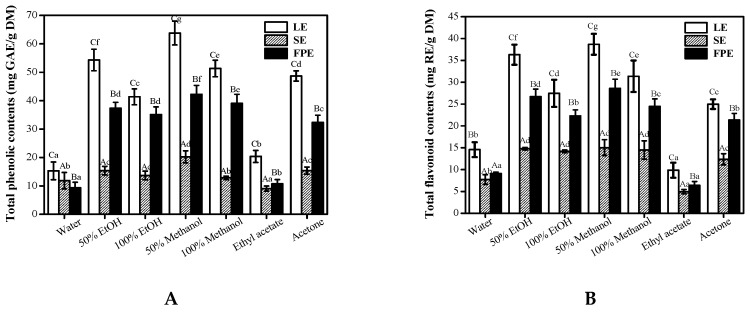
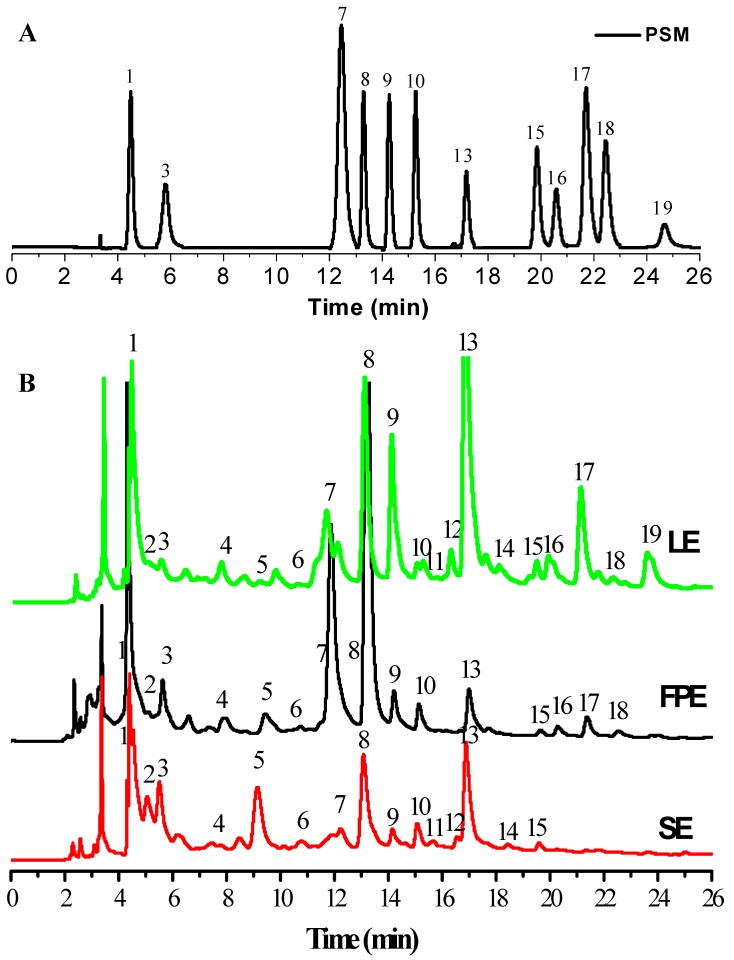
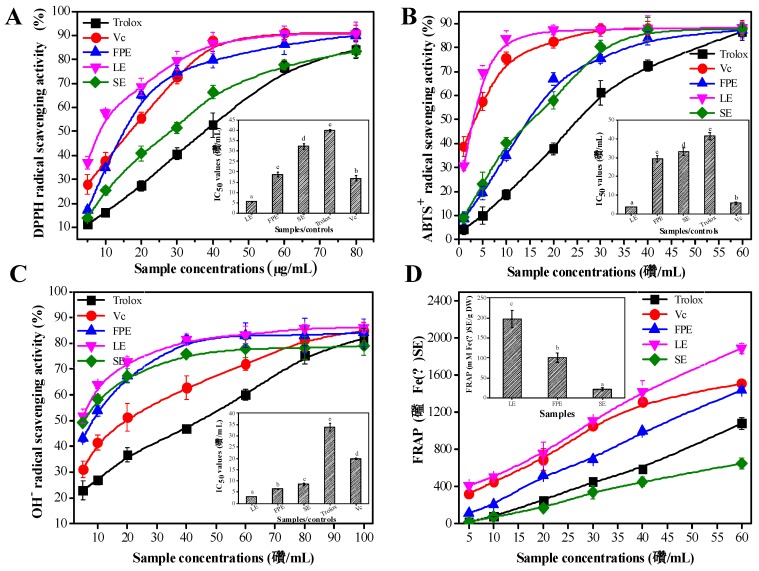
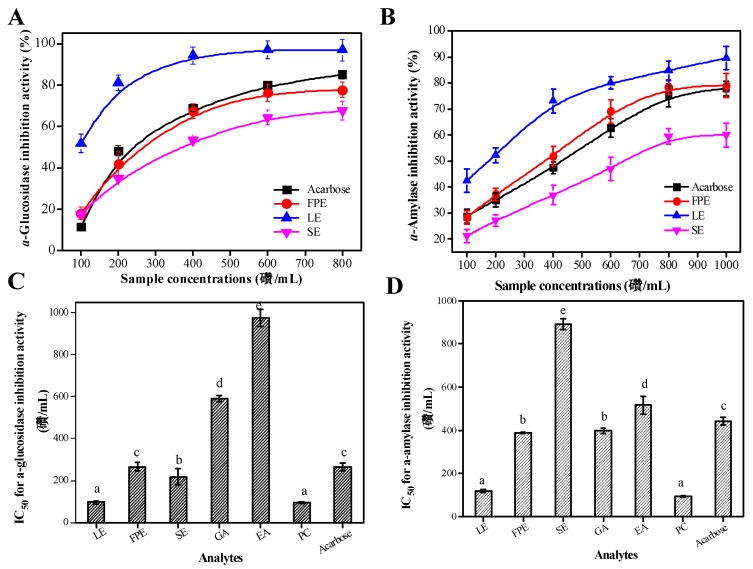
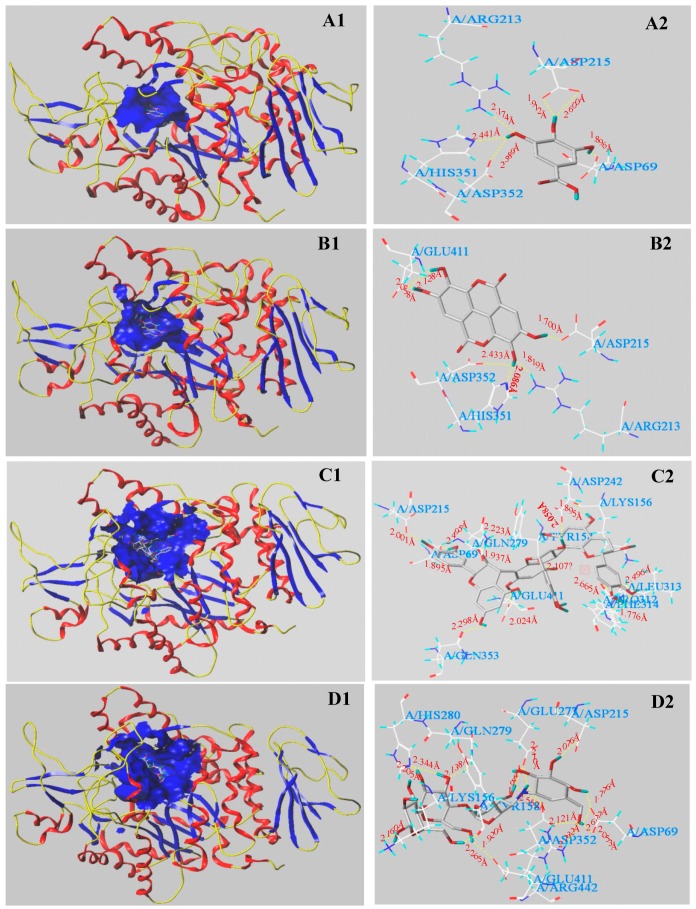
The anti-oxidative phenolic compounds in plant extracts possess multiple pharmacological functions. However, the phenolic characterization and in vitro bio-activities in various parts of raspberry ( L.) have not been investigated systematically. In the present study, the phenolic profiles of leaves (LE), fruit pulp (FPE), and seed extracts (SE) in raspberry were analyzed by HR-HPLC-ESI-qTOF-MS/MS method, and their antioxidant activities and digestive enzymes inhibitory abilities were also investigated. The molecular docking analysis was used to delineate their inhibition mechanisms toward type II diabetes related digestive enzymes. Regardless of LE, FPE, or SE, 50% methanol was the best solvent for extracting high contents of phenolic compounds, followed by 50% ethanol and 100% methanol. The LE of raspberry displayed the highest total phenolic content (TPC) and total flavonoid content (TFC). A total of nineteen phenolic compounds were identified. The quantitative results showed that gallic acid, ellagic acid, and procyanidin C3 were the major constituents in the three extracts. The various parts extracts of raspberry all exhibited the strong antioxidant activities, especially for LE. Moreover, the powerful inhibitory effects of the three extracts against digestive enzymes (-glucosidase and -amylase) were observed. The major phenolic compounds of the three extracts also showed good inhibitory activities of digestive enzyme in a dose-dependent manner. The underlying inhibitory mechanisms of the main phenolic compounds against digestive enzymes were clarified by molecular docking analysis. The present study demonstrated that the various parts of raspberry had strong antioxidant activities and inhibitory effects on digestive enzymes, and can potentially prevent oxidative damage or diabetes-related problems.
植物提取物中的抗氧化酚类化合物具有多种药理功能。然而,树莓各部位的酚类特征及其体外生物活性尚未得到系统研究。在本研究中,采用高分辨液相色谱-电喷雾电离-四极杆飞行时间串联质谱法(HR-HPLC-ESI-qTOF-MS/MS)分析了树莓叶片提取物(LE)、果肉提取物(FPE)和种子提取物(SE)的酚类成分,并研究了它们的抗氧化活性和对消化酶的抑制能力。通过分子对接分析来阐明它们对II型糖尿病相关消化酶的抑制机制。无论LE、FPE还是SE,50%甲醇都是提取高含量酚类化合物的最佳溶剂,其次是50%乙醇和100%甲醇。树莓叶片提取物的总酚含量(TPC)和总黄酮含量(TFC)最高。共鉴定出19种酚类化合物。定量结果表明,没食子酸、鞣花酸和原花青素C3是三种提取物中的主要成分。树莓各部位提取物均表现出较强的抗氧化活性,尤其是叶片提取物。此外,还观察到三种提取物对消化酶(α-葡萄糖苷酶和α-淀粉酶)有强大的抑制作用。三种提取物中的主要酚类化合物也呈剂量依赖性地表现出良好的消化酶抑制活性。通过分子对接分析阐明了主要酚类化合物对消化酶的潜在抑制机制。本研究表明,树莓各部位具有较强的抗氧化活性和对消化酶的抑制作用,并可能预防氧化损伤或糖尿病相关问题。