State Key Laboratory of Sheep Genetic Improvement and Healthy Production/Institute of Animal Husbandry and Veterinary, Xinjiang Academy of Agricultural and Reclamation Sciences, Shihezi, China.
Novogene Bioinformatics Institute, Beijing, China.
Parasit Vectors. 2019 Aug 5;12(1):390. doi: 10.1186/s13071-019-3650-1.
Moniezia expansa (Cyclophyllidea: Anoplocephalidae) is a large species of tapeworm that occurs in sheep and cattle and inhabits the small intestine, causing diarrhea and weight declines, leading to stockbreeding losses. Interestingly, the body fat percentage of M. expansa, which lacks the ability to synthesize fatty acids, is as high as 78% (dry weight) and all of the proglottids of M. expansa exhibit a dynamic developmental process from top to bottom. The aim of this paper is to identify the molecular basis of this high body fat percentage, the dynamic expression of developmental genes and their expression regulation patterns.
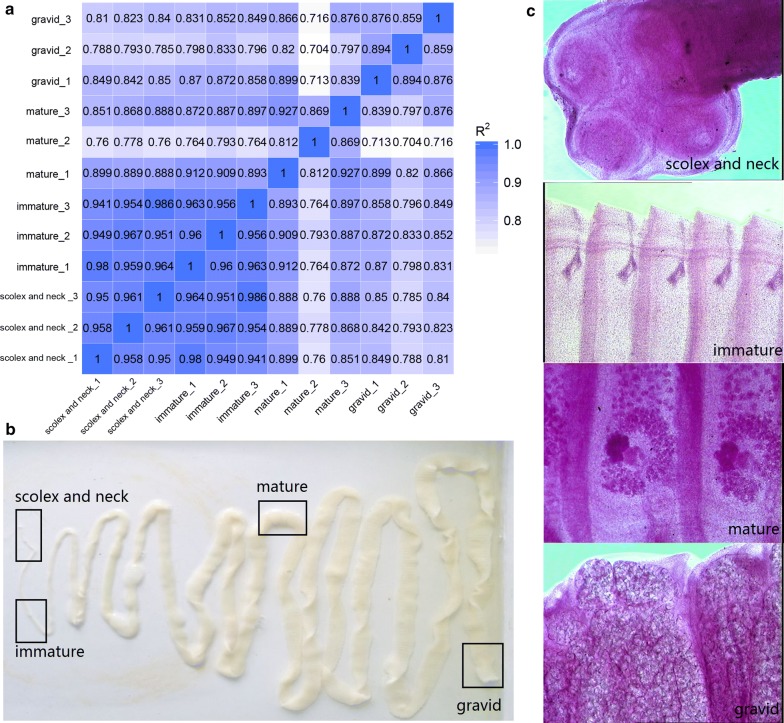
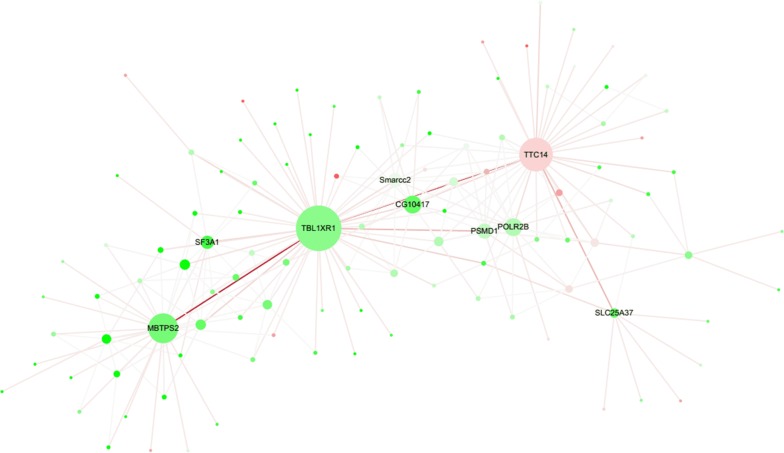
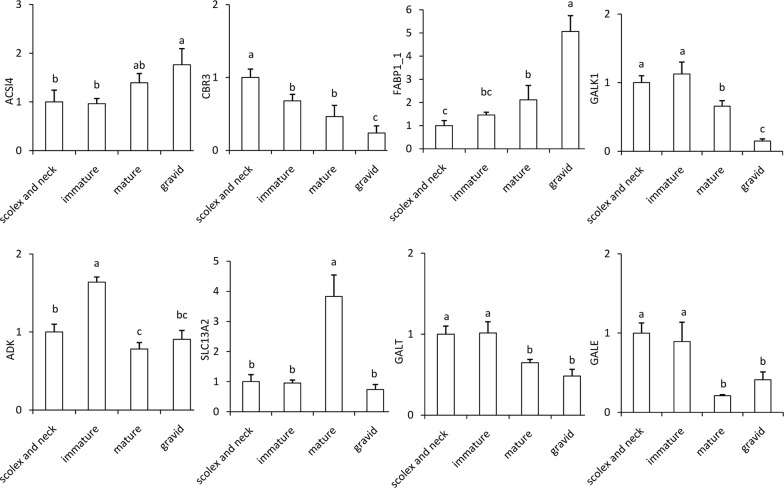
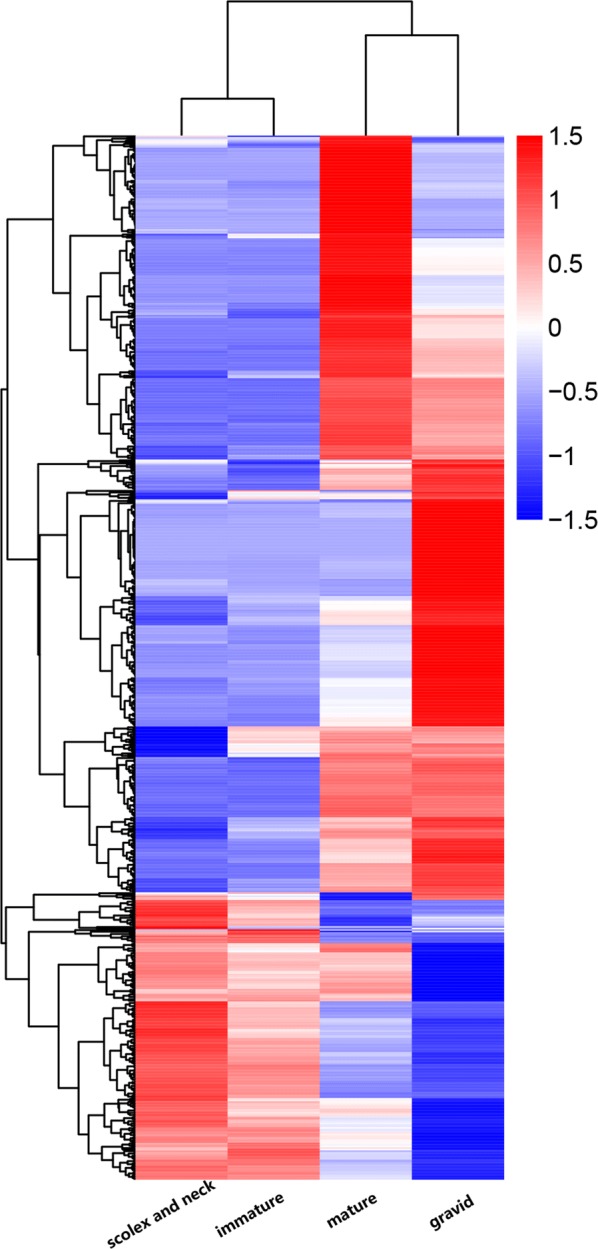
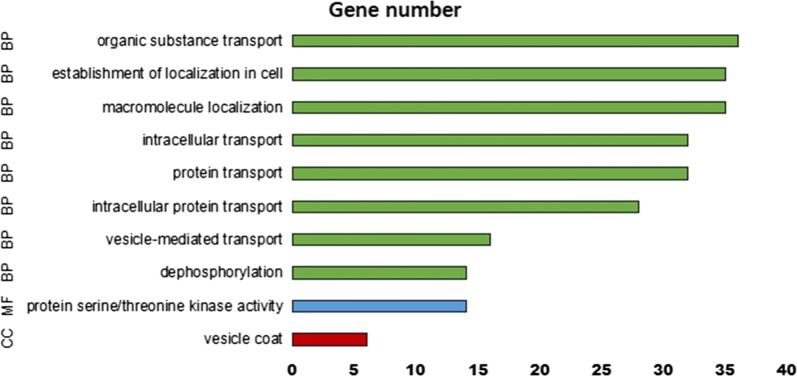
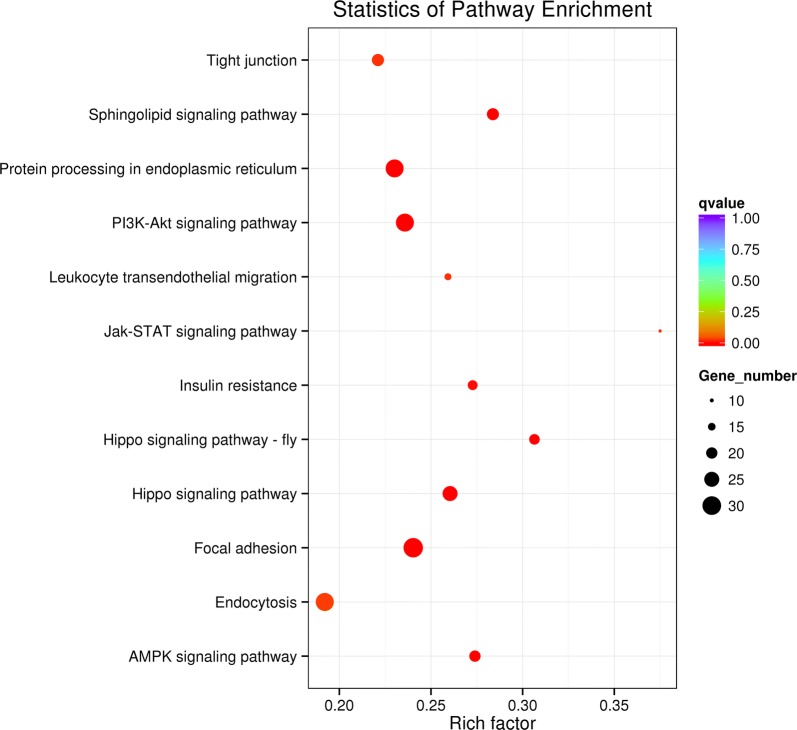
From 12 different proglottids (four sections: scolex and neck, immature, mature and gravid with three replicates), 13,874 transcripts and 680 differentially expressed genes (DEGs) were obtained. The gene expression patterns of the scolex and neck and immature proglottids were very similar, while those of the mature and gravid proglottids differed greatly. In addition, 13 lipid transport-related proteins were found in the DEGs, and the expression levels showed an increasing trend in the four proglottid types. Furthermore, it was shown that 33 homeobox genes, 9 of which were DEGs, had the highest expression in the scolex and neck section. The functional enrichment results of the DEGs were predominantly indicative of development-related processes, and there were also some signal transduction and metabolism results. The most striking result was the finding of Wnt signaling pathways, which appeared multiple times. Furthermore, the weighted gene co-expression networks were divided into 12 modules, of which the brown module was enriched with many development-related genes.
We hypothesize that M. expansa uses lipid transport-associated proteins to transport lipids from the host gut to obtain energy to facilitate its high fecundity. In addition, homeobox genes and Wnt signaling pathways play a core role in development and regeneration. The results promote research on the cell differentiation involved in the continuous growth and extension of body structures.
扩展莫尼茨绦虫(Cyclophyllidea: Anoplocephalidae)是一种大型绦虫,存在于绵羊和牛体内,寄生于小肠,引起腹泻和体重下降,导致畜牧业损失。有趣的是,缺乏合成脂肪酸能力的扩展莫尼茨绦虫的体脂肪百分比高达 78%(干重),并且所有节片都表现出从上到下的动态发育过程。本文旨在确定这种高脂肪百分比的分子基础、发育基因的动态表达及其表达调控模式。
从 12 个不同的节片中(4 个部分:头节和颈节、未成熟、成熟和孕节,每个部分有 3 个重复),获得了 13874 个转录本和 680 个差异表达基因(DEGs)。头节和颈节以及未成熟节片的基因表达模式非常相似,而成熟和孕节的表达模式则大不相同。此外,在 DEGs 中发现了 13 种脂质转运相关蛋白,其表达水平在 4 种节片类型中呈上升趋势。此外,33 种同源盒基因的表达水平最高,其中 9 种是 DEGs,存在于头节和颈节部位。DEGs 的功能富集结果主要与发育相关过程相关,也有一些信号转导和代谢结果。最引人注目的结果是发现了 Wnt 信号通路,该通路多次出现。此外,加权基因共表达网络被分为 12 个模块,其中棕色模块富集了许多与发育相关的基因。
我们假设扩展莫尼茨绦虫利用脂质转运相关蛋白将宿主肠道中的脂质运输到体内,以获取能量,从而促进其高繁殖力。此外,同源盒基因和 Wnt 信号通路在发育和再生中发挥核心作用。研究结果促进了对涉及连续生长和延伸的体结构的细胞分化的研究。