Center of Functionally Integrative Neuroscience (CFIN), Department of Clinical Medicine, Aarhus University, 8000 Aarhus, Denmark
Center of Functionally Integrative Neuroscience (CFIN), Department of Clinical Medicine, Aarhus University, 8000 Aarhus, Denmark.
eNeuro. 2019 Aug 14;6(4). doi: 10.1523/ENEURO.0444-18.2019. Print 2019 Jul/Aug.
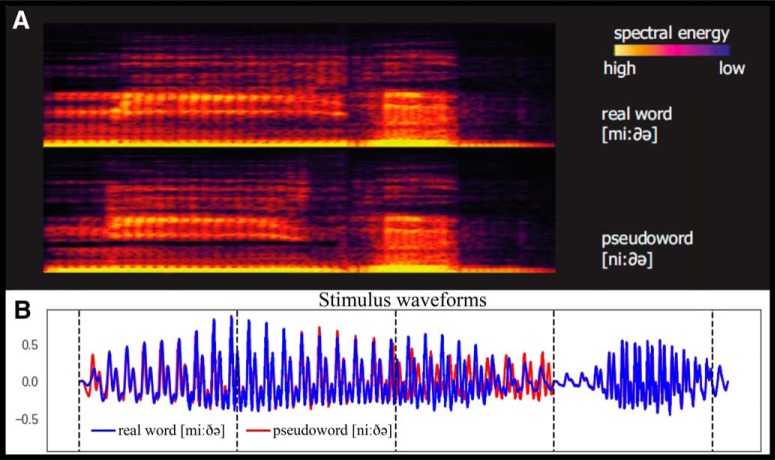
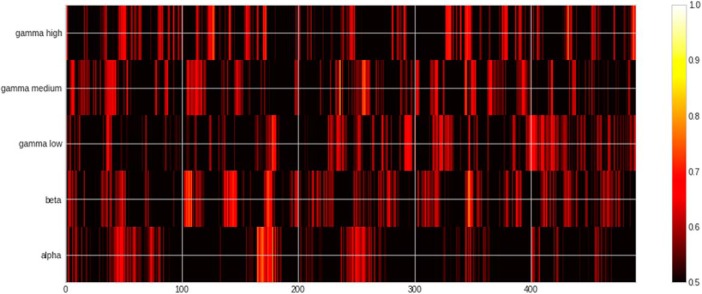
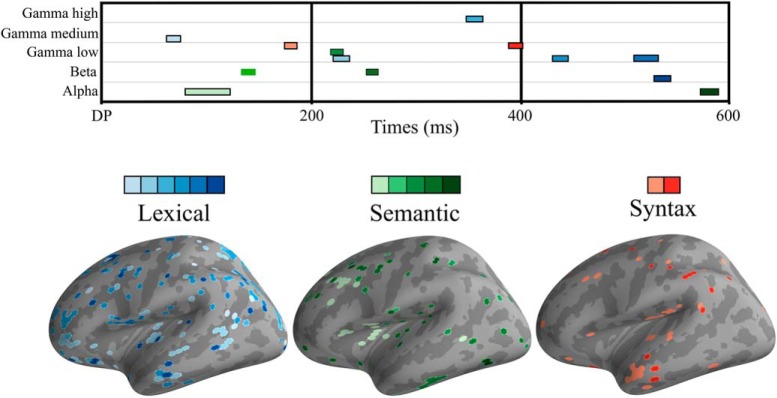
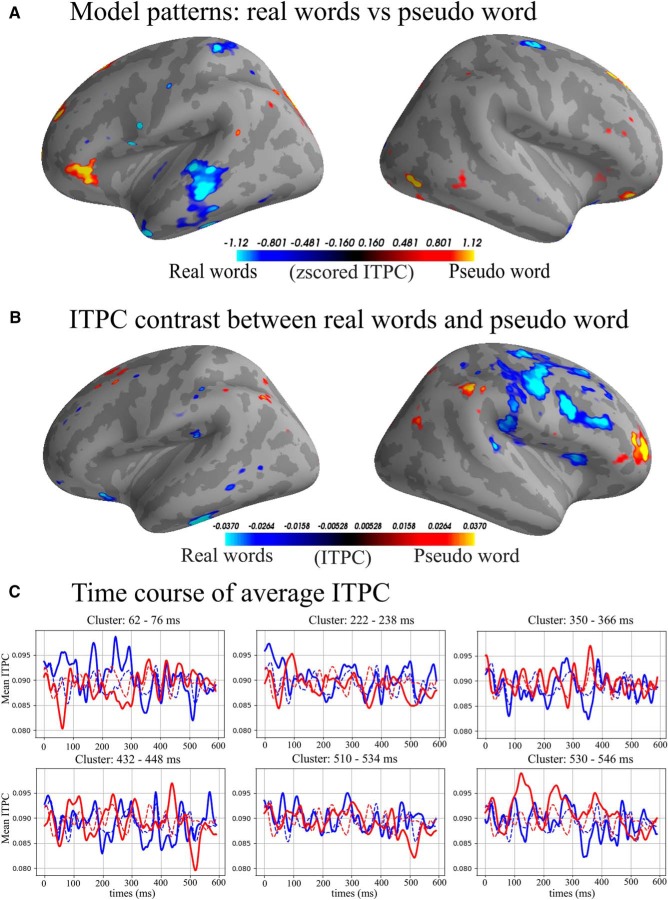
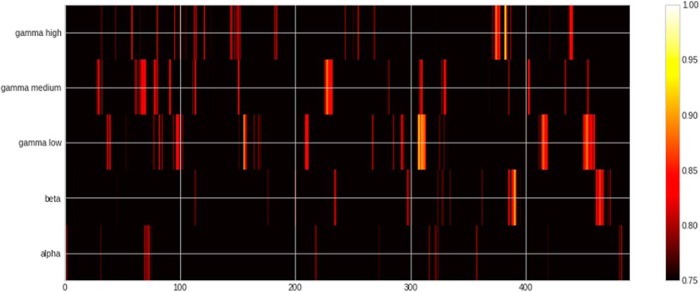
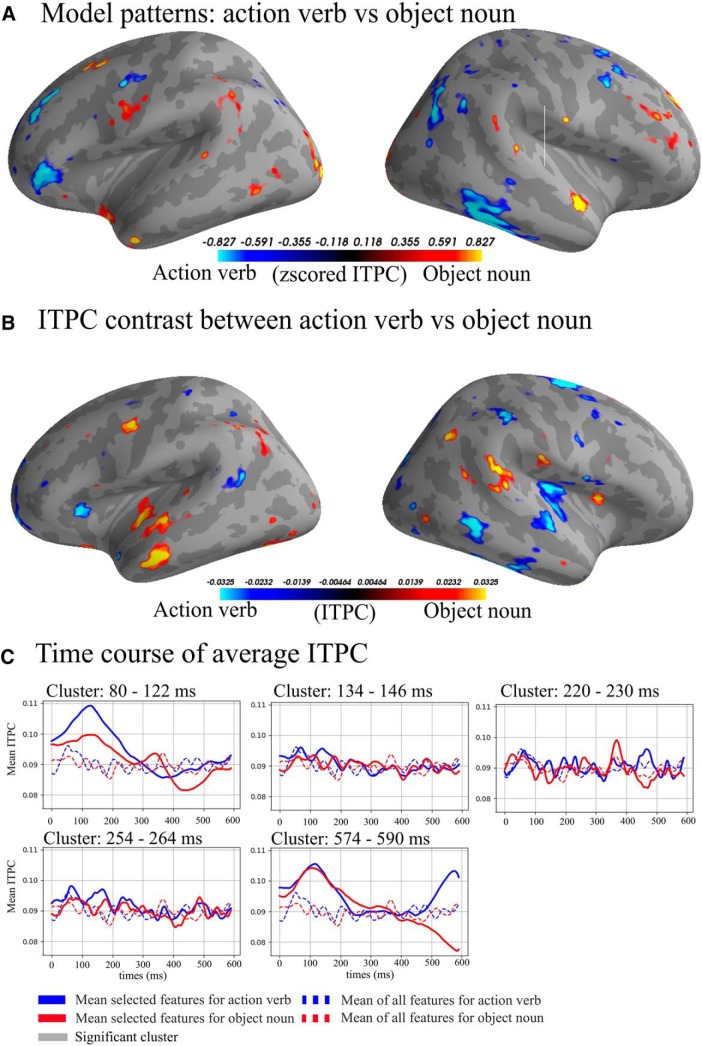
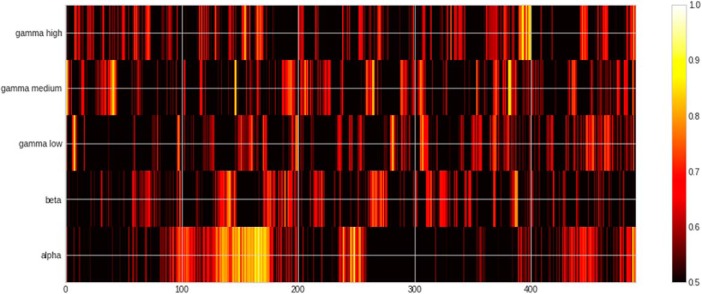
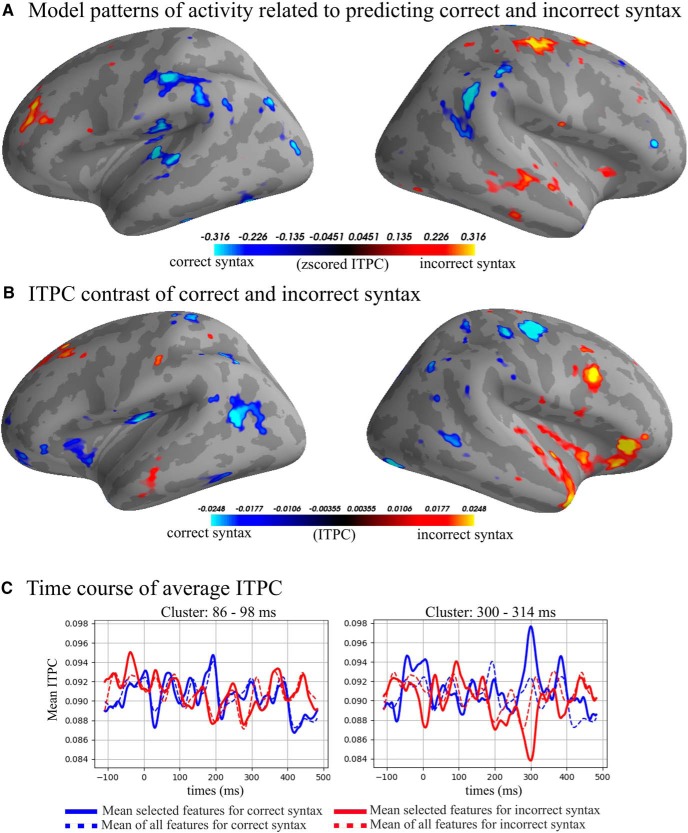
Neural processing of language is still among the most poorly understood functions of the human brain, whereas a need to objectively assess the neurocognitive status of the language function in a participant-friendly and noninvasive fashion arises in various situations. Here, we propose a solution for this based on a short task-free recording of MEG responses to a set of spoken linguistic contrasts. We used spoken stimuli that diverged lexically (words/pseudowords), semantically (action-related/abstract), or morphosyntactically (grammatically correct/ungrammatical). Based on beamformer source reconstruction we investigated intertrial phase coherence (ITPC) in five canonical bands (α, β, and low, medium, and high γ) using multivariate pattern analysis (MVPA). Using this approach, we could successfully classify brain responses to meaningful words from meaningless pseudowords, correct from incorrect syntax, as well as semantic differences. The best classification results indicated distributed patterns of activity dominated by core temporofrontal language circuits and complemented by other areas. They varied between the different neurolinguistic properties across frequency bands, with lexical processes classified predominantly by broad γ, semantic distinctions by α and β, and syntax by low γ feature patterns. Crucially, all types of processing commenced in a near-parallel fashion from ∼100 ms after the auditory information allowed for disambiguating the spoken input. This shows that individual neurolinguistic processes take place simultaneously and involve overlapping yet distinct neuronal networks that operate at different frequency bands. This brings further hope that brain imaging can be used to assess neurolinguistic processes objectively and noninvasively in a range of populations.
语言的神经处理仍然是人类大脑中理解最差的功能之一,而在各种情况下,都需要以参与者友好和非侵入性的方式客观评估语言功能的神经认知状态。在这里,我们提出了一种基于短时间无任务的 MEG 对一组口语语言对比的反应记录的解决方案。我们使用了在词汇上(单词/伪词)、语义上(与动作相关/抽象)或形态句法上(语法正确/不正确)不同的口语刺激。基于波束形成器源重建,我们使用多变量模式分析 (MVPA) 在五个典型频段(α、β 和低、中、高γ)中研究了试验间相位相干性 (ITPC)。使用这种方法,我们可以成功地将有意义的单词与无意义的伪词、正确的语法与不正确的语法以及语义差异的大脑反应进行分类。最佳分类结果表明,活动的分布模式由核心颞额语言回路主导,并辅以其他区域。它们在不同的神经语言特性之间在频带之间变化,词汇过程主要由宽γ 分类,语义区别由α 和β 分类,语法由低γ 特征模式分类。至关重要的是,所有类型的处理都在大约 100 毫秒后以近乎平行的方式开始,从听觉信息允许对口语输入进行消歧开始。这表明个体神经语言过程同时发生,并涉及重叠但不同的神经网络,这些网络在不同的频带中运行。这进一步希望脑成像可以用于在一系列人群中客观、非侵入性地评估神经语言过程。