Picower Institute for Learning and Memory, Massachusetts Institute of Technology, Cambridge, MA 02139, USA.
Picower Institute for Learning and Memory, Massachusetts Institute of Technology, Cambridge, MA 02139, USA; Department of Biology, Massachusetts Institute of Technology, Cambridge, MA 02139, USA; Department of Brain and Cognitive Sciences, Massachusetts Institute of Technology, Cambridge, MA 02139, USA.
Cell Rep. 2019 Aug 6;28(6):1584-1595.e5. doi: 10.1016/j.celrep.2019.07.012.
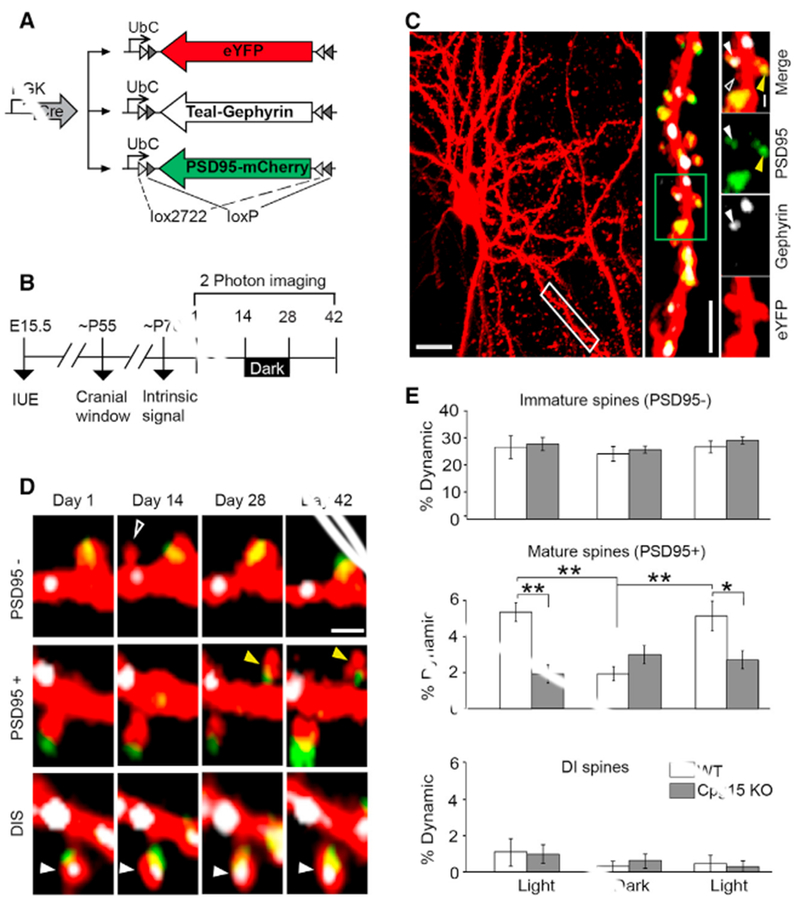
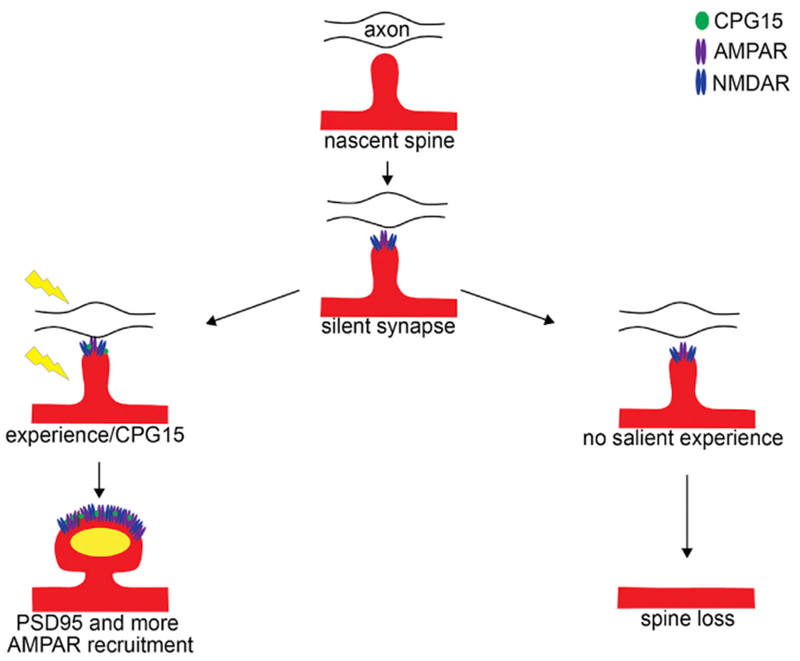
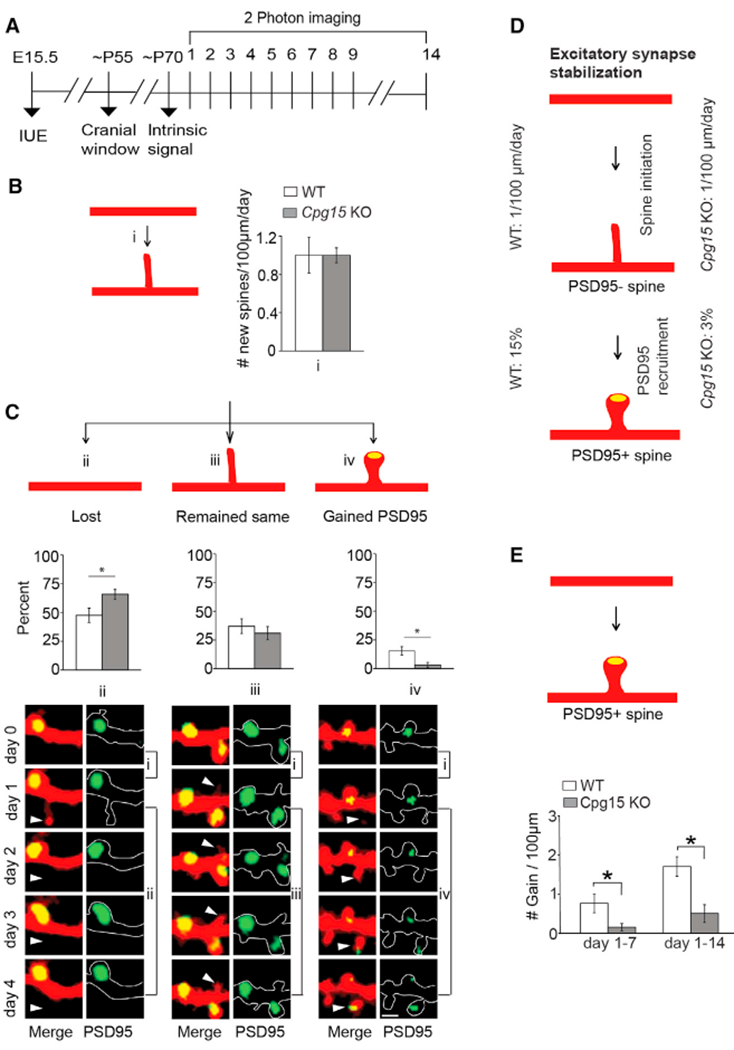
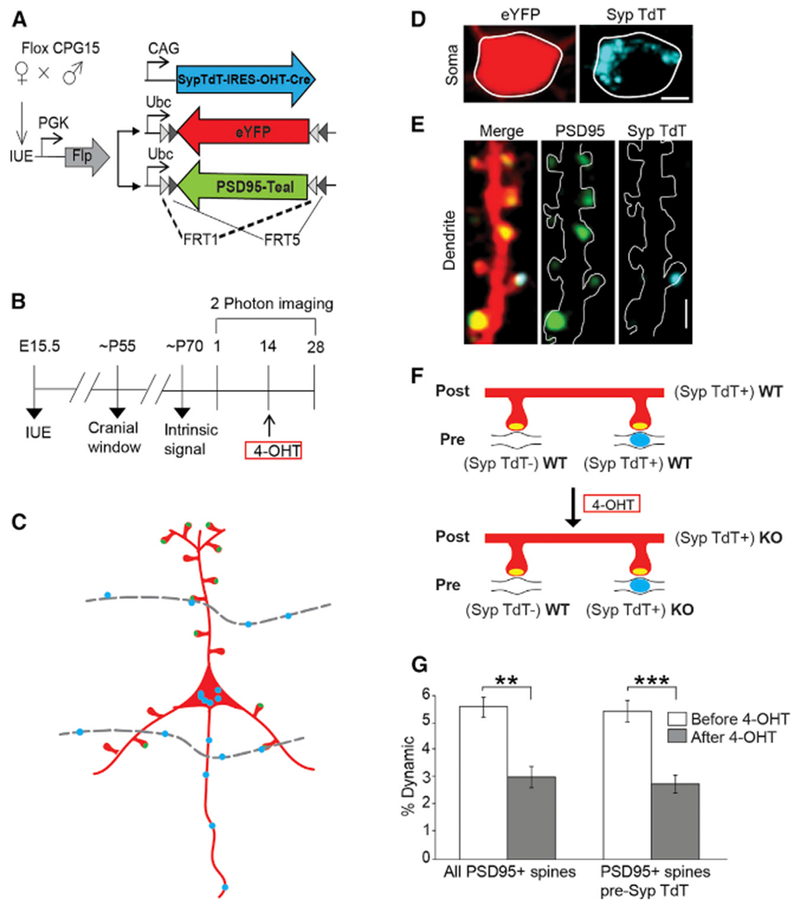
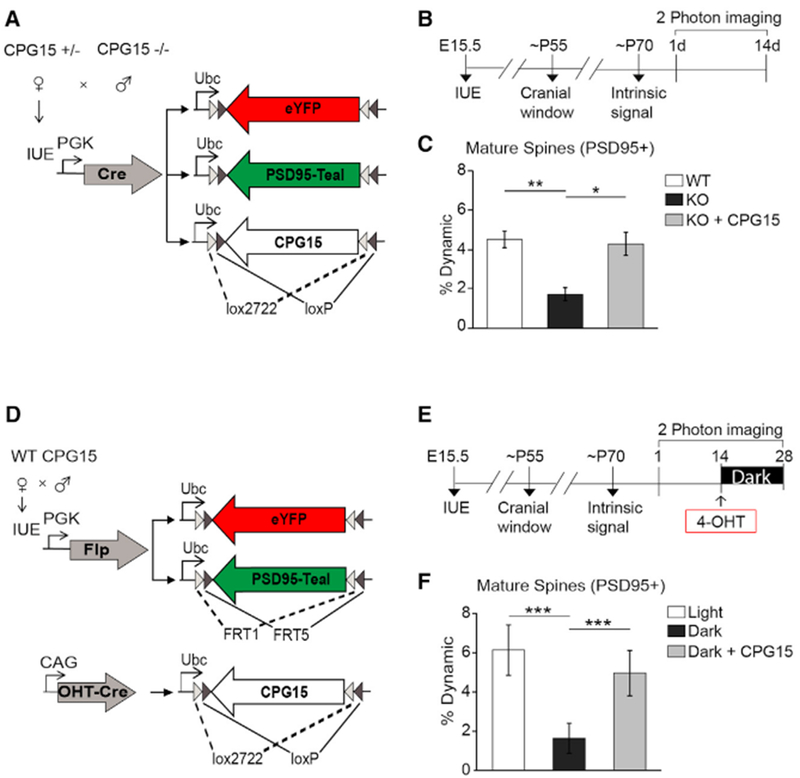
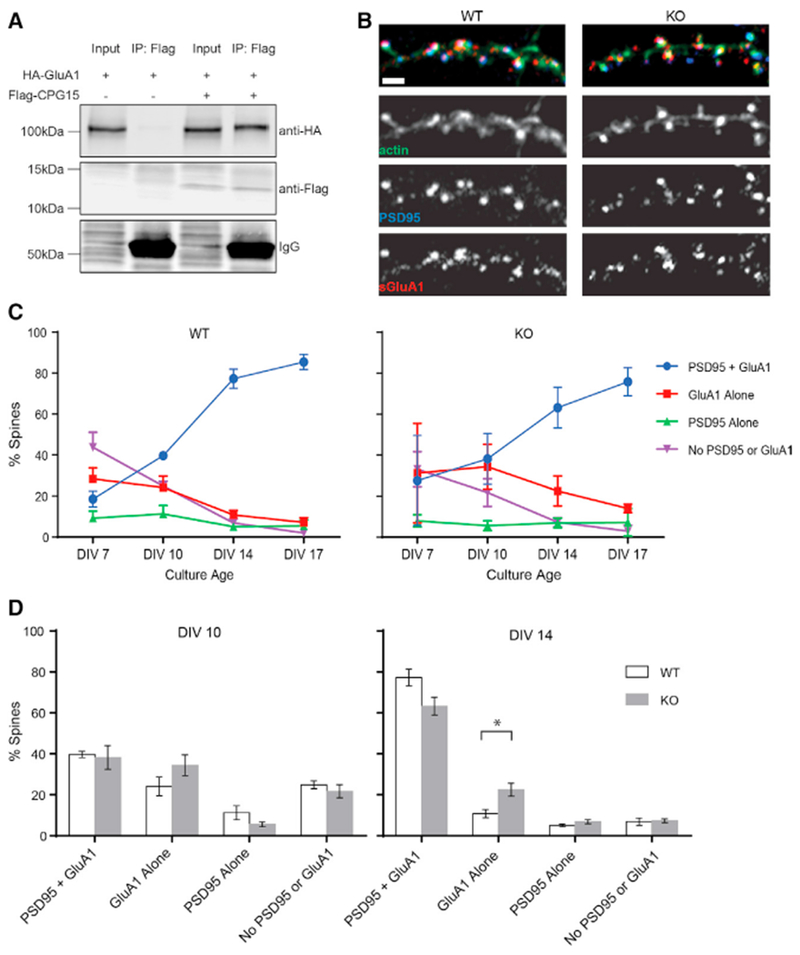
A key feature of brain plasticity is the experience-dependent selection of optimal connections, implemented by a set of activity-regulated genes that dynamically adjust synapse strength and number. The activity-regulated gene cpg15/neuritin has been previously implicated in stabilization and maturation of excitatory synapses. Here, we combine two-photon microscopy with genetic and sensory manipulations to dissect excitatory synapse formation in vivo and examine the role of activity and CPG15 in dendritic spine formation, PSD95 recruitment, and synapse stabilization. We find that neither visual experience nor CPG15 is required for spine formation. However, PSD95 recruitment to nascent spines and their subsequent stabilization requires both. Further, cell-autonomous CPG15 expression is sufficient to replace experience in facilitating PSD95 recruitment and spine stabilization. CPG15 directly interacts with α-amino-3-hydroxy-5-methyl-4-isoxazolepropionic acid (AMPA) receptors on immature dendritic spines, suggesting a signaling mode for this small extracellular molecule acting as an experience-dependent "selector" for spine stabilization and synapse maturation.
大脑可塑性的一个关键特征是依赖经验选择最佳连接,这是由一组活性调节基因实现的,这些基因可以动态调节突触强度和数量。活性调节基因 cpg15/神经黏附素先前被认为参与兴奋性突触的稳定和成熟。在这里,我们结合双光子显微镜和遗传及感觉操作,在体内剖析兴奋性突触的形成,并研究活性和 CPG15 在树突棘形成、PSD95 募集和突触稳定中的作用。我们发现,视觉经验和 CPG15 都不是形成棘突所必需的。然而,PSD95 募集到新生棘突及其随后的稳定需要两者。此外,细胞自主表达 CPG15 足以替代经验,促进 PSD95 募集和棘突稳定。CPG15 直接与不成熟树突棘上的α-氨基-3-羟基-5-甲基-4-异恶唑丙酸(AMPA)受体相互作用,这表明这种小细胞外分子作为一种依赖经验的“选择器”,作用于棘突稳定和突触成熟的信号模式。